











JHY PCB Blog Hub
Your Source for Expert PCB Design, Manufacturing, and Assembly Insights – Stay Informed with 2025 Trends!
Top Flex Circuit Board Manufacturers for Global Buyers
A Flex Circuit Board can bend around a compact hinge, follow a curved housing, or connect components inside a crowded device. That freedom is useful, but it does not make every design easy to manufacture. Buyers must weigh layer count, copper type, bend radius, operating environment, and production volume. A board that looks simple on a drawing may demand careful material selection and tight process control.
Stanford materials scientist and flexible-electronics expert Zhenan Bao has described the goal as creating electronics “as soft and stretchable as human skin.” That vision highlights what flexibility can enable, but commercial boards still need reliable electrical performance and repeatable production. The right supplier should explain how its materials and fabrication choices fit the intended bend cycle, connector layout, and assembly process. Ask for clear capability data, sample evaluation, and consistent inspection records. Small details matter.
This guide compares leading Flex Circuit Board manufacturers for global buyers, focusing on capabilities, quality practices, customization, and communication. It also considers practical sourcing questions, such as engineering support and production scale. A supplier’s website can look convincing. Proof matters more. And no ranking replaces testing a sample against real operating conditions. Buyers can miss things, too; a rushed specification may leave key requirements unstated. Use the comparisons as a starting point, then verify each manufacturer against your design and risk priorities.
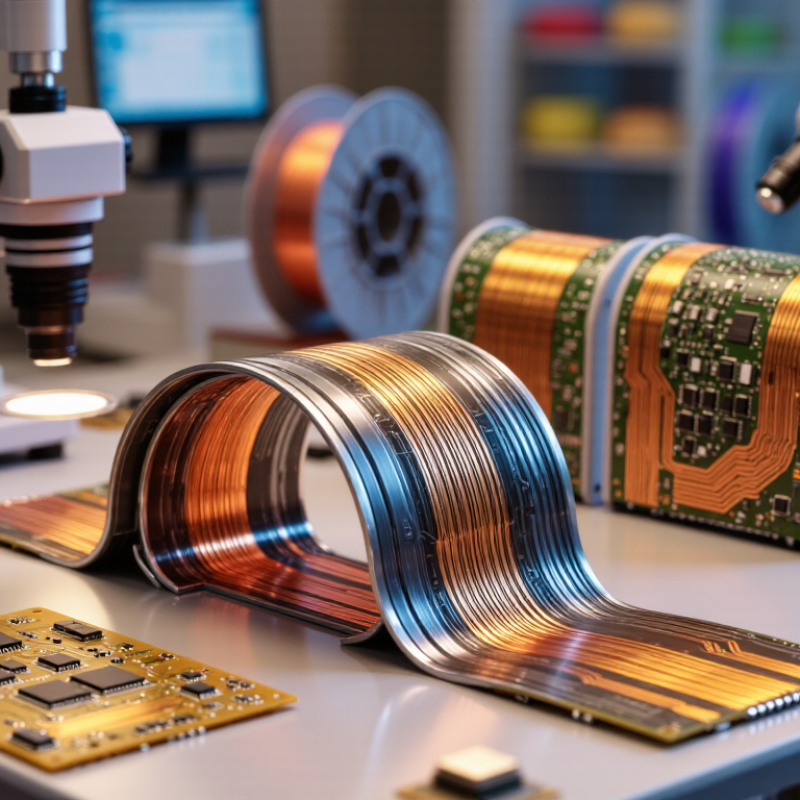
Flex Circuit Board Fundamentals: Materials, Layer Counts, and Applications
Top Flex Circuit Board Manufacturers for Global Buyers
Flex circuit boards use thin copper conductors laminated to flexible dielectric films, commonly polyimide or polyester. Polyimide tolerates heat well, making it useful for soldering and repeated movement. Copper may be bonded with adhesive or formed in adhesive-less constructions. Coverlay protects exposed traces while leaving pads accessible.
Small details matter: a sharp bend near a solder joint can invite cracking.
Layer count shapes routing capacity and cost. Single-sided circuits suit simple connections; double-sided designs add routing on both faces. Multilayer flex supports denser circuits, but extra layers can reduce flexibility and complicate fabrication.
A 2024 Grand View Research market report estimated the global flexible printed circuit board market at USD 19.6 billion in 2023. That figure reflects market revenue, not board shipments.
Flex circuits appear in phones, cameras, vehicle sensors, and wearable medical devices. The right construction depends on bend radius, heat, space, and expected movement—not just layer count.
Tips: Ask for the finished stack-up, minimum bend radius, and copper thickness. Check whether the circuit bends once during installation or flexes repeatedly in service. They are different design problems. Even careful planning can miss a real-world pinch point; prototype the assembly in its actual enclosure.
Design Metrics: 10× Static and 100× Dynamic Bend-Radius Rules of Thumb
Top Flex Circuit Board Manufacturers for Global Buyers
A practical bend-radius estimate starts with the finished flex thickness, not the bare copper. For a one-time installation bend, use an inside radius near 10 times that thickness. A 0.20 mm flex, for example, suggests roughly 2 mm or more. Not a guarantee. Adhesive, coverlay, copper weight, and layer count all affect the result.
Repeated motion calls for a much gentler curve: about 100 times the finished thickness is a useful starting point. A 0.20 mm circuit would need around a 20 mm radius. That can feel excessive in a compact hinge, but tight cycling bends may crack copper or fatigue plated transitions. Keep vias and component pads away from the moving zone. Smooth, gradual curves are safer than sharp folds.
These ratios are rules of thumb, not qualification data. Ask the manufacturer to review the actual stack-up, bend angle, motion speed, and expected cycle count. A cable that bends once during assembly behaves differently from one flexing thousands of times in a test fixture. I would also request a sample build and inspect the bend area after cycling. It takes time. Yet a neat drawing cannot reveal every weak point, and early testing may still miss a real-use problem.
Global Manufacturer Profiles: Supplier Regions, Capabilities, and Production Scale
Global buyers comparing flex circuit board manufacturers should map supplier regions against product demands, not shipping distance alone. IPC’s 2023 World PCB Production Report estimated worldwide PCB production value at US$73.4 billion, down 15.6% year over year. This figure covers the broader PCB industry, not flex circuits alone. Still, it shows why buyers should check a supplier’s actual flex-circuit portfolio rather than infer expertise from regional market size. Location matters.
East Asian manufacturing hubs offer dense electronics supply chains and access to materials, tooling, and component partners. Suppliers in North America and Europe may suit buyers seeking closer engineering collaboration or regional production options. These are broad patterns, not guarantees. Ask whether the factory produces single-, double-, and multilayer flex circuits, rigid-flex assemblies, and controlled-impedance designs. For dynamic applications, request bend-cycle test conditions and copper-type details.
Production scale needs evidence beyond a stated monthly capacity. Compare usable panel dimensions, line utilization, documented yields, inspection methods, and capacity reserved for repeat orders. Ask for recent examples of fine-pitch routing, laser-drilled features, and coverlay registration. IPC’s report is a useful market reference, but it does not verify any individual factory’s claims. The comparison is imperfect; buyers should validate key figures through audits, sample builds, and production records.
Quality Benchmarks: IPC-6013, ISO 9001, and UL 94 Material Ratings
Top Flex Circuit Board Manufacturers for Global Buyers
Quality Benchmarks: IPC-6013, ISO 9001, and UL 94 Material Ratings
Reliable flex-circuit sourcing starts with clear, verifiable quality benchmarks. IPC-6013 defines performance and qualification requirements for flexible printed boards. Ask suppliers which revision and product class apply to your design. Then check whether inspection records match the board’s layer count, copper thickness, and bend requirements. A certificate alone cannot confirm that a specific production lot meets your needs.
ISO 9001 concerns a manufacturer’s quality management system, not automatic approval of every circuit board. Review how the supplier handles process changes, defect reports, and lot traceability. UL 94 ratings describe how material samples respond to flame tests; they do not certify an entire finished assembly. Confirm the rating for the exact material and thickness in your stack-up. It is easy to assume a familiar material name means identical performance, but that assumption deserves a second look.
Tips: Request dated test reports and sample inspection data. Compare them with your drawing and material list. Ask how the supplier controls coverlay alignment near tight bends. Small gaps in documentation can become real problems later.
Buyer Scorecard: Compare Capacity, Yield, Lead Time, and Regional Support
A useful flex circuit supplier scorecard looks beyond headline capacity. Ask how monthly output changes when a design uses fine-pitch features, multiple layers, or stiffeners. Then compare quoted capacity with actual production evidence, such as recent delivery records and documented process controls. Numbers need context. A high yield figure means little unless the supplier explains how defects are counted and which product mix was measured. Request sample inspection data, including registration, trace width, and electrical test results. Ask for evidence.
Lead time should be measured from a defined point, such as approved files or released materials, not from an optimistic first quote. Check how engineering questions, tooling changes, and material shortages affect the schedule. Regional support matters when time zones slow decisions or local teams cannot resolve technical issues. A named contact and clear escalation path can be more useful than a nearby sales office. Small details matter. Compare response times during a real design review, not only during procurement. No scorecard is perfect; weights can favor neat spreadsheets over difficult production realities. Revisit them after pilot builds, and record what the supplier did well and where assumptions failed.
Top Flex Circuit Board Manufacturers for Global Buyers
Buyer Scorecard: Compare Capacity, Yield, Lead Time, and Regional Support
Suggested evaluation weighting, not supplier performance data: yield receives the highest weight because consistent quality affects rework and reliability; capacity, lead time, and regional support help assess production fit and delivery risk. Adjust the weights to match your project.
Related Posts
-
In-Depth Comparison of the Best Flex Circuit Boards: Performance Metrics and Market Analysis
-
Unlocking the Advantages of PCB Board Assembly for Global Procurement Success
-
China Top PC Board Assembly Manufacturers?
-

2026 Top PCB Board Fabrication Types for Global Buyers
-
7 Compelling Reasons to Choose Flexible PCB Boards for Your Next Project
-

Navigating the 2025 Tech Landscape: Key Strategies for Sourcing the Best PCB Circuit Boards Globally