





JHY PCB Blog Hub
Your Source for Expert PCB Design, Manufacturing, and Assembly Insights – Stay Informed with 2025 Trends!
China Top PC Board Assembly Manufacturers?
Choosing among China’s top PC Board Assembly manufacturers requires more than comparing prices or factory photographs. Buyers must examine engineering depth, production controls, communication habits, and evidence of consistent delivery. A capable partner should understand component sourcing, SMT placement, through-hole assembly, inspection, and final testing. Real production experience matters.
This guide introduces manufacturers that serve different project needs, from prototypes and low-volume builds to complex, high-volume electronics. It considers facility capabilities, quality management, traceability, equipment, and industry experience. Details such as automated optical inspection, X-ray inspection, solder paste control, and controlled material storage can reveal operational maturity. Certifications may support credibility, but certificates alone cannot guarantee reliable results.
Ask for sample records. Review test procedures. Check response times.
A strong manufacturer should explain design-for-manufacturing concerns before production begins. It should also identify risks involving component availability, thermal performance, board complexity, and packaging. Transparent communication is often more valuable than an impressive brochure. However, public information can be incomplete, outdated, or difficult to verify. No ranking remains permanently correct.
The companies discussed here should therefore be viewed as potential candidates, not automatic choices. Readers should confirm current capabilities, certifications, lead times, minimum order requirements, and export documentation directly with each supplier. Factory audits, pilot orders, and clearly documented acceptance criteria can reduce uncertainty. This approach supports practical decisions and helps match the right Pc Board Assembly partner to product requirements, budget, and long-term growth.
What Is PC Board Assembly and Why China Is a Major Supplier
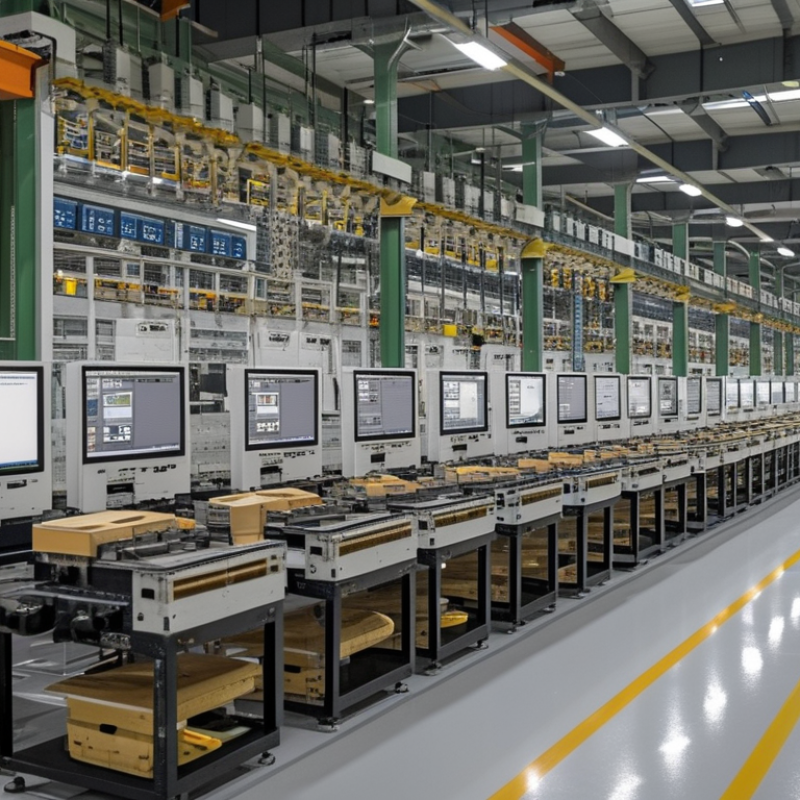
PC board assembly, or PCBA, converts a bare circuit board into a working electronic module. The process includes solder paste printing, component placement, reflow soldering, inspection, and functional testing. A small board may pass through several machines before shipment. According to Fortune Business Insights, the global PCB market reached an estimated USD 81.74 billion in 2024. Demand is growing through automotive electronics, industrial controls, medical devices, and consumer equipment.
China remains a major supplier because its manufacturing network is unusually dense. Board fabricators, component distributors, tooling workshops, and assembly plants often operate within the same region. This shortens purchasing cycles and reduces transport between production stages. China also offers extensive surface-mount technology capacity. However, low pricing alone can mislead buyers. IPC industry studies repeatedly emphasize process control, traceability, and inspection as key quality factors. In practical supplier audits, documentation can look excellent while operator training remains uneven. That gap deserves attention.
Tips: Ask for a sample inspection report, not only a certificate. Confirm solder paste control, component traceability, and test coverage. Request a pilot run before mass production. Check whether the supplier can explain defects clearly. No factory is perfect. A reliable partner reports problems early and improves the process with evidence.
How to Identify Leading PC Board Assembly Manufacturers in China
China remains a major electronics production base. Prismark’s 2024 PCB Industry Report estimated 2023 global PCB sales at approximately US$69.2 billion. This scale creates many choices, but size alone proves little. Leading PC board assembly manufacturers should show stable production records, clear process controls, and documented engineering experience.
Request factory audit reports, production photos, sample traceability, and recent quality data. Check whether each board can be tracked from incoming components to final testing. Ask for evidence.
Evaluate manufacturing depth, not attractive presentations. A capable supplier should explain SMT line speed, placement accuracy, solder paste inspection, automated optical inspection, and functional testing. IPC standards can help define acceptable workmanship and process discipline.
Also review first-pass yield, defect rates, corrective-action records, and delivery performance over several months. Numbers can be staged. Cross-check them against shipment records and customer references where possible.
Fortune Business Insights’ 2024 PCB market report forecasts continued market expansion through 2032, increasing pressure on capacity and skilled labor. Therefore, confirm backup equipment, trained operators, component sourcing controls, and realistic lead times.
A polished factory tour may still hide weak documentation. My own preference is a small pilot order with difficult assemblies, tight tolerances, and thermal testing before signing larger contracts. The imperfect result often reveals more than a perfect presentation.
Key Capabilities and Technologies Used by Chinese Manufacturers
China Top PC Board Assembly Manufacturers?
Chinese PC board assembly manufacturers now support prototypes, low-volume builds, and large-scale production. Their capabilities often include SMT placement, through-hole assembly, rigid-flex boards, and high-layer-count designs. Many facilities use automated solder paste inspection and 3D optical inspection. These systems check volume, alignment, bridges, and missing components.
Advanced factories also use X-ray inspection for hidden solder joints. This matters for BGAs and densely packed boards. Automated placement machines can handle very small components with consistent accuracy. Engineering teams review Gerber files, bills of materials, and assembly drawings before production. Design-for-manufacturing feedback may reduce rework, but it is not always perfect.
Traceability is another important capability. Reliable lines record feeder settings, inspection results, lot numbers, and operator actions. Controlled humidity protects moisture-sensitive components. Some manufacturers follow IPC workmanship standards and maintain ISO-based quality systems. Yet a polished factory tour can mislead. Buyers should request sample reports, process records, and pilot-run data. No facility is equally strong in every product category. A factory skilled in consumer electronics may lack experience with medical or industrial assemblies. Clear communication remains essential. Small documentation errors can delay an otherwise capable build.
| Capability Area | Typical Capability Range or Practice | Technology and Process Used | Typical Application Value |
|---|---|---|---|
| PCB Layer Count | 2 to 32 layers for standard production; higher counts available for specialized projects | Multilayer lamination, sequential build-up, laser drilling, controlled-depth drilling | Supports consumer electronics, industrial controllers, telecom equipment, medical devices, and computing hardware |
| Board Types | Rigid, rigid-flex, flex, metal-core, high-frequency, and high-density interconnect boards | FR-4 processing, flexible polyimide construction, aluminum or copper heat-spreading bases, HDI microvia technology | Enables compact designs, thermal management, vibration resistance, and reduced wiring complexity |
| Minimum Track and Space | Approximately 75/75 μm to 100/100 μm on advanced HDI designs; 100/100 μm to 150/150 μm is common for many production boards | Fine-line imaging, laser direct imaging, advanced etching, surface-profile control | Allows higher circuit density and smaller product footprints |
| Microvia Technology | Laser-drilled blind microvias, stacked microvias, and staggered microvias | CO₂ or UV laser drilling, copper filling, sequential lamination, via-in-pad processing | Improves routing efficiency for ball-grid-array packages and compact high-pin-count devices |
| PCB Base Materials | Standard and high-Tg FR-4, halogen-free laminates, flexible polyimide, PTFE-based and other high-frequency materials | Material selection based on thermal performance, dielectric constant, signal loss, flexibility, and flame rating | Supports general electronics, automotive systems, power electronics, and high-speed communication products |
| Surface Finishes | HASL, lead-free HASL, ENIG, immersion silver, immersion tin, and hard or soft gold on selected contacts | Hot-air leveling, electroless nickel immersion gold, immersion metal deposition, selective plating | Balances solderability, contact reliability, flatness, corrosion resistance, and cost |
| Component Placement | High-speed SMT placement for fine-pitch components, chip components, connectors, and mixed package types | Automated pick-and-place equipment, feeder verification, component traceability, real-time placement inspection | Provides repeatable assembly quality and supports high-volume production |
| Smallest Common SMT Components | 0201 metric components are widely supported; smaller packages may require project-specific validation | Precision placement systems, optimized solder-paste printing, 3D solder-paste inspection, controlled reflow profiles | Enables compact layouts and greater component density |
| Through-Hole Assembly | Manual insertion, selective soldering, and wave soldering are commonly available | Selective soldering for mixed-technology boards, wave soldering for suitable through-hole designs, hand assembly for low-volume builds | Handles large connectors, transformers, relays, power components, and mechanically stressed parts |
| Soldering Processes | Lead-free reflow is standard for many export-oriented production lines; tin-lead processing is available for approved applications | Multi-zone convection reflow, nitrogen reflow when required, selective soldering, and wave soldering | Supports compliance, stable solder joints, and controlled thermal profiles |
| Component Package Support | QFP, QFN, BGA, LGA, CSP, connectors, power modules, and mixed-technology assemblies | Fine-pitch printing, X-ray inspection, bottom-side inspection, rework stations, and package-specific process controls | Supports modern processors, wireless modules, sensors, power-management devices, and industrial electronics |
| Inspection and Testing | AOI, 3D solder-paste inspection, automated X-ray, flying-probe testing, in-circuit testing, and functional testing | Optical inspection, solder-joint measurement, non-destructive X-ray analysis, electrical test fixtures, and customer-defined test procedures | Detects placement defects, solder voids, opens, shorts, polarity errors, and functional failures |
| Electrical Test Coverage | Continuity and isolation testing are common; in-circuit and functional testing depend on product design and test-fixture availability | Bed-of-nails fixtures, flying-probe systems, boundary-scan methods, firmware loading, and functional test stations | Improves first-pass yield and verifies electrical performance before shipment |
| Manufacturing Tolerances | Typical PCB dimensional tolerance is about ±0.10 mm to ±0.20 mm, depending on board size, material, and process | CAD/CAM verification, tooling compensation, optical measurement, process capability monitoring, and controlled fabrication parameters | Helps ensure enclosure fit, connector alignment, and reliable assembly integration |
| Quality Management | Production systems commonly operate under ISO 9001; automotive, medical, or aerospace programs may require additional sector-specific certification | Documented work instructions, corrective-action systems, process audits, supplier controls, and lot traceability | Improves process consistency and supports customer and regulatory requirements |
| Traceability | Serial-number, lot-number, component-batch, operator, machine, and inspection-record tracking are commonly available | Manufacturing execution systems, barcode or QR-code scanning, digital traveler records, and database-linked inspection results | Supports root-cause analysis, warranty management, and controlled product recalls |
| Prototype and Low-Volume Production | Quick-turn prototypes, engineering samples, small batches, and pilot production are widely supported | Digital fabrication data preparation, rapid tooling, flexible SMT setup, stencil manufacturing, and engineering change control | Shortens design-validation cycles and reduces the risk of launching unverified designs |
| Typical Production Lead Time | Approximately 3 to 10 working days for many standard assembly orders after materials and data are approved; complex projects may take longer | Material planning, automated line scheduling, local and international sourcing, and parallel PCB fabrication and assembly workflows | Provides schedule flexibility for prototypes, product launches, and recurring production |
| Design for Manufacturing Support | DFM, DFA, DFT, component substitution review, stack-up review, and assembly-yield analysis are commonly offered | Gerber and ODB++ data checks, bill-of-material validation, stencil review, thermal-profile analysis, and design-rule verification | Reduces manufacturability risks, rework, material shortages, and unexpected production costs |
Quality Standards, Certifications, and Production Controls
China Top PC Board Assembly Manufacturers?
Quality Standards, Certifications, and Production Controls
Selecting a PC board assembly partner requires more than comparing prices. A capable factory should provide current certificates, audit records, and clear process ownership. ISO 9001 supports consistent quality management. ISO 13485 may apply to medical electronics. IPC standards guide soldering, inspection, and workmanship. RoHS and REACH controls help manage restricted substances. Certificates need verification. An outdated document proves little.
Production control should begin with incoming inspection. Operators should check component identity, moisture sensitivity, date codes, and packaging condition. Solder paste requires refrigerated storage and controlled thawing. SPI can measure paste volume before placement. AOI then identifies missing parts, polarity errors, and solder bridges. X-ray inspection helps examine hidden joints. ESD flooring, wrist-strap testing, and humidity records reduce avoidable failures.
Traceability should connect each board to materials, machines, operators, and inspection results. A reliable manufacturer can explain its first-article process and corrective-action system. Ask how it handles nonconforming boards. Ask for sample reports, not promises. In practice, production control is rarely perfect. Even strong factories can miss a weak component lot or misread a drawing revision. That risk deserves honest discussion, documented containment, and a measurable improvement plan. Small details matter, especially during low-volume builds or engineering changes.
How to Choose the Right China PC Board Assembly Partner
China Top PC Board Assembly Manufacturers? How to Choose the Right China PC Board Assembly Partner
China remains a major electronics manufacturing center. Fortune Business Insights estimated the global PCB market at about 81.7 billion US dollars in 2023. Its report projects growth to approximately 120.2 billion dollars by 2032. This scale creates options, but it also creates noise. A capable assembly partner should match your product, not merely offer the lowest quotation.
Ask for evidence. Review ISO 9001 certification, process audits, component traceability, and recent first-pass-yield data. Confirm whether the factory uses solder-paste inspection, automated optical inspection, X-ray testing, and functional testing. IPC industry data continues to show Asia producing roughly 90% of global PCBs. Regional capacity is strong, yet quality systems vary sharply between factories. Price is not proof.
Request a small pilot build before approving volume production. Check solder joints under magnification, label accuracy, packaging protection, and test reports. Discuss DFM feedback early, especially for tight-pitch components, thermal areas, and mixed-technology boards. A reliable partner should explain lead times, minimum order quantities, engineering changes, and material substitutions in writing. Ask for measurable targets, such as defect rates and delivery performance.
No scorecard is perfect. Some inspection data may arrive late or look unusually polished. That deserves a second question. Visit the facility when possible, or use an independent audit. The right partner communicates bad news early, protects revision control, and improves after a failed trial. That practical behavior matters more than a polished sales presentation.
Related Posts
-
Top Tips for Sourcing Printed Circuit Board Assembly Suppliers?
-
10 Key Reasons Why Circuit Boards are Essential for Modern Electronics
-
How to Choose the Right Printed Board for Your Project Needs
-
Top 10 Tips for PCB Board Fabrication What Buyers Need to Know
-

2026 Best Printed Circuit Board Assembly Techniques and Trends?
-
Solutions for Efficient Best Printed Board Assembly Manufacturing