









Why Is a Carbon Commutator Used in Electric Motors?
A Carbon Commutator helps a brushed electric motor keep turning by changing how current flows through its rotating windings. It works with carbon brushes, which press against the commutator’s copper segments as the armature spins. Each segment briefly connects to a brush, then moves on. This switching keeps the motor’s magnetic forces producing useful rotation instead of locking the rotor in one position. The action is continuous. It is also easy to overlook when a motor runs smoothly.
Carbon is used because it conducts electricity while offering some natural lubricity against the copper surface. That contact can reduce friction and help limit damage, though it does not eliminate wear. In a workshop, dark brush dust, uneven surfaces, or visible sparking can point to a commutation problem. These signs need careful inspection; they do not identify one cause by themselves. Brush pressure, load, alignment, and operating conditions may also matter. Small details count.
The design is not universal. Brushless motors use electronic controls instead of a mechanical commutator, while many traditional DC motors rely on this component. A carbon commutator therefore offers a practical way to switch current without separate electronic switching hardware at the rotor. It also creates routine maintenance needs. That trade-off is worth remembering. Understanding the commutator’s role helps explain motor operation, troubleshooting, and why correct brush and commutator materials matter. And sometimes, the simple explanation is not the complete one.
What a Commutator Does in an Electric Motor
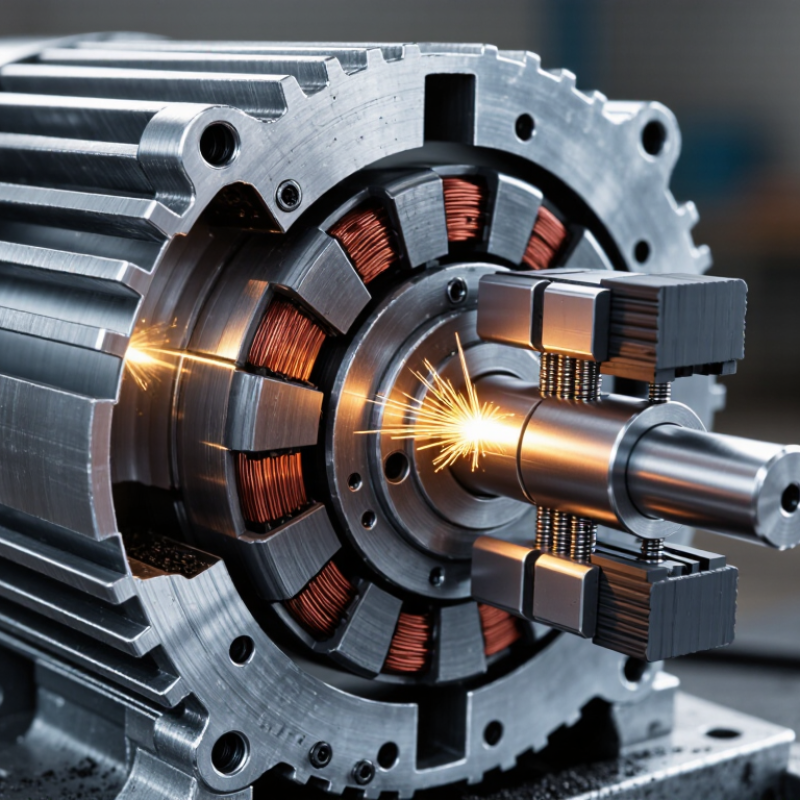
In a brushed DC motor, the commutator helps keep the rotor turning in one direction. It is usually made of copper segments insulated from one another, while carbon brushes press against its surface. That contact matters. As the rotor spins, the brushes touch different segments.
The commutator switches the direction of current through the rotor windings at carefully timed points. Without that switching, the magnetic forces would change in a way that could slow the rotor or make it stop. The result is steady rotation, though real motors still experience friction, heat, and electrical wear.
You can picture the brushes as small blocks sliding over a segmented metal ring. They must maintain contact without pressing so hard that they wear the commutator quickly. Carbon works well because it conducts electricity and is softer than copper, helping reduce damage to the rotating surface. Still, brushes gradually wear down, and dust or uneven contact can affect performance. It is a practical design, not a perfect one. A faint electrical hiss may be normal, but sparking that grows heavy can point to a fault or worn parts.
Why Is a Carbon Commutator Used in Electric Motors? — What a Commutator Does in an Electric Motor
| Topic | How It Works | Why It Matters |
|---|---|---|
| Commutator material | In many brushed DC motors, the commutator is made of separate copper segments insulated from one another, commonly with mica insulation. | The conductive segments connect to the armature windings and provide rotating electrical contacts. |
| Carbon brushes | Carbon or graphite brushes are held against the rotating commutator by springs. They carry current between the stationary circuit and the rotating armature. | Carbon is conductive and can provide a sliding contact while limiting wear on the copper commutator compared with many harder contact materials. |
| Current reversal | As the armature turns, the commutator changes which armature coil is connected to each supply polarity. | This reverses current in the relevant coils at the right point in the rotation, helping the motor’s torque continue in the same direction. |
| Mechanical switching | The commutator and brushes form a mechanical switching system: the commutator rotates with the armature, while the brushes remain stationary. | This switching enables a brushed DC motor to operate from a DC supply without electronic commutation. |
| Friction and wear | Brushes slide on the commutator, so both components experience wear over time. Brush material and motor design affect contact performance and service life. | Brushes are replaceable service parts in many motors; inspection can identify wear, poor contact, or excessive sparking. |
| Sparking and maintenance | Small sparks may occur during switching, but heavy or persistent sparking can indicate problems such as worn brushes, contamination, poor seating, or electrical overload. | Keeping the commutator clean and smooth, and using the correct replacement brushes, helps maintain reliable operation. |
| Where this arrangement is used | Brushed DC motors and some universal motors use brushes and a commutator. Brushless motors instead use electronic switching and do not use a brush–commutator contact. | The commutator is useful where a simple, compact motor design with mechanical current switching is appropriate. |
Important distinction: The commutator itself is generally made of copper segments, not carbon. Carbon or graphite refers to the brushes that press against it.