






JHY PCB Blog Hub
Your Source for Expert PCB Design, Manufacturing, and Assembly Insights – Stay Informed with 2025 Trends!
What Is Cable Drop Fibra Optica Used For?
Cable Drop Fibra Optica is the fiber link that carries an optical signal from a nearby distribution point to a home or business. It is commonly used in fiber-to-the-home networks, where the final connection brings broadband service to an individual property. The cable may run along a pole, through a conduit, or across a building’s exterior, depending on the network design. Its route can be short, but its role is essential.
A drop cable is not the whole network. It connects the local access network to the customer’s premises, where technicians terminate it at suitable equipment. That equipment may include an optical network terminal. Details vary by provider and installation, so the term does not always describe one identical cable or setup. That distinction matters.
This article explains where Cable Drop Fibra Optica is used, how it fits into a fiber network, and what to consider when choosing or installing it. Cable construction, connector type, bend limits, and exposure to weather can all affect performance and durability. A tight bend behind a wall may seem harmless, yet it can weaken the signal. Small details count. Readers will also learn how aerial and underground routes differ, and why careful handling during installation helps prevent avoidable damage. Not every property has the same needs, so checking the route and equipment requirements is a practical starting point.
What a Fiber Optic Drop Cable Is and Where It Fits in the Network
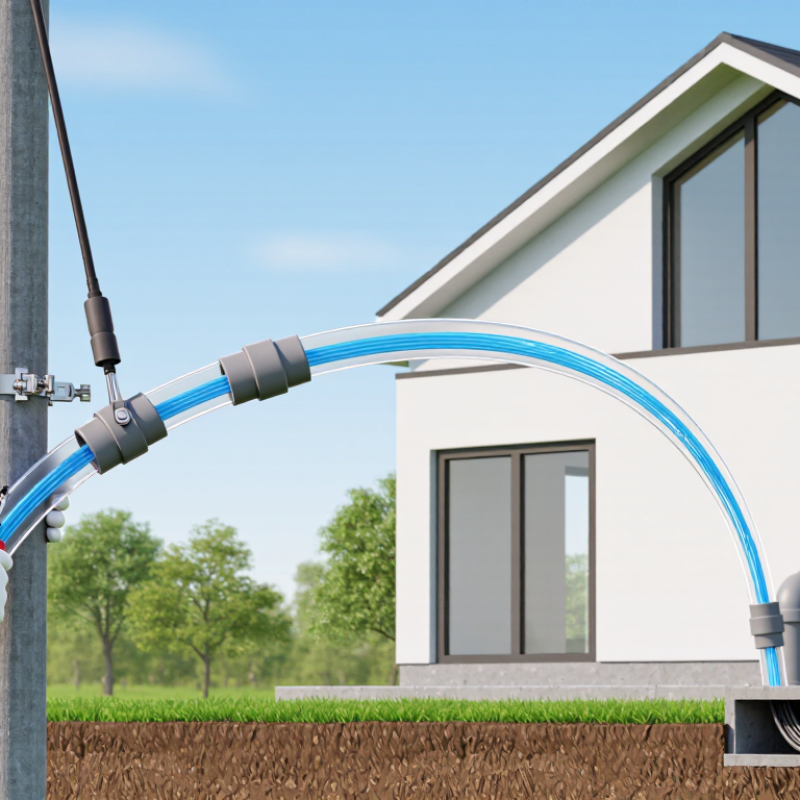
A fiber optic drop cable connects the local distribution network to an individual home or business. It usually runs from a nearby fiber terminal to an exterior wall, then to an optical network terminal inside. In a typical fiber-to-the-home layout, feeder cables serve an area, distribution cables reach local terminals, and drop cables complete the final connection. The drop is the last-mile link. Small cable, important job.
Drop cables can be installed overhead, attached to poles, or underground in a conduit. The route depends on the site, existing infrastructure, and the cable’s construction. At the building, a technician secures the entry point and protects the fiber from sharp bends, pulling force, and moisture. Fiber can carry data over long distances, but a damaged cable may cause signal loss or service interruptions. Do not kink it. Real properties are rarely as tidy as network diagrams suggest, so the best route may need adjustment during installation. The cable type and termination method should match the network design and local conditions.
What Is a Fiber Optic Drop Cable Used For?
A drop cable carries the fiber connection from a neighborhood distribution point to a subscriber’s home or business. It is the final access-network span before the customer premises.
Illustrative FTTH layout: the drop is typically the shortest outside-plant span shown here. Actual cable lengths vary with network design, route, and installation conditions; these values are examples, not fixed standards.
How It Connects a Distribution Point to a Subscriber
What Is Cable Drop Fibra Optica Used For?
How It Connects a Distribution Point to a Subscriber
A fiber drop cable carries the optical signal from a local distribution point to a subscriber’s home or building. It is the final connection in many FTTH networks. At the distribution point, a technician connects or splices the drop to a feeder network. The cable then runs through a duct, along a pole, or across an exterior wall. Inside, it terminates at an optical network terminal, which converts light signals into usable network traffic. Small details matter. A tight bend, crushed section, or poorly sealed wall entry can weaken the signal or invite water damage. A neat diagram can hide a messy installation.
The connection’s wider importance is reflected in deployment figures. FTTH Council Europe’s 2024 Market Panorama reported about 244 million homes passed across EU39 markets in 2023. “Passed” means a network is available nearby; it does not mean every home has subscribed. That distinction matters when planning drop cables, since each subscriber connection still needs a suitable route and termination.
Installers also check connector cleanliness, cable length, bend radius, and optical loss against the network’s design budget. The handoff is not always tidy, especially in older buildings. A careful site check can prevent avoidable signal problems later.
Common Residential and Commercial Uses
A cable drop fiber optic is the final fiber segment connecting a street-side distribution point to a home or business. At homes, technicians route it from a pole or through a buried conduit to an optical network terminal. That terminal converts light signals for a router, supporting video calls, streaming, cloud backups, and connected devices. An independent drop helps deliver stable bandwidth, but it cannot fix weak indoor Wi-Fi. That last link matters.
Commercial sites use the same connection for cloud-based records, payment terminals, video meetings, security cameras, and guest networks. Clinics, shops, and small offices often need several services running at once, so a clear pathway and protected entry point matter. The Fiber Broadband Association’s 2024 Fiber Deployment Index estimated fiber passed 76% of U.S. households in 2023. That figure describes availability, not actual subscriptions or guaranteed speeds. Layouts vary. Old ducts, sharp bends, and shared risers can complicate installation. A neat exterior route can still leave an awkward indoor handoff, so a site check is useful before work begins.
Cable Designs for Indoor and Outdoor Installation
Cable drop fiber optic cable carries a signal from a local distribution point to a home or small business. Its route may run along an exterior wall, through a conduit, or across an indoor space. The installation environment matters because moisture, sunlight, temperature changes, and tight bends can affect cable performance.
Outdoor drop cables are built to handle exposure. A durable outer jacket helps resist ultraviolet light and weather, while water-blocking materials can limit moisture movement if the jacket is damaged. Strength members help the cable withstand pulling during installation. Indoors, a compact, flexible design can make routing through walls and narrow spaces easier. Where building codes require it, a flame-retardant, low-smoke jacket may be appropriate. Small details matter.
Some cables are rated for both indoor and outdoor use, which can reduce the need for a transition point at the building entrance. Still, “dual-rated” does not mean suitable for every route. Check the cable’s specifications, including temperature range, bend radius, and pulling limits, before installation. A cable that looks sturdy may still be damaged by a sharp corner or excessive tension. Not always obvious. The right design depends on the actual path, local installation requirements, and how the cable will be protected at entry points.
What Is Cable Drop Fibra Optica Used For? - Cable Designs for Indoor and Outdoor Installation
| Cable Design | Typical Construction | Installation Environment | Common Use | Key Installation Considerations |
|---|---|---|---|---|
| Flat drop cable | Usually contains one or more optical fibers between strength members in a flat profile. | Outdoor aerial routes and building entry points; some versions are rated for indoor/outdoor use. | Connecting a nearby access network distribution point to a home or small building. | Check the cable’s bend-radius and tensile limits. Use fittings designed for its specific shape and construction. |
| Round drop cable | Round jacket with fiber elements and, depending on the design, strength members or protective components. | Indoor pathways, conduits, and some outdoor routes when the cable is rated for the exposure. | Routing a fiber connection through conduit or within a building to an optical network terminal. | Confirm the cable’s indoor, outdoor, or dual-use rating before installation; a general-purpose indoor cable is not automatically suitable outdoors. |
| Figure-eight self-supporting drop | Fiber cable joined to a messenger wire, forming a figure-eight profile. | Outdoor aerial spans between approved support points. | Overhead service drops where the messenger provides support for the fiber cable. | Use compatible clamps and follow span, clearance, and tension requirements. Do not treat the fiber portion as a substitute for the messenger. |
| Dielectric aerial drop | Non-metallic strength members support the cable; the design has no metallic messenger. | Outdoor aerial installations where an all-dielectric cable is appropriate. | Overhead connections between an access network and a customer location. | Requires purpose-designed anchoring and support hardware. Verify mechanical ratings and the route’s exposure conditions. |
| Duct-rated drop | Jacketed cable designed for placement in a duct or conduit; construction varies by product. | Underground ducts and conduits, subject to the cable’s rating. | Protected underground routing from a distribution point toward a building. | Check duct fill, pulling tension, bend radius, and water-exposure requirements. A duct-rated cable is not necessarily rated for direct burial. |
| Direct-burial drop | Outdoor cable with construction intended to tolerate direct burial; some designs include additional moisture or mechanical protection. | Buried routes without a continuous protective duct, where local rules permit. | Underground service connections between network access points and premises. | Use only a cable specifically rated for direct burial. Follow applicable burial-depth, locating, and separation requirements. |
| Indoor drop / premises cable | Compact, flexible cable designed for indoor routing; may have one or more fibers. | Inside walls, raceways, or other approved building pathways. | Connecting the building entry point to an indoor termination or optical network terminal. | Confirm the required fire and building-code rating. Protect the cable from crushing, sharp bends, and abrasion. |
General purpose: A fiber-optic drop cable provides the final connection from an access network distribution point to a residence or other customer premises. The correct design depends on the route, installation method, environmental exposure, and applicable codes; ratings and fiber counts vary by cable.
Factors for Selecting a Fiber Optic Drop Cable
A fiber optic drop cable carries data from a distribution point to a home, office, or small business. Choosing one starts with the route, not the price. An outdoor cable fixed to a wall faces sun, rain, and temperature swings; a buried route needs suitable moisture protection. For indoor entry, check fire and installation requirements. A mismatch can cause trouble. Measure twice.
Check the required fiber type, fiber count, and connector interface against the network plan. Many access networks use single-mode fiber, but confirm the equipment specification instead of assuming. Look for adequate tensile strength and a stated minimum bend radius. Tight corners can increase signal loss or damage the glass. A compact cable is easier to route. Still, compact does not always mean durable.
Consider whether installers will pull the cable through conduit, clip it to a facade, or splice it at a terminal. Each method affects jacket choice, pulling load, and access for future repairs. Ask for test results, such as insertion loss, and allow enough length for service loops. A specification sheet helps, but it may not reflect every detail of the route. That deserves a second look.


