










JHY PCB Blog Hub

Your Source for Expert PCB Design, Manufacturing, and Assembly Insights – Stay Informed with 2025 Trends!

Top TRT Turbine Blade Manufacturers for Global Buyers

A reliable Trt Turbine Blade is judged by more than its profile or alloy. Buyers need evidence of manufacturing control, inspection capability, traceability, and support after delivery. IATA reported that global passenger demand increased 10.4% in 2024 compared with 2023. That figure describes air travel, not turbine-blade orders, but it signals the operating pressure facing engine fleets. Small defects matter. So does lead time.

Technical documents help separate proven capability from polished sales claims. The FAA’s Advisory Circular AC 33.70-1 outlines damage-tolerance considerations for turbine-engine rotor parts, providing useful context for evaluating inspection and engineering processes. Henry Petroski, an engineering professor and author, is often quoted: “Science is about knowing; engineering is about doing.” For buyers, the distinction is practical: ask how a supplier demonstrates performance, not only what its brochure promises. The comparison is imperfect. Suppliers may serve different engine platforms, quality systems, and repair or replacement needs.

This guide introduces manufacturers for global buyers and highlights questions worth asking about materials, testing, documentation, delivery, and technical support. Request current certificates and platform-specific evidence; verify claims against your own requirements. A supplier’s name alone proves little. The details deserve a closer look.
Top TRT Turbine Blade Manufacturers for Global Buyers

Understanding TRT Turbine Blades and Their Industrial Applications

TRT turbine blades operate inside top-pressure recovery turbines, which capture energy from gas leaving a blast furnace. Instead of wasting the pressure drop, the turbine converts part of that energy into shaft power. This power can support electricity generation or auxiliary equipment at a steel plant. It is useful, but not a magic efficiency fix.

The blades face hot process gas, changing loads, moisture, and fine dust. Deposits can alter blade profiles, while erosion may thin edges. Vibration can point to imbalance or mounting issues. Material selection, surface finish, and manufacturing consistency all matter. Buyers should check operating temperature, gas composition, pressure range, inspection records, and repair options. A catalogue description alone is not enough. Field conditions can differ more than expected.

Tips: Request dimensional inspection data and material traceability. Compare expected service life with actual plant records. Ask how damage is assessed and repaired. Keep rotor balance and clearances within specified limits. One overlooked detail can matter.

How TRT Turbine Blades Are Designed and Manufactured

Top TRT Turbine Blade Manufacturers for Global Buyers

How TRT Turbine Blades Are Designed and Manufactured

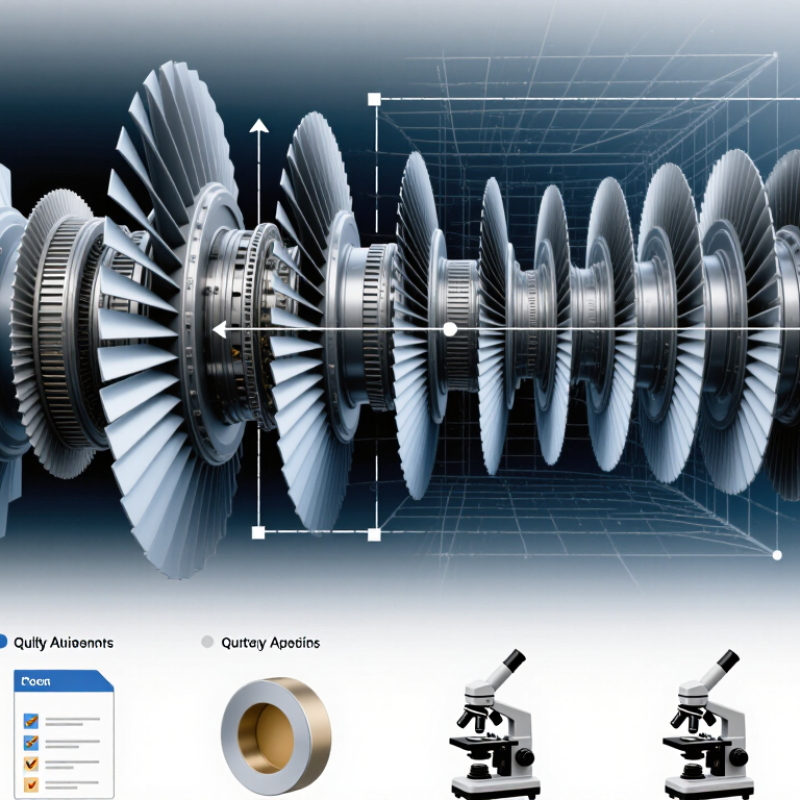
TRT blades recover energy as high-pressure blast-furnace gas expands through a turbine. Their design starts with operating data: gas flow, temperature, pressure, dust levels, and expected speed changes. Engineers use flow analysis to shape each airfoil and manage gas movement across the rotor. Small details matter. Blade roots and platform transitions also need careful stress analysis, since local strain can shorten service life.

Material selection depends on temperature, gas chemistry, and erosion exposure. A blade may be produced by precision casting or machined from a forged blank; the route depends on its geometry and alloy. Manufacturers control the profile, root dimensions, and surface finish during machining. Some designs use protective treatments, but these cannot compensate for unsuitable materials or poor operating conditions.

Inspection follows production. Coordinate-measuring equipment checks critical dimensions, while suitable nondestructive tests look for surface or internal flaws. Assemblies may also undergo balancing checks before installation. Dust behavior can be difficult to predict exactly. That uncertainty deserves attention: inspection plans and maintenance intervals should reflect actual plant conditions, not only the original design assumptions.

Top TRT Turbine Blade Manufacturers for Global Buyers - How TRT Turbine Blades Are Designed and Manufactured

Selection or Engineering Dimension What It Means for TRT Blades Design and Manufacturing Considerations What Global Buyers Should Verify
TRT application A Top Pressure Recovery Turbine (TRT) recovers energy from the pressure and flow of blast-furnace top gas. Blade design must suit the turbine stage, gas path, operating conditions, and the specific TRT configuration. Confirm that the supplier has experience with the relevant TRT type, stage, and equipment interface.
Operating gas Blast-furnace gas is a process gas whose composition and cleanliness can vary with plant operation. Gas composition, temperature, pressure, moisture, and entrained dust can affect erosion, corrosion, and operating performance. Provide site-specific gas data and ask how the design accounts for dust loading and expected operating variation.
Aerodynamic design Blade profiles guide gas through the turbine and influence energy conversion, flow capacity, and losses. Design work typically uses aerodynamic analysis and computational tools, followed by checks against the turbine's design conditions. Request the applicable design basis, performance assumptions, and evidence that the blade geometry matches the intended stage.
Blade geometry Airfoil shape, chord, thickness distribution, twist, and root or platform features are determined by the turbine design. Geometry must balance aerodynamic requirements with structural strength, manufacturing limits, and fit with adjacent components. Verify dimensional drawings, interface details, tolerances, and compatibility with the existing rotor or assembly.
Material selection Material choice depends on the design's mechanical loads, temperature, gas environment, and service requirements. Material specifications should define the required composition, mechanical properties, heat treatment, and traceability. Review material certificates and confirm that the proposed material is approved for the specific operating conditions.
Manufacturing route Blade production may involve forming or casting, machining, heat treatment, and finishing, depending on blade design and material. Process controls help maintain the required profile, surface condition, material properties, and consistency between parts. Ask for the proposed manufacturing route, process controls, inspection stages, and records linked to each component.
Machining and finishing Precision machining establishes blade contours and critical interfaces; finishing prepares surfaces for service. Tooling, machining sequence, and surface finishing must preserve the approved geometry and avoid defects. Check critical dimensions, surface-finish requirements, and inspection results against the approved drawings.
Inspection and testing Inspection verifies material quality, dimensions, and the condition of the finished blade. Depending on the specification, quality checks can include dimensional inspection, material verification, and suitable non-destructive examination. Agree on inspection scope, acceptance criteria, documentation, and any required witness or hold points before production.
Rotor fit and balance Blade fit and mass distribution matter to the rotating assembly and its operating behavior. Blade roots, attachment features, and component mass must conform to the equipment design and assembly requirements. Confirm fit-up requirements, identification and orientation markings, and whether assembly or balance checks are included in scope.
Repair or replacement scope Buyers may require new blades, replacement parts, or repair support for existing TRT equipment. Repair feasibility depends on the blade's condition, material, design limits, and approved repair procedures. Provide inspection findings and equipment records; establish repair limits and acceptance criteria before work begins.
Supplier qualification A manufacturer's suitability depends on technical capability and quality controls, not only quoted price. Relevant factors include engineering support, manufacturing controls, traceability, inspection capability, and delivery planning. Evaluate documented quality procedures, comparable project references, technical responsiveness, and after-sales support.
Documentation and logistics Clear records and packaging help protect components and support installation, maintenance, and international delivery. Documentation may include drawings, material records, inspection reports, part identification, and handling instructions. Define document language, export packing, preservation, shipping terms, delivery schedule, and spare-parts identification requirements.

Blade materials, dimensions, manufacturing processes, and inspection requirements are equipment-specific. Buyers should confirm all technical details against the original turbine design and site operating data.

Key Criteria for Evaluating Global Turbine Blade Manufacturers

Global buyers should assess turbine blade manufacturers beyond quoted price and rated output. GWEC’s Global Wind Report 2024 records 117 GW of new wind capacity installed in 2023, bringing cumulative capacity to about 1,021 GW. IRENA’s Renewable Capacity Statistics 2024 reports 1,017 GW for the same year. Small differences matter: reporting methods and revisions can vary. This expanding market makes consistent quality control and dependable delivery especially important.

Request traceable records for laminate materials, root-insert bonding, lightning protection, and fatigue testing. Check whether inspection procedures align with IEC 61400-5, which covers wind turbine blade design. Ask for production-capacity evidence, defect rates, repair instructions, and logistics plans for moving long blades through ports and roads.

Ask for evidence. A spreadsheet can look reassuring; it cannot reveal a weak bond line. Factory audits and sample documentation help, but they do not replace independent verification. Review warranty terms carefully, including inspection access and response times.

Some buyers focus too heavily on price. That is understandable, but a low bid can conceal costly delays or limited after-sales support.

Leading TRT Turbine Blade Manufacturers and Their Capabilities

Top-pressure recovery turbine (TRT) blades work in demanding conditions: hot blast-furnace gas, pressure changes, and dust that can erode surfaces. Leading manufacturers typically support custom blade design, material selection, precision casting, and finish machining. Their engineering teams may review operating speed, gas composition, temperature, and existing rotor drawings before proposing a design. Small details matter.

Manufacturing capability is more than shaping metal. A qualified supplier should control blade profiles, dimensions, surface finish, and material traceability. Depending on the component and specification, inspections may include dimensional checks, dye-penetrant testing, radiography, or ultrasonic examination. Some suppliers also provide protective coatings, repair services, and rotor balancing. Capabilities vary, so buyers should verify the actual process and acceptance criteria rather than rely on a broad catalog claim.

For global buyers, useful evidence includes inspection records, material certificates, sample reports, and clear communication about tolerances and delivery stages. Ask how the manufacturer handles design changes and nonconforming parts. A polished brochure is not enough. Even experienced suppliers may need better operating data to avoid an unsuitable replacement blade; that limitation deserves an honest discussion before production begins.

Top TRT Turbine Blade Manufacturers for Global Buyers — Leading Manufacturers and Their Capabilities

Material selection is one factor buyers can assess when comparing turbine blade manufacturing capabilities. This chart shows representative densities of engineering alloys; it is not a ranking of manufacturers or a claim that every material is used in TRT blades.

Density values are approximate reference figures. Actual alloy specifications and suitability depend on the grade, product form, operating conditions, and manufacturer’s technical documentation.

Global Sourcing, Quality Assurance, and Supplier Selection

For global buyers sourcing TRT turbine blades, supplier selection starts with operating conditions, not a catalog photo. Share gas composition, temperature range, speed, and expected operating hours. Ask manufacturers to confirm the blade alloy, heat-treatment process, and dimensional tolerances against your drawings. Clear answers matter. So does traceability from raw material to finished part.

Quality assurance should be supported by records and inspection steps. Request material certificates, machining inspection results, and applicable non-destructive testing reports. Agree on measurement points and acceptance limits before production. A remote factory audit can reveal process controls, but a polished report does not prove consistent output. Check how the supplier handles deviations, replacement parts, and technical questions across time zones. Delivery terms and protective packaging matter too; blades can be damaged before installation.

Tips: Compare suppliers using the same technical checklist. Request a sample inspection package, confirm lead times in writing, and identify a contact for quality issues. If a quotation is vague, pause and clarify it. That step may feel slow, but assumptions can cost more.

Scroll to Top