









2026 Top Weigh Feeder Manufacturers for Global Buyers
Choosing a Weigh Feeder manufacturer is not just a matter of comparing catalog capacities. Buyers need equipment that delivers a steady, verifiable flow under real operating conditions. A dusty limestone line, a sticky additive, and a narrow dosing range each place different demands on the feeder. Small details matter: belt tracking, load-cell stability, access for cleaning, and how quickly operators can check calibration.
Measurement pioneer Lord Kelvin is often credited with the principle, “If you cannot measure it, you cannot improve it.” That idea is useful here, though Kelvin was not a Weigh Feeder industry specialist. A buyer should ask how each manufacturer verifies feed-rate accuracy, manages changing material properties, and supports commissioning. Request test data for the intended material where possible. A polished specification sheet alone may not tell the whole story.
This 2026 guide compares manufacturers for global buyers through practical criteria: accuracy, capacity range, controls, integration, service coverage, and parts availability. It also considers whether technical claims are backed by clear documentation and application experience. Some comparisons will remain imperfect; published data rarely reflects every plant’s conditions. That is worth remembering. The best choice is usually the feeder that fits the process, can be maintained by the site team, and continues to perform after installation—not simply the one with the longest feature list.
What Weigh Feeders Do: Measuring Continuous Bulk-Solids Flow
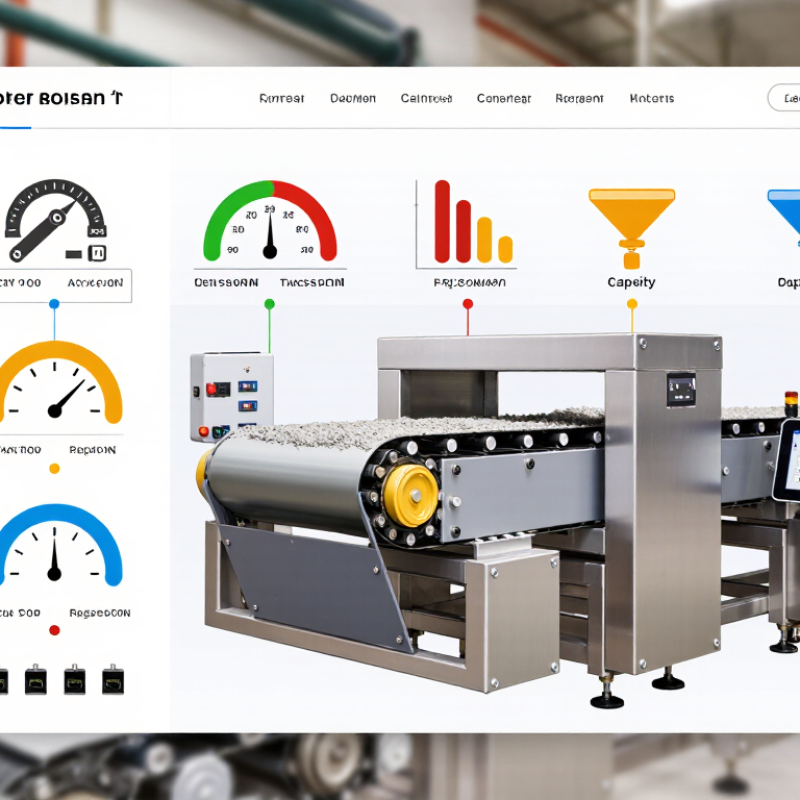
A weigh feeder measures and controls the continuous flow of bulk solids, such as grain, powder, or small pellets. A belt carries material across load cells, which sense its weight over a measured section. The feeder combines that reading with belt speed to calculate the mass delivered per hour. Operators can then adjust the feed rate to match a process target. Small changes matter.
In practice, readings depend on more than the scale. Uneven material depth, belt tension, vibration, and buildup can all affect measurement. A powder may flow smoothly one minute, then form a bridge above the outlet. The feeder cannot correct a blockage by weighing harder. It can, however, reveal a falling feed rate and provide a control signal for upstream equipment. Still, no setup is perfect; real materials can behave differently from test samples.
Tips: Keep the belt clean and check zero readings before operation. Calibrate with the material and rate you actually use, where practical. Watch for drift after maintenance or a change in bulk density. A steady display is useful, but it does not always prove that material is moving evenly.
2026 Top Weigh Feeder Manufacturers for Global Buyers — What Weigh Feeders Do: Measuring Continuous Bulk-Solids Flow
Weigh feeders regulate the flow of bulk solids and measure the quantity delivered over time. The table below compares common feeder configurations and practical selection considerations; suitability depends on the material, process conditions, and required accuracy.
| Feeder Configuration | How Flow Is Measured | Common Materials and Uses | Key Selection Considerations | Buyer Verification Points |
|---|---|---|---|---|
| Continuous belt weigh feeder | Load cells measure the material load on a section of belt, while a speed sensor measures belt velocity. Mass flow = belt load per unit length × belt speed. | Suitable for many free-flowing or moderately cohesive bulk solids, including aggregates, grains, and powders, when material can be conveyed on a belt. | Check belt loading, material distribution, dust containment, belt tracking, and whether the installation allows stable weighing. | Ask how the system is calibrated and zeroed, how belt speed is monitored, and how buildup or belt wear may affect measurement. |
| Loss-in-weight feeder | Load cells measure the weight of the feeder and its supply hopper over time. Mass flow = weight loss ÷ elapsed time. The controller adjusts the feeding device to maintain the set rate. | Commonly used for powders, pellets, granules, and ingredients requiring controlled dosing in continuous processes. | Consider refill frequency, hopper size, material flow behavior, vibration, and whether the process can accommodate brief refill cycles. | Confirm the stated operating range for the actual material, refill strategy, load-cell protection, and calibration procedure. |
| Weigh screw feeder | A screw moves material from a hopper; weighing components and drive data are used by the control system to regulate and monitor feed, depending on the design. | Often selected for powders and fine solids that need enclosed handling or controlled discharge from a hopper. | Review screw geometry, material flowability, risk of bridging or buildup, cleanability, and the suitability of the inlet arrangement. | Ask whether flow is measured gravimetrically or inferred from another signal, and request performance details for the specific material. |
| Weigh belt with integrated control | Combines belt weighing and speed measurement with a controller that adjusts belt speed to meet a target mass-flow rate. | Used where continuous conveying and controlled feeding are both required, such as batching, blending, and process feed systems. | Assess required turndown, response to changing material load, integration with upstream and downstream equipment, and access for maintenance. | Verify the control mode, signal interfaces, operating conditions, and acceptance-test method for the complete installed system. |
| Volumetric feeder (comparison) | Controls a volume per unit time using a device such as a screw or rotary mechanism. It does not directly measure mass flow unless combined with a weighing system. | May suit applications where bulk density is sufficiently consistent and mass-flow measurement is not required. | Bulk density, particle size, and material condition can change the relationship between volume and mass. | Confirm whether the process requires measured mass flow; do not treat a volumetric rate as a direct mass-flow reading. |