Top 10 Ultrasonic Cell Disruptors for Global Buyers
Choosing an Ultrasonic Cell Disruptor is not just a matter of comparing power ratings. A unit that performs well with small, chilled samples may struggle with larger volumes or heat-sensitive materials. Probe diameter, amplitude control, pulse settings, and vessel size all affect results. Small details matter.
This guide to the Top 10 Ultrasonic Cell Disruptors for Global Buyers offers a practical starting point for comparing equipment. It considers processing capacity, usability, temperature management, build quality, service, and the availability of replacement probes. These factors can matter as much as headline wattage, especially when a laboratory needs repeatable workflows and reliable support. Buyers should also check electrical compatibility, documentation, warranty terms, and local access to service before ordering.
No single model fits every lab. A compact benchtop instrument may suit occasional, low-volume work, while a higher-capacity system can better support demanding routines. Even then, published specifications do not guarantee identical results across sample types. A careful test with representative material is often more useful than a polished product sheet. That takes time.
The ranking is intended to clarify trade-offs, not replace technical evaluation. Some comparisons remain imperfect because manufacturers report specifications differently, and real performance depends on setup and operating conditions. Treat the list as a shortlist, then confirm key details directly with suppliers. The best choice is the one your team can operate consistently, maintain confidently, and justify with evidence.
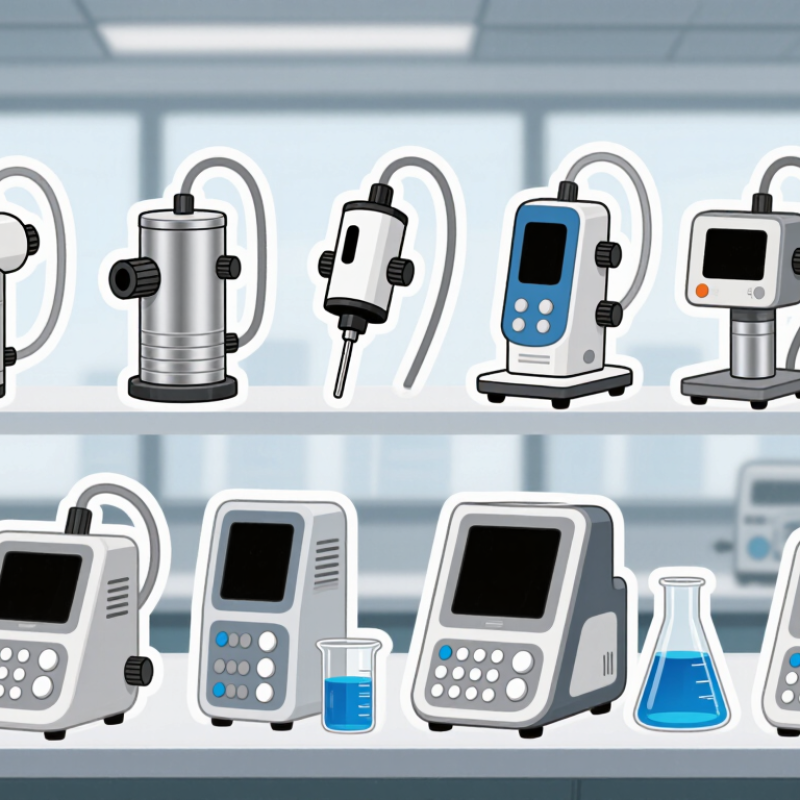
Ultrasonic Cell Disruption Basics: Cavitation at Common 20 kHz Frequencies
At common 20 kHz frequencies, an ultrasonic probe sends rapid pressure waves through liquid. These waves form tiny bubbles during low-pressure cycles. When the bubbles collapse, they create localized shear, heat, and small fluid jets. That is cavitation. It can disrupt cells and release intracellular material. Small bubbles, big effects.
The result depends on more than frequency. Probe diameter, amplitude, sample volume, viscosity, and vessel shape all matter. For a thick suspension, energy may not spread evenly. A suitable probe and vessel help reduce dead zones. Use short pulses and cooling when heat-sensitive compounds are present; check sample temperature rather than assuming it stays cool. A specification sheet cannot predict every sample. That assumption can fail.
For practical selection, match the instrument’s working range to the volume and material you process. Keep the probe immersed without touching the vessel wall or bottom. Listen for uneven operation, and inspect the tip for wear. Record settings and sample conditions between runs. Results may still vary, so test a small portion before scaling up.
Comparison Criteria for 10 Models: Power, Amplitude, and Sample Volume
When comparing ten ultrasonic cell disruptors, rated power is only a starting point. IEC 61161:2013 describes radiation-force-balance methods for measuring ultrasonic power; a model’s electrical rating alone does not confirm acoustic energy reaching the sample. That matters. Compare power alongside amplitude, probe diameter, and duty cycle, then check whether the supplier reports measured output or nominal input.
Amplitude describes probe-tip movement, not watts. Two units with similar power ratings may produce different cavitation patterns because probe geometry and sample volume differ. For a simple comparison, 100 watts delivered acoustically for 60 seconds into 10 milliliters equals a theoretical 600 joules per milliliter. It is a useful estimate, not a measured dose: heat loss and vessel geometry change the result. A small caveat.
Sample volume should match the working range, not merely the maximum capacity. A narrow probe may suit a few milliliters, while larger batches may need a broader probe and longer processing. For each of the ten models, record minimum and maximum volume, amplitude control, and cooling options. I still find volume claims easy to misread; ask whether they refer to one continuous batch or several short pulses. Keep the comparison grounded in your actual tube, viscosity, and temperature limit.
Top 10 Ultrasonic Cell Disruptors for Global Buyers — Comparison Criteria for 10 Models: Power, Amplitude, and Sample Volume
Comparison note: These are indicative ranges for common ultrasonic probe-disruptor configurations, not verified specifications for individual products. Suitable volume and achievable tip amplitude depend on the probe diameter, vessel geometry, sample properties, duty cycle, and heat-control method. Confirm the manufacturer’s specifications and recommended operating limits before purchase.
Top 10 Ultrasonic Cell Disruptors Across 100–1500 W Output Classes
Ultrasonic cell disruptors span a wide 100–1500 W output range, but higher wattage does not automatically mean better results. A 100 W unit may suit small, chilled samples in narrow tubes. Around 500 W, systems can handle larger batches, provided the probe and vessel are properly matched. At 1500 W, the equipment may support demanding workloads, yet heat control and noise become harder to ignore.
Compare more than the power label. Check adjustable amplitude, pulse timing, probe diameter, and the manufacturer’s recommended sample volume. A thin probe can focus energy in a small vessel; a larger probe may distribute it across a broader sample. Keep the vessel centered, leave room for the probe tip, and watch for foaming or a rapid temperature rise. Small details matter.
Cooling capacity matters. So does cleaning access. A pulsed cycle can reduce heat buildup, though it may extend processing time. For sensitive samples, use an ice bath and record temperature between runs. Test a small batch before scaling up; published power ratings alone cannot predict disruption efficiency. That is easy to overlook. Buyers should also check whether the unit’s duty cycle fits their routine, since continuous operation can strain equipment not designed for it. Even careful comparisons have limits: sample composition changes the energy needed, so the best setting often takes measured adjustment.
Top 10 Ultrasonic Cell Disruptor Output Classes for Global Buyers
A comparison of ten representative nominal output ratings across the 100–1500 W range.
These output values are reference points within the stated power range, not a product ranking or a list of specific models. Rated electrical output alone does not determine disruption performance; probe size, amplitude, duty cycle, sample volume, and sample properties also matter.
Applications by Scale: From Microliter Samples to Liter-Scale Batches
Scale changes the main risk. In 50–500 microliter samples, a narrow probe can overheat the tube bottom or foam a precious lysate. Use short pulses, keep the tip immersed, and record sample temperature. Small is not simple. At this scale, small differences in immersion depth can change cavitation and reproducibility.
For milliliter batches, probe diameter and vessel geometry matter more than rated watts alone. Track delivered energy per volume, in joules per milliliter, alongside temperature and processing time. Chemat and colleagues’ review in Ultrasonics Sonochemistry (2017, volume 34, pages 540–560) describes ultrasound processing as dependent on operating conditions and the treated material, not power settings alone. That is a useful caution: two samples can respond differently to the same nominal setting.
Liter-scale batches need uniform exposure, cooling, and a plan for moving fluid through the active zone. Recirculation or flow-through setups can reduce untreated pockets, but may add shear and heat. Power ultrasound commonly operates around 20–100 kHz, though the best setting depends on the cells and vessel. Heat wins fast. Validate disruption by measuring soluble protein or another relevant endpoint; visual cloudiness is a weak proxy. Some protocols still rely on fixed run times, which is convenient but deserves scrutiny.
Global Buyer Checks: IEC 61010-1 Safety and 100–240 V Compatibility
For global buyers comparing the top 10 ultrasonic cell disruptors, electrical safety deserves the same attention as power and probe performance. Check whether the exact model is documented against IEC 61010-1, a safety standard for electrical laboratory equipment. Do not assume that a supplier’s general statement covers every configuration. Ask for model-specific documentation and confirm that the rated accessories match the unit.
A 100–240 V input range can support use on many electrical grids, but it is not the whole story. Read the rating plate for frequency, current, and any operating limits. A plug adapter changes the plug shape; it does not correct an incompatible voltage. Small detail. Big consequence. Also confirm the supplied cord, grounding arrangement, and local socket are suitable before powering the instrument.
When screening ten candidates, compare their manuals and safety records side by side. Look for clear instructions on probe installation, sample-vessel placement, and ventilation. Keep a practical check in mind: a unit may accept 230 V yet still need a different cord or frequency confirmation. That detail is easy to miss. Buyers sometimes focus on headline specifications and overlook the label on the rear panel; a careful second look is worthwhile.