










JHY PCB Blog Hub
Your Source for Expert PCB Design, Manufacturing, and Assembly Insights – Stay Informed with 2025 Trends!
Top Polyolefin Heat Shrink Sleeve Manufacturers?
Choosing among the top Polyolefin Heat Shrink Sleeve manufacturers requires more than comparing prices or polished catalogs. Reliable suppliers demonstrate practical experience, consistent production, and clear technical documentation. Their sleeves should show stable shrink performance, uniform wall thickness, clean surfaces, and dependable recovery around cables, tubes, or packaged components.
Details matter. A strong manufacturer explains shrink ratios, operating temperatures, color options, flame-retardant grades, and available diameters. Test reports should identify methods, sample conditions, and production batches. Traceability is equally important. It helps buyers connect a finished sleeve to its raw materials, inspection records, and shipment date. Quality systems, including documented process controls and recognized certifications, can provide useful evidence of professionalism. Still, certification alone proves little.
Ask practical questions.
Can the supplier maintain tight dimensional tolerances? Can it provide samples from regular production rather than laboratory stock? Does its technical team understand installation speed, uneven substrates, and heat exposure near sensitive components? These answers often reveal more than a sales presentation. Experienced manufacturers may also recommend suitable shrink temperatures and warn against overheating, surface contamination, or excessive tension during installation.
No manufacturer is perfect. Some catalogs simplify performance claims, while some buyers overlook storage conditions and application limits. That is worth remembering. This guide compares leading manufacturers through product consistency, engineering support, customization, testing transparency, delivery reliability, and customer feedback. The aim is not to name the loudest brand, but to identify suppliers that can perform steadily in real production environments. Evidence should guide the decision, and unanswered questions should remain visible.
What Are Polyolefin Heat Shrink Sleeves?
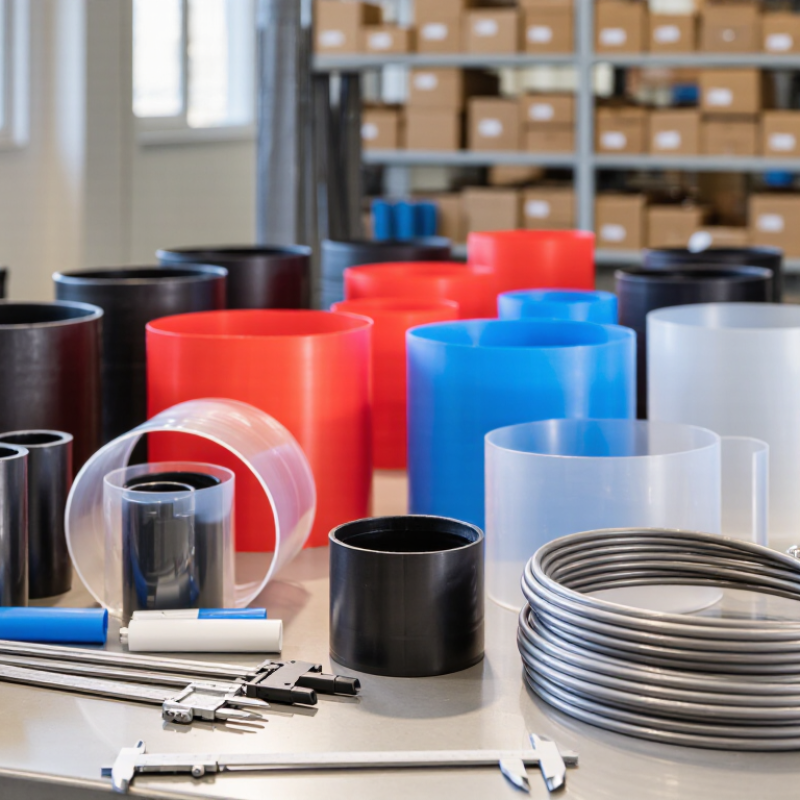
Polyolefin heat shrink sleeves are flexible thermoplastic films or tubes that contract when heated. They wrap tightly around wires, cables, connectors, or packaged items. Their main purpose is protection, insulation, bundling, and clear identification. Most sleeves are cross-linked for better strength and dimensional stability. Common shrink ratios include 2:1 and 3:1, helping one sleeve fit different diameters.
During installation, the sleeve should slide freely over the target area before heating. A controlled heat source then activates the material and creates a close, even fit. Avoid direct flames. They can scorch the surface and weaken the seal. In cable work, a properly fitted sleeve reduces abrasion, moisture exposure, and accidental movement. It also leaves a cleaner finish than ordinary tape.
Tips
Measure the largest diameter first. Check the recovered diameter, length, and temperature range on the technical sheet. Keep the heat moving, especially near connectors. Uneven heating can cause wrinkles or trapped air. Do not assume a thicker sleeve is always stronger. Some applications need flexibility more than maximum wall thickness. Material selection also depends on chemicals, outdoor exposure, and mechanical stress. A sleeve may look secure but still fail if the substrate is dirty or sharply edged. That detail is easy to overlook.
How Polyolefin Heat Shrink Sleeves Are Manufactured
Polyolefin heat shrink sleeves begin with carefully selected polyolefin resin, colorants, and performance additives. Manufacturers blend these materials in controlled proportions before melting them inside an extruder. The molten polymer passes through a precision die, forming a continuous tube or flat film. Wall thickness matters greatly here. Even a small variation can create uneven shrinkage later.
The extruded material is cooled, inspected, and crosslinked, often through controlled electron-beam treatment. Crosslinking gives the polymer memory, allowing it to return toward its original size when heated. The crosslinked tube then enters an expansion line. Heat softens the material, mechanical tooling enlarges it, and cooling fixes the expanded dimensions. It looks simple, but timing is critical. Too much heat can weaken the sleeve.
Quality technicians measure diameter, wall thickness, shrink ratio, tensile strength, and recovery temperature from sampled batches. They may also check surface clarity, color consistency, and resistance to oils or moisture. Production records should connect every roll with its resin lot and processing conditions. That traceability supports dependable technical decisions. Still, no manufacturing line is perfect. Dust, unstable tension, or a poorly calibrated sensor can affect performance. Experienced operators review unusual readings instead of hiding them, then adjust the process and document what changed.
What to Look for in a Reliable Manufacturer
A reliable polyolefin heat shrink sleeve manufacturer must prove performance, not just quote a low price. Grand View Research valued the global shrink films market at about USD 12 billion in 2023. Its forecast also indicates steady growth through 2030. This pressure increases the risk of rushed production and inconsistent film quality. Ask for resin specifications, gauge tolerances, shrink curves, and recent batch records. Small differences matter. A sleeve that shrinks unevenly can wrinkle around corners or expose the package.
Testing should follow recognized methods, including ASTM and ISO procedures where applicable. Request data for shrink percentage, tensile strength, seal strength, coefficient of friction, and optical clarity. A useful supplier should provide samples from several production lots. One sample is not enough. Production capability matters too. Check extrusion capacity, printing control, inspection equipment, and backup systems. Traceability should reach the resin lot and production date. PMMI industry research continues to identify labor efficiency and automation as major packaging investment drivers, so manufacturers should also explain how they control process variation.
Communication is another reliability test. Can the technical team discuss tunnel temperature, dwell time, and film tension without vague promises? Can it support trial runs at your actual line speed? Lead times should be documented, not casually estimated. A low-cost offer still tempts buyers. It should not. I would also review complaints, corrective-action records, and audit results. Even experienced suppliers make mistakes; their response reveals more than a polished brochure.
Top Polyolefin Heat Shrink Sleeve Manufacturers? - What to Look for in a Reliable Manufacturer
| Evaluation Dimension | Reliable Manufacturer Benchmark | Why It Matters | Recommended Verification |
|---|---|---|---|
| Base Material | Cross-linked polyolefin, normally polyethylene-based, with documented formulation and batch traceability. | The polymer system affects shrink performance, flexibility, chemical resistance, insulation, and service life. | Request the technical data sheet, material declaration, and lot-traceability procedure. |
| Available Shrink Ratios | Common options include 2:1 and 3:1; higher ratios such as 4:1 may be available for irregular shapes. | A suitable ratio allows the sleeve to fit over the installation area and recover tightly around the smallest section. | Compare recovered wall thickness, minimum supplied diameter, and minimum recovered diameter. |
| Operating Temperature | Many cross-linked polyolefin products are designed for approximately -55°C to 135°C, subject to the specific grade. | The temperature range indicates whether the sleeve can withstand the expected installation and service environment. | Check the published continuous-use temperature range and test it under the actual thermal cycle. |
| Shrink Temperature | Typical shrink initiation is around 70°C to 90°C, with complete recovery commonly requiring approximately 90°C to 120°C. | Controlled shrink temperature helps prevent substrate damage and supports consistent installation. | Request installation instructions and evaluate recovery using the intended heat source. |
| Wall Thickness | Thin-wall, medium-wall, and heavy-wall constructions should be available for different insulation and mechanical-protection requirements. | Wall thickness influences dielectric strength, abrasion resistance, flexibility, and recovered dimensions. | Review nominal and recovered wall thickness values before and after shrinking. |
| Electrical Performance | The product should provide published dielectric strength, insulation resistance, and volume resistivity values where electrical insulation is required. | Verified electrical properties reduce the risk of leakage, short circuits, and insulation breakdown. | Ask for test results based on recognized methods such as ASTM D149 or equivalent electrical standards. |
| Flame Retardancy | Flame-retardant grades may be available with testing to requirements such as UL 224, including VW-1 when specifically qualified. | Flame performance is important in transportation, electrical, industrial, and enclosed equipment applications. | Verify the exact product grade, test report, and applicable end-use approval rather than relying on general claims. |
| Chemical and Environmental Resistance | The sleeve should have documented resistance to moisture, oils, fuels, cleaning agents, and common industrial chemicals relevant to the application. | Chemical exposure can cause swelling, embrittlement, cracking, or loss of insulation performance. | Request immersion or compatibility data using the actual chemicals, temperatures, and exposure durations. |
| Dimensional Control | Consistent inner diameter, wall thickness, shrink ratio, ovality, and cut length should be controlled through documented inspection procedures. | Tight dimensional control improves assembly fit and reduces installation defects. | Request dimensional inspection records, sampling plans, and sample pieces from multiple production lots. |
| Color and Identification | Standard colors commonly include black, red, blue, yellow, green, white, and clear, with custom colors subject to volume and color-matching capability. | Color coding can support polarity identification, cable organization, inspection, and product appearance. | Confirm color tolerance, fade resistance, minimum order quantities, and sample approval procedures. |
| Adhesive-Lined Options | Reliable suppliers should distinguish standard polyolefin sleeves from adhesive-lined versions designed for sealing and environmental protection. | The adhesive layer can improve moisture sealing and strain relief but may affect processing temperature and reworkability. | Review adhesive melt temperature, sealing range, compatibility, and post-installation inspection requirements. |
| Quality Management | A documented quality system, commonly aligned with ISO 9001 principles, should cover incoming materials, production, testing, nonconformance, and corrective action. | A controlled quality system improves repeatability and provides evidence when problems occur. | Request current certification, audit scope, certificates of analysis, and corrective-action records when appropriate. |
| Testing and Compliance Documentation | Technical data sheets, safety data sheets, regulatory declarations, and test reports should be available for the exact product specification. | Complete documentation supports engineering approval, compliance reviews, and supplier comparison. | Check revision dates, test conditions, sample descriptions, and whether reports apply to the supplied grade. |
| Production Capacity and Lead Time | The manufacturer should provide realistic standard and custom-order lead times, minimum order quantities, and capacity information. | Stable supply is essential when sleeves are used in recurring production or time-sensitive projects. | Confirm capacity with a written production schedule, safety-stock options, and an agreed replenishment plan. |
| Technical Support | The supplier should assist with diameter selection, shrink calculations, heat-tool settings, installation procedures, and failure analysis. | Technical guidance reduces incorrect sizing, overheating, incomplete recovery, and field failures. | Evaluate response time, sample support, installation guides, and the quality of engineering recommendations. |
Top Polyolefin Heat Shrink Sleeve Manufacturers
Top Polyolefin Heat Shrink Sleeve Manufacturers?
Top polyolefin heat shrink sleeve manufacturers compete through consistency, not attractive catalogs. Grand View Research estimates the global heat shrink tubing market will grow at about 6% annually through 2030. That growth reflects rising demand from electrical, automotive, and industrial assembly. However, market expansion does not guarantee reliable production. A strong manufacturer should control wall thickness, shrink ratio, color stability, and surface finish across every batch. These details matter when a sleeve must fit a warm cable joint without wrinkles or exposed edges.
Testing reveals more than sales language. Look for documented tests covering tensile strength, elongation, dielectric performance, flame behavior, and longitudinal shrinkage. A 2:1 sleeve may suit simple connections, while a 3:1 design handles wider dimensional variation. Smithers’ packaging research also highlights the continuing importance of lightweight polymer solutions and downgauging, but thinner material can reduce handling tolerance. That trade-off deserves honest discussion. Ask manufacturers for production samples, lot traceability, aging results, and certificates from independent laboratories. Check the sleeve after heating: it should recover evenly, remain smooth, and resist cracking around sharp transitions. Small defects become expensive failures. In my experience, supplier audits often reveal more than technical brochures. Still, audits can miss seasonal process drift, so repeated sampling is wiser than one impressive visit.
How to Select the Best Manufacturer for Your Application
Top Polyolefin Heat Shrink Sleeve Manufacturers?
Selecting the right manufacturer starts with your application, not a sales brochure. Define the sleeve’s shrink ratio, recovery temperature, wall thickness, and operating environment. A reliable supplier should explain how its material performs around sharp corners, moisture, oils, and repeated handling. Ask for technical data, batch traceability, and samples from current production. These details reveal process discipline. They also reduce unpleasant surprises during installation.
Tips: Request sleeves in your actual diameter range. Test them on real components, not smooth laboratory tubes. Check print adhesion, color consistency, sealing behavior, and recovery after heating. Clear communication matters. A fast reply is useful, but a precise reply is better.
Evaluate the manufacturer’s testing system and production controls. Confirm dimensional tolerances, shrink performance, tensile strength, and aging results. If your application requires flame resistance or specific compliance documentation, request verifiable records before approval. Experienced manufacturers will discuss tooling limits, minimum order quantities, and realistic lead times openly. Be cautious when every answer sounds perfect. No supplier fits every application, and initial samples may not represent long-term production quality. A pilot run, followed by inspection after installation, often exposes issues that specifications miss.
Top Polyolefin Heat Shrink Sleeve Manufacturers: How to Select the Best Manufacturer for Your Application
When comparing manufacturers, verify that the sleeve’s continuous operating-temperature range matches the application. Typical polyolefin products operate from approximately −55°C to 125°C, while specialized high-temperature formulations can reach about 135°C to 150°C. Also confirm shrink ratio, recovery temperature, longitudinal shrinkage, flame-retardancy requirements, dimensional tolerances, and applicable certifications.
The ranges shown are representative engineering values commonly published for polyolefin heat-shrink materials. Actual performance depends on the formulation, wall thickness, irradiation level, and test method.


