Top Level 3 DC Fast Charging Station Manufacturers in China
China has become a central force in the global fast-charging supply chain. The International Energy Agency’s Global EV Outlook 2024 reports that public charging points worldwide exceeded four million in 2023. Fast-charger numbers grew by 55% that year, and China accounted for roughly 85% of the global fast-charging stock. These figures explain why buyers increasingly compare Chinese manufacturers for a Level 3 DC fast charging station. The label “Level 3” is common in North America; connector and grid requirements still vary by destination.
The pressure is visible. IEA Executive Director Fatih Birol described the wider EV shift this way: “The growth of electric cars is unstoppable.” More electric vehicles mean greater demand for reliable charging, not just higher advertised power. For this manufacturer overview, practical comparisons should consider output range, thermal management, connector options, communications protocols, field-service coverage, and documented testing. A cabinet rated for high power looks impressive; uptime and repair access matter just as much at a busy depot. Buyers should also confirm whether performance figures apply continuously or only under specific conditions. That detail is easy to miss.
No single factory is right for every project. A credible shortlist weighs product evidence, export experience, customization capacity, and after-sales support against the site’s actual needs. The rankings should therefore be treated as a starting point, not a substitute for technical due diligence. Chinese suppliers are not interchangeable, and a polished specification sheet does not prove long-term reliability.
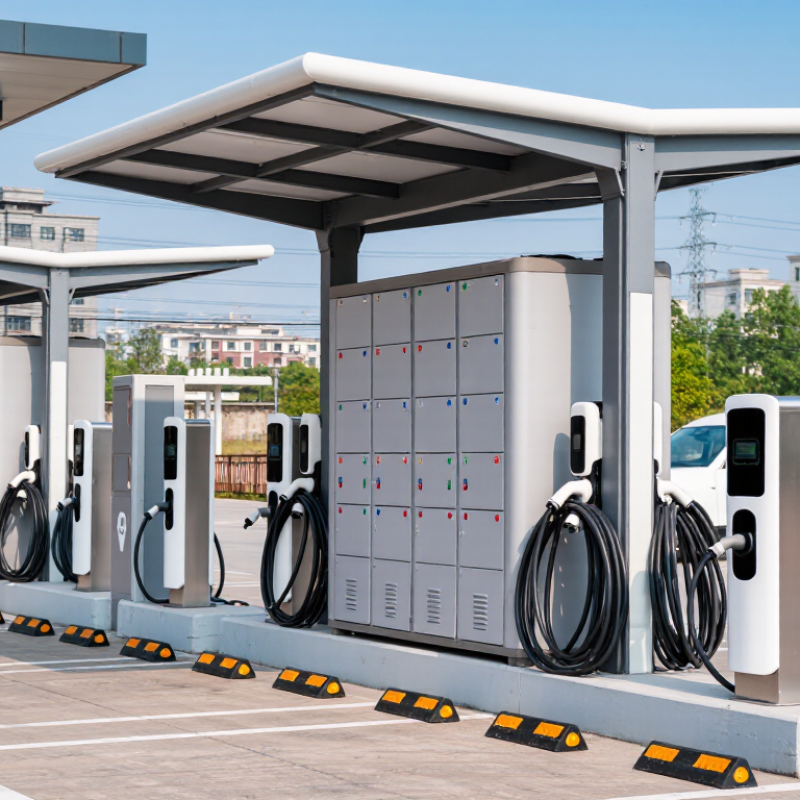
Defining Level 3 DC Fast Charging and China’s GB/T 20234.3 Connector Standard
“Level 3” is a common market term for rapid DC charging, not a precise rating shared worldwide. With DC charging, the station converts grid power and supplies direct current to the vehicle’s battery system. This can bypass the car’s onboard AC charger. Charging speed still depends on the vehicle, battery temperature, state of charge, and available site power. The label can mislead.
In China, GB/T 20234.3 specifies the physical DC charging connection and related interface requirements. Its plug and vehicle inlet support high-current transfer, with separate contacts for protective grounding, control, and communication. The connector alone does not ensure compatibility. The charger and vehicle must also complete communication and safety checks, commonly governed by the GB/T 27930 protocol. Fit matters. Contact condition matters, too.
When comparing stations, check rated voltage and current against the vehicle’s accepted range. Ask how the unit manages cable temperature, insulation faults, and connector locking. A thick cable may feel reassuring, yet become awkward to handle in winter. Site wiring and transformer capacity can also limit output, even when a station’s nameplate rating looks impressive. Published peak power is not a promise of constant power; actual charging curves vary.
GB/T 20234.3: Theoretical Power at 250 A
The chart calculates voltage × current using a 250 A current rating and illustrative voltage points up to the 1,000 V DC rating associated with GB/T 20234.3. These figures are theoretical calculations, not guaranteed charging-station output; actual power depends on the vehicle, station, and operating conditions.
China’s Charging Network: 3.6 Million Public Charging Points by 2024
China’s public charging network reached about 3.6 million charging points by 2024, reflecting rapid expansion across cities, highways, and residential areas. The figure includes different charger types, not just high-power equipment. A public charging point is also not the same as a complete charging station. That distinction matters.
For drivers, growth is most visible at highway service areas, where several vehicles may charge during a short stop. In dense urban districts, curbside units and public parking facilities add access closer to daily destinations. But the number alone cannot show whether chargers are working, easy to find, or available during peak hours. Numbers can mislead.
Level 3 DC fast chargers support quicker charging, but their performance depends on power supply, battery conditions, and equipment design. Manufacturers need to manage heat, protect electrical components, and make maintenance practical for busy sites. Operators also need clear fault reporting and spare parts, not only impressive output ratings. Small details count. A damaged cable or a screen that fails in heavy rain can turn a promising network into a frustrating stop. The network’s next challenge is not simply adding more points; it is keeping existing ones dependable across different locations.
Leading Chinese Manufacturers: Huawei, Star Charge, TELD, Sinexcel, and Injet
China’s Level 3 DC fast-charging market is shaped by manufacturers with strengths in power electronics, charging networks, and high-volume deployment. The International Energy Agency’s Global EV Outlook 2024 reports that public charging points worldwide grew by 40% in 2023, while fast chargers grew by 55%. China accounts for a major share of this expansion, raising demand for stations that can serve busy highways, urban fleets, and commercial depots. Real-world performance depends on more than peak power. Cable reach, thermal management, uptime, and clear fault reporting matter when queues form in summer heat.
Leading Chinese suppliers tend to differentiate through integrated hardware, software, and service capabilities. Some emphasize grid-connected power systems; others build large operating networks or modular chargers that simplify maintenance. For buyers, compare rated output with sustained output, and check whether remote diagnostics identify a specific module or merely report a general fault. That detail saves time.
The China Electric Vehicle Charging Infrastructure Promotion Alliance publishes monthly charging-infrastructure statistics, useful for tracking market deployment, though station counts alone do not prove reliability. A well-written specification still needs field testing.
Charger cabinets can be efficient on paper, yet awkward cable placement or slow repair response can frustrate drivers. The lesson is practical: review local service coverage, test payment and load-sharing functions, and request measured uptime data before selecting equipment.
Comparing Charger Power, Output, and Deployment Across Manufacturer Portfolios
Comparing Level 3 DC fast charging portfolios takes more than reading the peak-power label. A 120 kW unit and a 240 kW unit may serve very different sites. Check whether power is shared when two vehicles charge at once. A busy highway stop needs steady output across several stalls; a small urban hub may value compact equipment and easier installation. Details matter.
Output depends on more than the charger. Vehicle voltage, battery temperature, and state of charge all affect the power a driver actually receives. A high-rated dispenser cannot guarantee a matching charging speed. Ask for performance data under realistic conditions, including sustained output and power sharing. Look closely at connector options, cable reach, and the space needed around each unit. Small design choices can change daily usability.
Deployment also separates strong portfolios from attractive spec sheets. Modular cabinets can support staged growth, while integrated units may simplify a constrained site. Consider grid capacity, cooling needs, service access, and local installation support before comparing purchase prices. Request references from sites with similar traffic and climate. Then check how reported uptime is measured. Numbers can flatter. A clean comparison still has gaps, especially when test conditions differ. Keep those gaps visible when choosing equipment.
Top Level 3 DC Fast Charging Station Manufacturers in China - Comparing Charger Power, Output, and Deployment Across Manufacturer Portfolios | Anonymous portfolio profile | Typical rated power | DC output characteristics | Power sharing and configuration | Typical deployment fit | Relevant considerations |
| Portfolio A — compact fast charging | 60–120 kW per charger | Commonly specified for a broad vehicle-battery voltage range; output voltage and current vary by model and operating conditions. | Often configured with one or two charging connectors. When two vehicles charge together, available power may be shared. | Urban public charging, retail locations, fleet depots, and sites with moderate daily utilization. | Check continuous output current, connector rating, cable cooling, and whether the rated power is available to one vehicle or shared. |
| Portfolio B — high-power charging | 120–240 kW per charger | Output is controlled to match vehicle battery voltage and charging limits; maximum current is model-specific. | May use integrated dual connectors or distributed power cabinets connected to multiple dispensers. | High-traffic public stations, intercity corridors, and commercial fleet sites requiring faster vehicle turnaround. | Actual charging speed depends on the vehicle, battery temperature, state of charge, site power capacity, and simultaneous sessions. |
| Portfolio C — high-capacity and modular systems | 240 kW and above per system; modular systems can be scaled to several hundred kilowatts | High-power output may require liquid-cooled cables or other thermal-management measures; voltage and current limits depend on the complete system. | Cabinet-and-dispenser designs can allocate power dynamically among charging bays, subject to system capacity and configuration. | Large highway hubs, logistics centers, bus or truck depots, and other sites with concentrated charging demand. | Requires careful assessment of grid connection capacity, load management, cable cooling, redundancy, and future expansion plans. |
Comparison note: These anonymized profiles summarize common DC fast-charger configuration ranges and deployment patterns; they are not specifications for named manufacturers or individual products. Confirm connector standard, certified output ratings, local grid requirements, and simultaneous-power behavior against the exact equipment datasheet and site design.
How to Evaluate Manufacturers for China’s 1.24 Million Public DC Chargers
With China’s public DC charging network cited at 1.24 million units, choosing a manufacturer takes more than comparing rated power and price. Ask for test records showing how equipment performs during sustained high-output charging, not just short laboratory runs. Heat matters. Review cooling design, connector temperature data, and power sharing when several vehicles charge at once. These details affect real sites on hot afternoons and during busy holiday periods.
A credible supplier should explain its production checks in plain terms and provide traceable inspection records. Ask how it tests insulation, protection systems, and communication with vehicle and site-management systems. Request installation references with operating data, such as uptime, fault categories, and repair times. Numbers need context: a high uptime figure means little without a clear measurement period and definition. Visit a factory if possible, and watch whether test procedures match the documents.
After-sales support deserves equal scrutiny. Confirm spare-part availability, response arrangements, software maintenance, and warranty exclusions before signing. Ask who handles a fault at a remote site, and how quickly replacement parts can arrive. Compare offers using the same duty cycle, service scope, and acceptance criteria. No checklist is perfect; I would still want evidence from a pilot installation, because a polished specification sheet cannot reveal every field problem.