Who Are the Top Home Massage Cushion Suppliers in China?
China is a major sourcing base for products ranging from compact seat cushions to full-back massage pads. Yet choosing a Home Massage Cushion supplier involves more than comparing catalog photos or quoted prices. Buyers need to understand what each company actually manufactures, how it checks product quality, and whether its capabilities fit the intended market.
This guide examines leading Chinese suppliers through practical sourcing criteria, including product range, customization options, sample availability, minimum order quantities, production capacity, and communication. Details matter. A useful sample review checks stitching, fabric feel, control-button placement, motor noise, and how the cushion performs during a realistic session. Buyers should also request clear product specifications and supporting documentation rather than relying on broad marketing claims.
No supplier is perfect. Some may offer flexible designs but limited production scale; others may handle volume well while providing fewer customization choices. That trade-off deserves attention. Supplier rankings can also shift as product lines, quality systems, and service teams change, so independent verification remains important. Ask specific questions, compare written quotations, and clarify inspection steps and after-sales responsibilities before placing an order. The following overview offers a grounded starting point for evaluating China’s home massage cushion suppliers, not a substitute for checking each candidate directly.
What Is a Home Massage Cushion and How Is It Used?
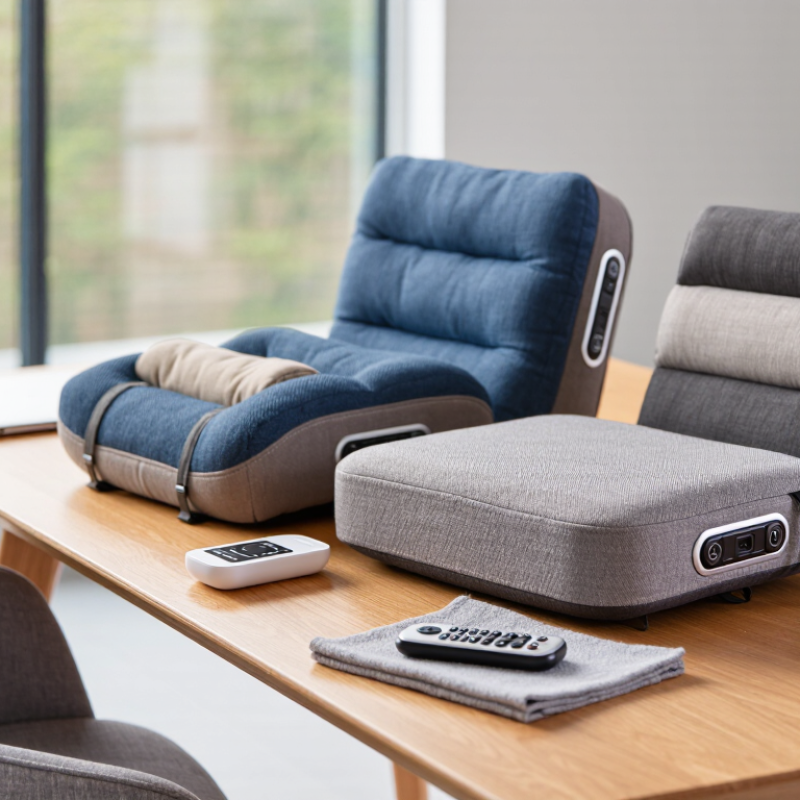
A home massage cushion is a portable device that rests against a chair back or seat. Many models use moving nodes, vibration, or gentle heat to create a massage-like sensation. The exact feel depends on the design and the chair beneath it. Some cushions target the upper back, while others reach the lower back or thighs. It is not the same as hands-on treatment.
Use it on a stable chair, and check that its straps or base keep it from sliding. Sit back slowly. Start with a low setting and a short session, following the product instructions. Notice whether the pressure feels comfortable; strong pressure is not automatically better. Keep clothing smooth to reduce rubbing, and avoid placing the cushion over bare skin if the surface feels hot. Small details matter.
A cushion may help someone unwind after desk work, but it cannot diagnose or treat an injury. Stop if you feel pain, numbness, or unusual discomfort. People with ongoing health concerns, reduced skin sensation, or pregnancy should ask a qualified health professional before use. The chair fit is not always perfect. That part is easy to overlook. Check the cushion’s size, controls, and cleaning instructions before making it part of a daily routine.
How Is China’s Home Massage Cushion Supply Market Structured?
China’s home massage cushion supply market is usually organized around component makers, product developers, assemblers, and export-oriented trading firms. Some suppliers control several stages; others purchase motors, control boards, fabric, and foam from separate factories. The arrangement can lower costs, but it may also make responsibility less clear when a product needs adjustment. Not always.
Manufacturing clusters in coastal provinces support access to electronics, textiles, packaging, and shipping services. A cushion’s quality depends on practical details: motor noise, pressure consistency, seam strength, controller response, and how securely the unit fits a chair. Ask suppliers for model-specific specifications and sample units, rather than relying only on catalog photos. That matters.
Factories focused on original design and manufacturing may adapt dimensions or functions, while trading firms can offer a wider selection and simpler communication. Neither structure guarantees better quality. Production capacity, inspection routines, and after-sales processes vary considerably, even among suppliers with similar product descriptions. Specifications can also change between samples and bulk orders, an inconvenient reality worth checking. Buyers should compare test records, material details, packaging samples, and written production requirements before judging a supplier’s suitability.
Which Suppliers Are Notable in China’s Home Massage Cushion Sector?
China’s notable home massage cushion suppliers are often specialist manufacturers, rather than general gift-product traders. Some focus on compact seat cushions for sofas and office chairs. Others offer broader OEM or ODM production, including adjustable massage modes, warming zones, and removable fabric covers. Their catalogs may look similar. Production details tell a clearer story.
Ask how suppliers control motor noise, stitching, foam density, and temperature consistency. Request a sample and run it through repeated sessions. Feel for pressure points; listen for rattling. Small checks matter. Export experience can help with packaging and communication, but it does not guarantee dependable quality. Verify factory capabilities, inspection procedures, and any claimed certifications directly. A supplier’s answers should be specific, not just reassuring.
Comparisons can be imperfect. A quiet sample may not represent every production batch, and a polished product sheet can hide design compromises. Ask for clear specifications, written warranty terms, and evidence of batch testing. It is also useful to discuss replacement parts and lead times before ordering. These practical conversations help distinguish capable cushion makers from suppliers relying mainly on attractive photos.
What Products and Manufacturing Capabilities Do These Suppliers Offer?
Chinese home massage-cushion suppliers typically offer several formats: seat-back cushions, compact neck-and-shoulder units, and portable pads. Common options include rotating shiatsu nodes, gentle heat, vibration, adjustable straps, and washable covers. Some factories can tailor node layouts, fabric, controls, and packaging to buyer specifications. Details matter. A sample should be checked for pressure, noise, and comfort across different body shapes.
Manufacturing capabilities may include fabric cutting and sewing, plastic-housing production, motor and circuit-board assembly, and final product testing. Ask whether each process happens in-house or through subcontractors. Request documented checks for operating temperature, electrical performance, and repeated-use durability. A polished sample is useful, but it does not prove consistent production. Not quite enough.
Grand View Research estimated the global massage equipment market at USD 7.4 billion in 2023, with projected annual growth of 8.2% from 2024 to 2030. This broad category includes products beyond cushions, so it should not be read as a cushion-market figure. For supplier comparisons, review product specifications, production capacity, inspection records, and sample results together. Some details remain easy to overlook, especially how a cushion feels after twenty minutes of use.
Product and Manufacturing Overview
These bars identify common home massage cushion product categories; they do not represent supplier counts, market share, or a ranking. Chinese manufacturers may offer OEM/ODM customization, product assembly, sewing, and electrical testing. Specific products and factory capabilities vary, so confirm them directly with each supplier.
How Can Buyers Evaluate and Select a Chinese Supplier?
When evaluating Chinese home massage cushion suppliers, inspect the factory process, not just a polished catalogue. Ask for a recent audit, production-flow records, and batch-level traceability. The ISO Survey 2023 counted more than 1.4 million ISO 9001 certificates worldwide. That scale makes certification a useful screening clue, not proof that one factory controls cushion quality. Ask to see current certificates and confirm the issuing body and scope.
Request test reports for the exact model, including checks for heat, electrical safety, motor noise, and repeated-use durability. IEC 60335-2-32 covers safety requirements for massage appliances; buyers should confirm which standards apply in their destination market. Watch a sample run: Does the cushion stay stable on a chair? Do controls remain clear after repeated use? Small details matter. Compare component lists, warranty terms, spare-part availability, and defect-handling procedures in writing. I would still test production samples independently; paperwork can miss a loose cable or uneven heating. It takes time. Ask the supplier to explain any failed test and show corrective-action records, not just promise a better batch.