Top 10 Grab Hook Manufacturers for Global Buyers
Choosing a reliable Grab Hook manufacturer requires more than comparing prices or browsing polished product catalogs. Global buyers need dependable components for chain assemblies, load securing, forestry equipment, and other demanding applications. A Grab Hook must match the intended chain size, working load limit, material specification, and operating environment. Small details matter. The hook throat, weld quality, heat treatment, and surface finish can influence daily performance.
This guide examines ten Grab Hook manufacturers serving international customers. It focuses on practical evidence, including factory experience, quality-control systems, product testing, traceability, export capability, and communication standards. Relevant documents may include material certificates, dimensional inspection reports, batch records, and load-testing results. Buyers should also review applicable safety requirements in their destination markets. Compliance is not a marketing phrase. It needs supporting documentation.
A strong supplier should explain its steel grade, manufacturing process, inspection points, and working load limits clearly. It should also provide realistic lead times, packaging details, minimum order quantities, and replacement support. Factory audits and sample evaluations can reveal issues that websites often hide. A sample may look excellent, yet production consistency remains uncertain. That is an important limitation.
No ranking can suit every buyer. One manufacturer may offer better customization, while another provides faster delivery or stronger regional support. Therefore, this selection is intended as a practical starting point, not a final purchasing decision. Compare specifications carefully. Ask precise questions. Keep safety at the center.
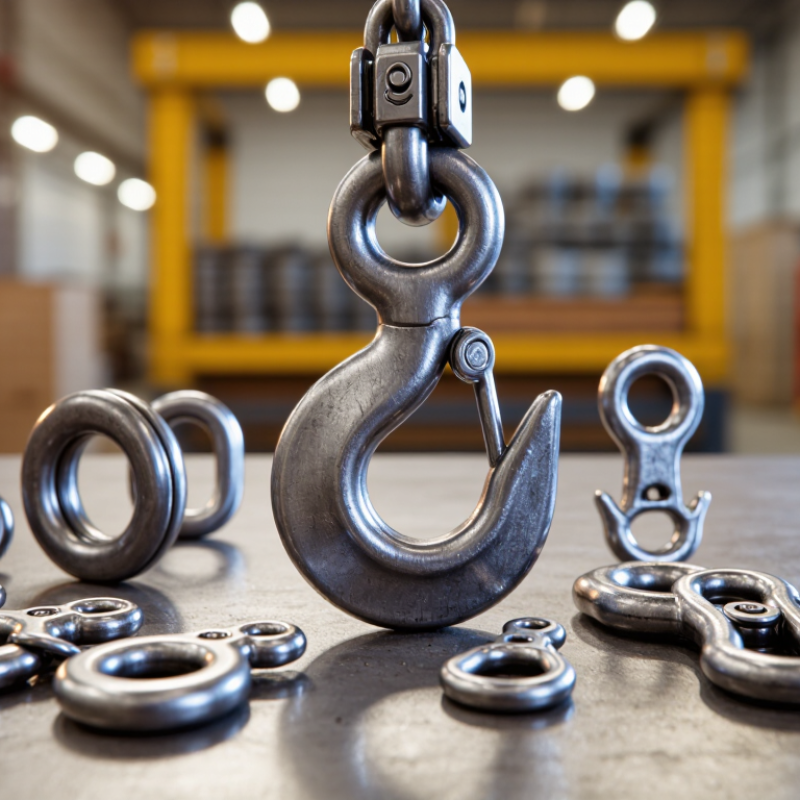
What Grab Hooks Are and How They Support Lifting and Rigging Work
Grab hooks are forged lifting components designed to shorten, position, or secure chain during rigging work. Their narrow throat captures a selected chain link without requiring a full connection through the link. A clevis-style hook usually connects directly to compatible chain, while an eye-style hook attaches with a connector. The working load limit, chain grade, hook size, and connection method must match. A stronger-looking hook is not automatically safer.
In practical lifting, a rigger may use a grab hook to adjust sling length around a steel beam or machinery frame. The hook should seat fully in the chain link, with its load carried in the bowl, not on the tip. A safety latch can reduce accidental release, but it cannot correct side loading or poor seating. OSHA guidance requires inspecting slings and attachments before use, while applicable ASME standards provide detailed requirements for hooks and rigging hardware. These rules are useful, though field judgment still matters.
The U.S. Bureau of Labor Statistics recorded 1,032 fatal work injuries among transportation and material-moving occupations in 2023. That figure does not prove grab hooks caused those incidents. It does show why small hardware deserves serious attention. Inspect for cracks, stretched throats, bent parts, corrosion, and illegible markings. Remove damaged equipment from service. Periodic competent-person inspections should support, not replace, daily checks. In my view, product selection remains the weak point; buyers often compare price before verifying traceability, proof testing, and certified working load limits.
Key Standards and Quality Factors for Comparing Global Manufacturers
Top 10 Grab Hook Manufacturers for Global Buyers
When comparing the top ten grab hook manufacturers, buyers should rank evidence, not popularity. Grand View Research valued the global material handling equipment market at about USD 206.6 billion in 2023. That scale increases the need for dependable components. Start with material certificates, heat-treatment records, and traceable batch numbers. Each hook should match recognized requirements, such as ASME B30.10 or EN 1677, where applicable. Check working load limits, proof-test results, and markings on the hook body.
Look closely at manufacturing controls. ISO 9001 certification supports process consistency, but it does not guarantee perfect products. Ask for inspection plans, non-destructive testing methods, and calibration records. Magnetic particle testing can reveal surface cracks after forging or machining. Dimensional checks should include throat opening, latch fit, and shank geometry. Small errors matter. A poorly fitted latch can create serious handling risks.
The International Labour Organization estimates nearly 2.93 million workers die annually from work-related causes. This figure reinforces why supplier selection needs more than a low quotation. Review failure data, corrective-action reports, packaging methods, and after-sales response times. Factory audits can reveal practical details, such as whether hooks are stored on clean racks or left against wet floors. That detail is easy to overlook. A polished certificate is not proof of reliable production. Buyers should compare at least three recent batches and verify claims with independent inspection when the application is critical.
Top 10 Grab Hook Manufacturers and Their Product Strengths
Top 10 Grab Hook Manufacturers for Global Buyers
The leading ten grab hook manufacturers differ mainly in steel quality, testing, and production control. One focuses on forged alloy steel for heavy lifting. Another is known for compact hooks used with short chains. A third offers heat-treated designs with strong wear resistance. Several manufacturers produce hooks with safety latches, reducing accidental chain release. Details matter.
Some suppliers specialize in corrosion-resistant finishes for outdoor and marine environments. Others support custom sizes, engraved markings, and private packaging for distributors. A few maintain flexible minimum order quantities, which helps smaller buyers test demand. Their strongest advantage is often traceability, including batch numbers, material certificates, and load-test records. Reliable documentation matters during international purchasing.
Global buyers should compare working load limits, not only breaking strength. Hook geometry also affects chain seating and long-term wear. Experienced factories inspect thread areas, latch movement, and surface cracks before shipment. Some use proof testing on selected batches, while stronger operations test every critical production lot. No manufacturer is perfect. Some catalog pages still provide unclear safety guidance. That weakness deserves attention. Buyers should request drawings, inspection reports, packaging details, and replacement-part policies before ordering. A dependable manufacturer answers clearly and admits product limits. That honesty is often more valuable than a polished sales promise.
Top 10 Grab Hook Manufacturers and Their Product Strengths
This manufacturer-neutral chart uses ten common chain-diameter reference points to show the typical nominal Working Load Limit (WLL) associated with Grade 80 lifting-chain systems. Actual grab-hook ratings vary according to hook design, chain grade, safety factor, and applicable standards.
Product strength is commonly evaluated through rated capacity, alloy-steel construction, heat treatment, safety-latch design, traceability, and compliance with recognized lifting-equipment requirements. The values shown are nominal industry reference figures in metric tonnes, not company-specific performance claims.
How to Evaluate Materials, Load Ratings, and Safety Features
Top 10 Grab Hook Manufacturers for Global Buyers
How to Evaluate Materials, Load Ratings, and Safety Features
Choosing a grab hook requires more than comparing prices and catalog photos. Experienced buyers inspect the steel grade, heat treatment, and manufacturing records. Alloy steel is often preferred for demanding lifting work. However, material names alone prove little. Ask for test reports, batch traceability, and clear dimensional drawings. I once treated a bright surface finish as evidence of quality. That was a poor shortcut.
Load ratings need careful reading. Confirm the working load limit, chain size, loading direction, and required safety factor. A hook rated for a straight pull may perform differently under side loading. Check whether proof testing is documented for each production batch. Reliable manufacturers should explain their testing process without vague promises. The hook should also have a secure latch, smooth throat, visible markings, and no sharp casting defects. Small flaws matter.
Tips: Compare identical ratings, not attractive prices. Request photographs of markings and test documents. Review corrosion protection when hooks will face rain, salt air, or dusty sites. Inspect samples before placing a large order. Also, ask how rejected parts are controlled. These details can reveal weak quality systems. No evaluation is perfect, and supplier documents still need independent checking.