











JHY PCB Blog Hub

Your Source for Expert PCB Design, Manufacturing, and Assembly Insights – Stay Informed with 2025 Trends!

Top Steam Turbine Blade Suppliers for Global Buyers

Choosing a supplier for a steam turbine blade is a technical decision, not just a price comparison. A Steam Turbine Blade must match the turbine’s design, operating conditions, and maintenance requirements. Even small differences in airfoil shape, root geometry, or material specification can affect fit and performance. Buyers should confirm drawing revisions, applicable inspection records, and material traceability before placing an order. A polished catalog is not proof of capability. Details matter.

This guide introduces supplier types and selection factors that global buyers can use when building a shortlist. It considers original equipment manufacturers, specialist blade producers, and experienced repair providers, while recognizing that their capabilities differ. Look for evidence of relevant production experience, documented quality controls, and inspection methods suited to the component. Ask how suppliers handle dimensional checks, non-destructive testing, packaging, and replacement-part identification. Lead times and technical support also deserve attention, especially when a planned outage leaves little room for delays. Claims can sound similar. Ask for specifics.

No single supplier is right for every turbine, region, or project. A technically strong bidder may have limited availability, while a lower quote may omit important inspection or documentation work. This comparison is intended as a starting point, not a substitute for engineering review. Buyers should assess each candidate against their turbine data, risk tolerance, and procurement needs—and revisit assumptions when the evidence is incomplete. That takes work.
Top Steam Turbine Blade Suppliers for Global Buyers

What Steam Turbine Blades Do in Power Generation

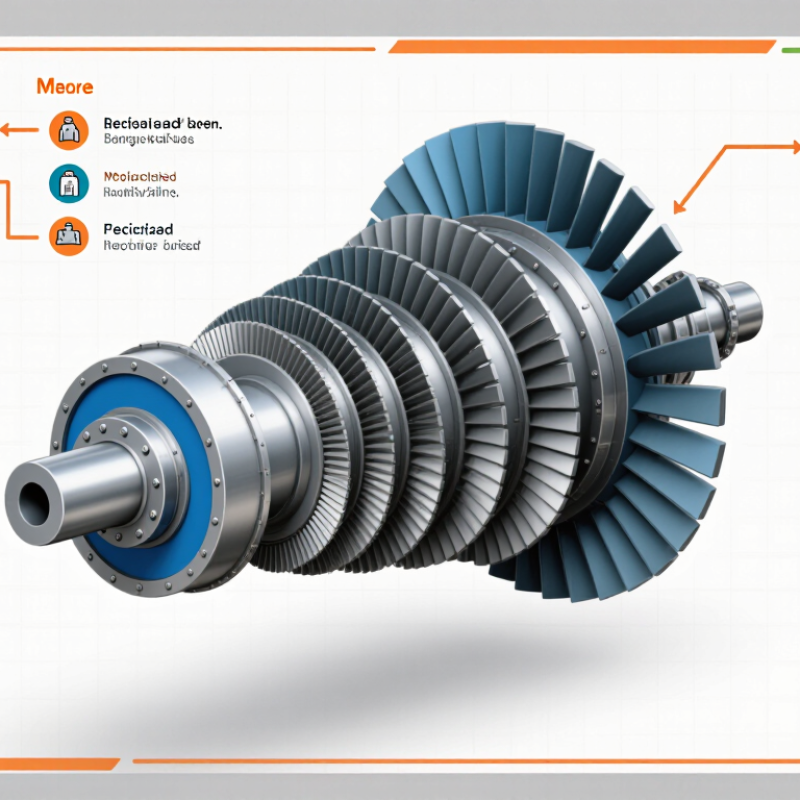
Steam turbine blades convert the energy in moving steam into rotation. In a typical turbine, stationary nozzles guide expanding steam toward rows of moving blades. The steam changes direction across each row, applying force to the rotor. That rotation turns a generator, which produces electricity. Small changes matter.

Blade shape, spacing, and surface condition affect how smoothly steam flows through the machine. Engineers consider pressure, temperature, rotational speed, and the turbine’s operating range when specifying blade designs. In lower-pressure sections, moisture can form in the steam. Tiny water droplets may gradually erode blade surfaces, so material choice and inspection are important. Deposits, cracks, or worn edges can also reduce performance.

For power plant operators and equipment buyers, blades are not interchangeable parts selected by appearance alone. Compatibility with the rotor and operating conditions matters, as do manufacturing quality and maintenance requirements. Inspections may include checking for surface damage, measuring clearances, and reviewing vibration or performance data. That is a useful simplification, but not the whole story: turbine efficiency depends on the complete steam path, not blades in isolation. Even a well-made blade cannot compensate for every upstream or operating problem.

How Blade Design and Manufacturing Shape Performance

Steam turbine blade performance starts with matching the airfoil to the machine’s operating conditions. Blade twist, profile, and spacing guide steam through each stage while managing pressure and velocity changes. A shape optimized for steady full-load operation may behave differently during frequent starts or partial-load running. Small deviations matter.

Material selection and manufacturing control help preserve that design intent. Forging or casting routes, heat treatment, and machining tolerances affect strength and dimensional consistency. A rough or damaged surface can increase losses, while poor root fit may create uneven loading. Inspect the specified alloy, dimensional records, surface condition, and any agreed nondestructive examination results. These details are more useful than broad claims about efficiency.

Fit also matters. Blade length, attachment geometry, and rotor compatibility must match the turbine and its service history. Ask suppliers how they verify airfoil dimensions, balance, and root features, and how they handle traceability. Erosion-resistant coatings can help in suitable conditions, but they do not fix an unsuitable profile or poor installation. A drawing may look convincing and still leave questions about real operating behavior; performance depends on the whole stage, not one blade. Good documentation reduces uncertainty, though it cannot remove it.

Types of Steam Turbine Blade Suppliers Worldwide

Steam turbine blade suppliers worldwide generally fall into several practical groups. Original-equipment manufacturers make blades for specific turbine designs and can often verify geometry against original drawings. Specialist component makers focus on forged, machined, or precision-finished blades, sometimes producing replacements from approved samples or engineering data. Their capabilities vary. A polished website does not prove they can hold a tight profile tolerance.

Repair and overhaul providers inspect used blades, restore eligible surfaces, and may supply replacement parts during maintenance projects. They can be useful when shutdown schedules are tight, but buyers should confirm whether the work includes inspection records and dimensional checks. Regional distributors connect buyers with manufacturers and may simplify shipping, local communication, or spare-part coordination. Engineering procurement firms take a broader role, matching specifications with qualified production sources. Ask who actually manufactures the blade. Check the details.

For any supplier type, review material traceability, inspection methods, manufacturing experience, and documentation before comparing price alone. A turbine blade’s root, airfoil profile, and surface finish all affect whether it suits a particular stage. Drawings and operating conditions matter. I would not assume that a visually similar blade is interchangeable; that judgment needs engineering review. Global supply chains can also add lead time, so confirm production capacity and delivery terms early.

How Global Buyers Evaluate and Compare Suppliers

Global buyers should compare steam turbine blade suppliers on verifiable process controls, not price alone. The IEA’s Electricity 2024 report projects global electricity demand will grow by an average of 3.4% annually from 2024 to 2026. That forecast is not a blade-market estimate, but it highlights why dependable maintenance and replacement planning matter. Ask suppliers for material certificates, heat-treatment records, and traceability linking each blade to its production lot. Check inspection results for airfoil profile, root dimensions, surface finish, and non-destructive testing. Request sample records, not just a quality-policy statement. Details matter.

Delivery capability needs evidence too. Compare realistic lead times, machining capacity, revision control, and how suppliers handle drawing changes. A low quote may exclude inspection steps, packaging, or engineering support; compare the same scope and acceptance criteria. Ask for references involving similar turbine designs and operating conditions, while respecting confidentiality. A polished spreadsheet can still mislead. Blade life depends on steam conditions, start-stop cycles, and maintenance history, so supplier claims need context. Even careful comparisons have limits: buyers may receive incomplete operating data, and identical test results do not guarantee identical field performance. Keep the uncertainty visible in the evaluation.

Top Steam Turbine Blade Suppliers for Global Buyers - How Global Buyers Evaluate and Compare Suppliers

Supplier evaluation framework for comparing steam turbine blade manufacturers. The suggested weightings are illustrative buyer-planning values, not an industry standard. Adapt them to the turbine design, service conditions, project requirements, and procurement rules.

Evaluation Dimension Suggested Weight What Buyers Should Compare Useful Evidence to Request Practical Comparison Notes
Design and application fit 20% Experience with the relevant turbine type, blade row, operating conditions, geometry, and interface requirements. Technical proposal, drawing and interface review, design-change process, and examples of comparable applications where disclosure is permitted. Confirm compatibility with the approved design and operating envelope. Do not treat general turbine experience as proof of fit for a specific blade.
Quality management and inspection 18% Documented quality controls, inspection planning, nonconformance handling, calibration, and control of subcontracted processes. Quality-system certificate and scope, inspection and test plan, sample inspection records, calibration records, and corrective-action procedure. Check certificate validity and scope. Agree acceptance criteria and inspection hold or witness points before production starts.
Material traceability 12% Control of specified alloy, material condition, heat or batch identity, and traceability from incoming material to finished part. Material test certificates, heat or batch traceability records, material identification procedure, and records for any approved substitutions. Specify the required material grade and documentation in the purchase order. EN 10204 inspection-document types may be referenced when appropriate to the contract.
Manufacturing capability 12% Processes and equipment suitable for the specified blade design, including forming or machining, heat treatment, finishing, and special processes where required. Process flow, equipment and capacity overview, process qualification records where applicable, and controls for outsourced operations. Assess capability against the drawing and specification rather than equipment lists alone. Verify any special process requirements for the particular part.
Inspection and test capability 10% Ability to verify dimensions, surface condition, material properties, and required nondestructive examination against agreed acceptance criteria. Inspection methods and procedures, sample dimensional reports, test certificates, NDT personnel qualifications where required, and equipment calibration records. Select inspection methods based on the component and specification. Confirm whether testing is performed in-house or by an approved external laboratory.
Delivery and capacity planning 10% Quoted lead time, production-slot availability, capacity constraints, schedule controls, and ability to communicate delivery risks. Project schedule, capacity confirmation, milestone plan, delivery-performance data where available, and escalation procedure. Compare like-for-like scope and delivery terms. Request a project-specific schedule rather than relying on an unqualified standard lead-time estimate.
Technical documentation and configuration control 6% Completeness of manufacturing records, revision control, approval of deviations, and retention of product documentation. Document index, sample manufacturing record pack, revision-control procedure, deviation-request process, and record-retention policy. Define the required document pack and language, format, and submission milestones in the contract.
Commercial value and total landed cost 6% Quoted price, tooling or engineering charges, packaging, freight, insurance, duties, payment terms, and potential cost of schedule or quality risks. Itemized quotation, delivery term, price-validity period, payment schedule, warranty terms, and clearly stated exclusions. Compare total landed cost and commercial scope, not unit price alone. Ensure quotations use comparable quantities and delivery terms.
After-sales and repair support 4% Availability of technical assistance, warranty response, failure investigation, replacement-part support, and repair coordination. Support scope, response and escalation process, warranty conditions, and example root-cause or corrective-action reports where shareable. Clarify service boundaries, response expectations, and responsibility for investigation costs before award.
Compliance and supply-chain risk 2% Export-control and sanctions screening as applicable, ethical sourcing, cybersecurity or data-handling requirements, and sub-tier supply-chain visibility. Compliance declarations, country-of-origin information where required, subcontractor controls, and relevant policies or audit evidence. Apply the rules relevant to the buyer’s jurisdictions, end use, and contract. Additional requirements may apply to regulated or safety-critical projects.
Total suggested weighting 100% Adjust the weighting to reflect project criticality, procurement policy, and technical risk.

Suggested scoring method: rate each supplier from 1 (does not meet requirements or evidence is insufficient) to 5 (fully meets requirements with clear, verifiable evidence). Multiply each rating by its weighting, and treat mandatory technical or regulatory requirements as pass/fail gates rather than compensable score items.

Key Considerations for Sourcing Turbine Blades Internationally

Sourcing steam turbine blades across borders requires more than comparing unit prices. Buyers should confirm the blade’s alloy, heat-treatment condition, coating requirements, and dimensional tolerances against the turbine’s drawings. A small mismatch at the root or airfoil can complicate installation. Ask suppliers for material certificates, inspection records, and traceability linking each part to its production batch. Clear documentation matters.

Manufacturing capability needs practical review. Request sample inspection data, measurement methods, and details about non-destructive testing where applicable. If possible, arrange a technical review before production, especially for replacement blades with limited reference data. No checklist catches everything. Drawings may be old, and field conditions can differ from the original specification. That deserves a second look.

International delivery adds its own risks. Confirm packaging protects precision surfaces from moisture, impact, and corrosion during transit. Discuss lead times, export documents, inspection milestones, and how design changes will be approved. Agree on the units used for measurements; a quiet conversion error can become an expensive delay. Evaluate communication quality as well as price. A supplier that flags an unclear tolerance early may be more dependable than one that simply promises a fast shipment. When comparing quotations, check whether tooling, testing, packaging, and freight are included. The cheapest offer may not be the lowest-cost outcome.

Scroll to Top