










JHY PCB Blog Hub
Your Source for Expert PCB Design, Manufacturing, and Assembly Insights – Stay Informed with 2025 Trends!
Top Fence Machine Manufacturers for Global Buyers
Choosing a Fence Machine manufacturer is not a catalog exercise. Buyers need to match wire diameter, mesh opening, fence height, and expected production volume to the machine’s real operating range. A line that looks impressive in a showroom may behave differently during a long shift. Watch a production trial. Check weld consistency, feeding stability, changeover time, and how operators access routine service points. Small details matter. So does the supplier’s response after installation.
Manufacturing pioneer Taiichi Ohno is often associated with the principle, “Where there is no standard, there can be no kaizen.” For global buyers, that idea offers a practical test: ask manufacturers for clear specifications, repeatable quality checks, and documented service procedures. Then compare warranty coverage, spare-parts availability, training, and technical support—not just quoted output speed. A reliable supplier should explain what affects performance, including wire quality and setup conditions. Claims deserve evidence. A polished brochure cannot show every weakness, and one factory visit cannot predict every future issue. This guide examines leading manufacturers through those practical questions, helping buyers assess capability, fit, and long-term support before making a commitment.
What Fence Machines Are and How They Work
Fence machines turn wire or metal stock into repeatable barriers. Common systems include chain-link weavers, welded-mesh lines, and roll-forming machines for fence panels. Their shared purpose is practical: feed material, shape or join it, then cut products to a set size. The exact process depends on the fence design.
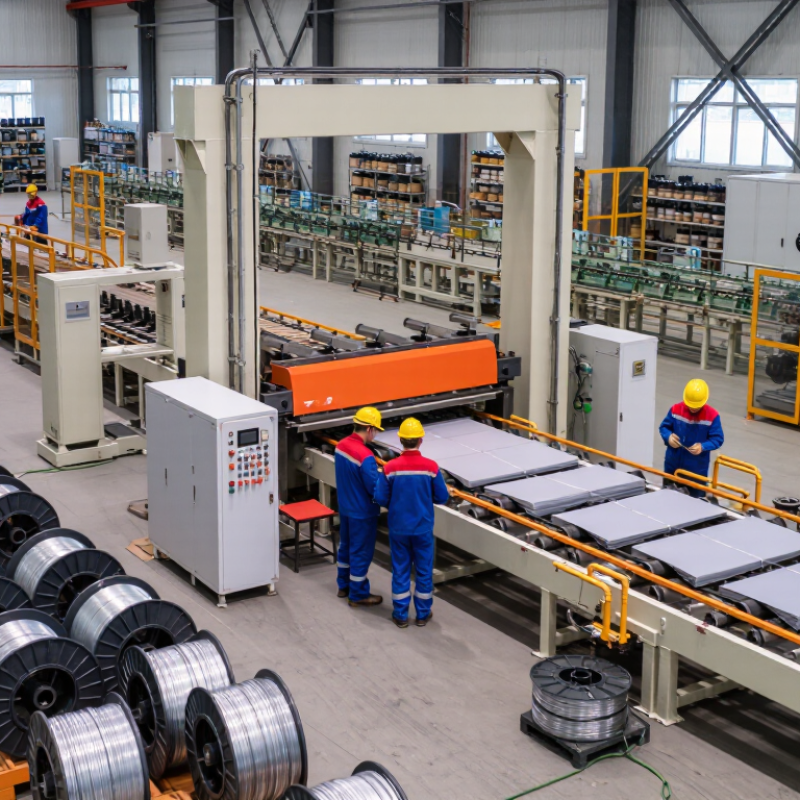
A welded-mesh line typically straightens wire, feeds it across longitudinal wires, and uses resistance welding to make grid intersections. Operators adjust wire spacing, welding current, and feed speed. Finished mesh is then cut or rolled. Chain-link equipment instead bends and interlocks wire into a continuous diamond pattern. Small changes in wire tension can affect the opening size. It is a detail that deserves attention.
These machines rely on motors, sensors, and control systems to maintain steady production, but setup still matters. Misaligned wire can cause uneven panels, while poorly matched speed and welding settings may weaken joints. The World Steel Association’s World Steel in Figures 2024 reports global crude steel production of 1,892.2 million tonnes in 2023. That figure describes the scale of the material supply, not fence-machine output. Buyers should compare machine capacity against wire diameter, mesh size, changeover time, and the operator skills available on site. A fast line is not automatically the right line.
Main Types of Fence-Making Machines
Fence-making machines differ by product, not just output speed. A chain-link weaving machine twists galvanized or coated wire into continuous diamond mesh. Operators set the mesh opening and roll length. A welded-wire mesh line joins crossing wires at fixed spacing, producing rolls or sheets for garden and livestock fences. It needs steady wire feeding and consistent weld pressure. For rigid panels, a panel welding machine makes wider grids and may add bends for stiffness.
Tips: Match the machine to wire diameter, mesh opening, panel width, and available power. Ask for a sample run using your own wire. Check changeover time, spare electrodes, safety guards, and operator training. Specs can hide limits.
Roll-forming lines shape steel strip into fence posts or rails rather than weaving wire. They suit buyers making complete fence systems, though some layouts need separate cutting or punching equipment. Compare working speed under real settings, not just the advertised maximum. Ask how quickly the line changes between profiles. I would also allow floor space for wire coils, finished panels, and safe handling; that detail is easy to underestimate.
How Fence Machine Manufacturers Serve Global Markets
Global buyers need fence machines that fit local wire sizes, power supplies, factory layouts, and production targets. Manufacturers serving multiple markets often offer adjustable tooling, different voltage configurations, remote commissioning, and operator training. These details matter when a machine must produce consistent mesh across long shifts. The World Steel Association’s World Steel in Figures 2024 reports 1,892.2 million tonnes of crude steel production in 2023, underscoring the scale of the material supply chain behind metal products. Still, abundant steel does not guarantee reliable deliveries.
Export service also depends on spare-parts planning, clear manuals, and responsive technical support. The World Bank’s 2023 Logistics Performance Index covers 139 economies, reflecting how much transport and customs conditions vary between markets. Buyers should confirm shipping terms, installation responsibilities, and replacement-part lead times before placing an order. A video call can help, but it cannot replace checking a sample fence panel against the required dimensions. One detail is often missed: local operators may need training even when the machine is highly automated.
Tips: Request a trial run using your actual wire diameter and mesh specification. Ask for a parts list, electrical drawings, and a realistic service-response time. Then verify the details in writing.
Key Manufacturers and Their Product Offerings
Fence-machine manufacturers typically offer equipment for chain-link, welded-wire, and woven-wire production. A chain-link line twists wire into diamond mesh, then winds it into compact rolls. Welded-mesh systems feed straightened wire through resistance-welding stations, producing rigid panels for farms, construction sites, or security perimeters. Some suppliers also build barbed-wire machines, wire-straightening units, and automatic coilers.
Product details matter. Buyers should compare mesh width, wire-diameter range, changeover time, and output consistency—not just advertised speed. The International Federation of Robotics reported 541,302 industrial robot installations worldwide in 2023. Its World Robotics 2024 report reflects broader factory automation, though it does not measure fence-machine adoption specifically. That distinction is worth keeping clear. Automation can improve repeatability, but it also raises maintenance and operator-training needs.
For material planning, the World Steel Association’s October 2024 Short Range Outlook projected steel demand of about 1.77 billion tonnes in 2025. That large market does not guarantee stable wire prices. Buyers should ask manufacturers about feeder accuracy, welding-electrode replacement, spare-part lead times, and local technical support. Request a sample run using the intended wire. A neat demonstration is useful, but real production can be messier. Even reliable equipment may need adjustment when wire quality or coating varies.
| Manufacturer Profile | Typical Product Offering | Common Materials Processed | Typical Applications | Key Capabilities | Buyer Considerations |
|---|---|---|---|---|---|
| Wire mesh welding equipment manufacturers | Automatic and semi-automatic resistance-welding lines for welded wire mesh panels and rolls | Low-carbon steel wire; galvanized wire, where supported by the machine configuration | Welded wire fencing, reinforcing mesh, animal enclosures, and security panels | Configured for selected wire diameters, mesh pitches, panel widths, and production rates | Confirm wire-diameter range, mesh-size flexibility, changeover time, power requirements, and availability of welding electrodes and service |
| Chain-link fencing machine manufacturers | Machines that weave wire into diamond-pattern chain-link fabric, often with winding and edge-finishing equipment | Galvanized steel wire; PVC-coated wire on compatible lines | Perimeter fencing, sports grounds, temporary barriers, and general-purpose enclosures | Production settings typically determine mesh opening, fabric width, and roll length | Check compatible wire coatings and diameters, mesh-opening range, roll handling, and whether winding or selvage equipment is included |
| Wire drawing and straightening equipment manufacturers | Wire-drawing lines, payoff and take-up systems, and wire straightening and cutting machines | Steel wire rod and wire, depending on the drawing dies and line specification | Upstream wire preparation for mesh welding, fence posts, and other wire products | Line configurations can support different drawing stages, finished wire sizes, and cut lengths | Review inlet and outlet size ranges, drawing stages, die compatibility, line speed, and integration with downstream equipment |
| Fence post roll-forming equipment manufacturers | Roll-forming lines for producing selected metal post and rail profiles from coil | Coated or uncoated steel coil, subject to the line's material and thickness limits | Metal fence posts, rails, and structural components for panel fencing | Profile tooling and line layout are generally selected for a specified section shape and production workflow | Confirm coil-width and thickness range, profile drawings, tooling scope, cut-off method, and setup requirements |
| Barbed-wire machine manufacturers | Machines for twisting line wires and forming barbs, with winding equipment in some configurations | Steel wire, including galvanized wire when compatible with the equipment | Rural, agricultural, and perimeter-security fencing | Output depends on wire specification, barb spacing, line setup, and winding configuration | Verify wire-size limits, barb-spacing options, finished-coil dimensions, guarding, and operator-safety provisions |
| Razor-wire processing equipment manufacturers | Machines for forming and processing concertina or straight razor-wire products from suitable strip and core wire | Galvanized or stainless steel strip and core wire, depending on machine design | High-security perimeter installations and facility protection systems | Product geometry and coil format depend on the specified blade profile and processing setup | Assess material compatibility, blade-profile tooling, guarding, handling procedures, and compliance with destination-market safety rules |
| Integrated fencing-line manufacturers | Combined production systems that may link wire preparation, mesh welding, cutting, stacking, and handling | Typically steel wire and related metal inputs selected for the target fence product | High-volume production of welded fence panels and related products | Automation level and line integration can be tailored to product dimensions and factory layout | Request a defined production scope, realistic output assumptions, installation plan, operator training, spare-parts list, and after-sales support terms |
How Buyers Can Compare Manufacturers and Suppliers
Comparing fence machine manufacturers and suppliers starts with your production needs, not a glossy catalogue. Define the mesh opening, wire diameter, roll width, and daily output you actually require. Then ask each company to quote the same configuration. Small differences in included tooling can make prices difficult to compare.
Check who designs and builds the machine, and who resells it. Ask for a factory acceptance test using your wire size and target settings. Watch the welds across a full sample panel; consistent joints matter more than a brief demonstration. Request a written list of standard parts, wear items, and replacement lead times. Ask how operators receive training, and whether remote troubleshooting is available across time zones. Details matter.
References can reveal what a brochure cannot. Speak with buyers running similar products, and ask about setup time, breakdown response, and actual output after installation. A low quote may exclude installation or essential tooling. A high one is not proof of better performance. It is easy to focus on advertised speed and overlook changeover time. I would compare both, though one production test cannot predict every shift or material variation. Keep the questions consistent, record the answers, and note what remains unverified.
How to Compare Fence Machine Manufacturers and Suppliers
Suggested buyer evaluation weights (%) for comparing quotations. These are a decision-making framework, not measured industry statistics; adjust them to your products and production goals.
Compare verified production capacity, supported wire and product specifications, automation features, changeover requirements, and service terms. Ask suppliers to document quoted specifications and confirm performance through a production test.


