










JHY PCB Blog Hub

Your Source for Expert PCB Design, Manufacturing, and Assembly Insights – Stay Informed with 2025 Trends!

Top Engineered Wood Panel Manufacturers Worldwide?

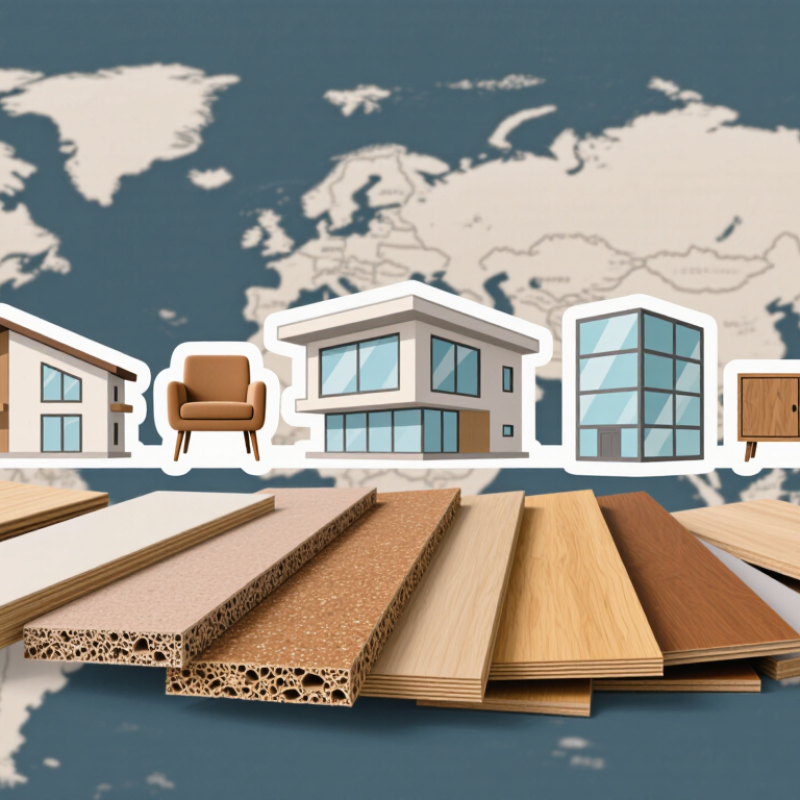
Engineered Wood Panels are used in homes, commercial buildings, furniture, and packaging. They include plywood, particleboard, medium-density fibreboard, oriented strand board, and structural veneer products. Each type responds differently to load, moisture, machining, and finishing. That matters when comparing manufacturers. A panel that performs well in a dry interior may not suit a damp site or a demanding structural application.

This guide introduces major manufacturers and the markets they serve. Rather than treating “top” as a fixed global ranking, it considers product range, manufacturing reach, technical documentation, and independently verifiable quality credentials. Company information can change, and regional brands may be more relevant than a multinational supplier for certain projects. Markets differ. Buyers should check current product data, including thickness tolerances, emissions information, structural grades, and moisture-use recommendations. They should also confirm that claims apply to the exact product and facility, not just the company as a whole. Those checks take time. They can prevent costly mismatches.

The following overview is a starting point, not a substitute for engineering advice or local specification requirements. Manufacturer scale alone does not guarantee consistent delivery, suitable performance, or responsible sourcing. Even well-known names deserve closer review. Where possible, compare technical sheets and ask suppliers about testing, traceability, and regional availability before making a selection. A global list can be useful, but it cannot capture every local strength.
Top Engineered Wood Panel Manufacturers Worldwide?

Engineered Wood Panels: Types and Core Applications

Engineered wood panels are not interchangeable sheets. Plywood uses thin wood veneers bonded in alternating directions, giving it useful strength across a broad area. It is commonly selected for roof and wall sheathing, subfloors, and cabinet parts. Oriented strand board, made from aligned wood strands, also serves in structural sheathing and flooring. Check the panel’s rated use and moisture exposure before specifying it.

Medium-density fiberboard has a smooth, consistent face that suits painted furniture, shelving, and interior trim. Particleboard is often used in economical furniture cores and cabinet components, especially when covered with laminate or veneer. Neither is a universal substitute for solid wood. Edges matter. Unsealed edges can absorb moisture, swell, or become difficult to finish.

For long spans or concentrated loads, laminated veneer lumber may be used in beams and headers, subject to structural design requirements. In practice, thickness, grade, fastening method, and site conditions all affect performance. A panel that works well in a dry room may be unsuitable near persistent dampness. The labels can be confusing, too; verify the technical data sheet rather than relying on appearance alone. That extra check is easy to skip.

How Engineered Wood Panels Are Manufactured

How Engineered Wood Panels Are Manufactured

Manufacturing starts with logs or mill residues, which are debarked and reduced to veneers, strands, chips, or fibers. For plywood, thin veneers are dried, coated with adhesive, and stacked with alternating grain directions. For oriented strand board, strands are dried, blended with resin, and arranged in layered mats. Fiberboard uses refined wood fibers instead. Small details matter.

The loose mats pass through a heated press, where pressure consolidates them and heat cures the adhesive. Panels are then cooled, trimmed, sanded, and checked for thickness and bonding quality. A poor moisture balance can weaken a panel or cause uneven pressing; mills monitor it closely, though no process is perfect. The Food and Agriculture Organization’s Global Forest Products Facts and Figures 2022 reports worldwide wood-based panel production at about 400 million cubic metres that year. That scale reflects varied products and processes, not one recipe. Exact temperatures, resin formulations, and press cycles differ by panel type and factory. A cut edge can reveal the structure: cross-laid veneers, visible strands, or a fine, uniform fiber core.

Leading Engineered Wood Panel Manufacturers Worldwide

Leading engineered wood panel manufacturers worldwide supply materials for construction, furniture, and interior fit-outs. Their product range may include plywood, oriented strand board, medium-density fiberboard, and particleboard. Each panel type suits different loads, finishes, and working conditions. Strong production depends on controlled fiber or veneer preparation, even resin application, and consistent pressing. A small moisture change can affect thickness, bonding, and how well a screw holds. Details matter.

Reliable manufacturers provide clear technical data, including panel dimensions, density, strength, and suitable applications. They also track wood inputs and monitor production quality across batches. For buyers, a sample is useful: inspect the cut edge, check for uneven layers, and test how the surface accepts a finish. These checks do not replace independent testing, but they can reveal practical differences.

Capacity alone is not enough. A large facility may offer dependable supply, while a smaller producer may provide more flexible specifications or local delivery. The best fit depends on climate, end use, processing equipment, and required documentation. Even experienced buyers can overlook handling conditions; panels stored on a damp floor may warp before installation. The market is not simple, and “leading” can mean different things to different projects.

Regional Production and Global Market Presence

Engineered wood panel production is strongly shaped by regional resources and nearby customers. In North America, large panel facilities often serve construction markets across long distances, where transport costs can influence product choice. Europe’s producers operate within varied forestry conditions and established building supply chains. Asia-Pacific combines major manufacturing capacity with fast-changing demand, though conditions differ widely between countries.

The product mix also reflects local needs. Oriented strand board is widely used in structural applications, while medium-density fiberboard and particleboard often go into furniture and interior fittings. A plant near timber supplies may have an advantage, but dependable resin, energy, labor, and rail or port access matter too. Small details count. A wet week can slow log handling; a port delay can disrupt shipments.

Global presence does not always mean the same thing as global reach. Some manufacturers export across several regions, while others focus on nearby markets and build capacity close to customers. No ranking tells the whole story. Production figures may hide differences in panel grades, plant utilization, or delivery reliability. Buyers should compare certified product specifications and local supply options, not just headline capacity. Even then, comparisons can be imperfect, because public data is not always updated consistently.

How to Compare Manufacturers and Product Offerings

Comparing engineered wood panel manufacturers means looking beyond price and catalogue size. The UNECE/FAO Forest Products Annual Market Review reported global wood-based panel production of about 405 million cubic metres in 2022. That scale makes product fit and consistency important. Compare panel type, thickness tolerance, density, moisture resistance, and intended use. For structural panels, check the applicable strength grade and test documentation. For interior boards, review emissions data and surface quality. A polished sample is useful, but it cannot show batch-to-batch variation.

Ask each manufacturer for current technical data sheets, independent test results, and details of quality-control procedures. Check whether stated certifications cover the exact product and production site, not just the company generally. Also compare lead times, minimum order quantities, packaging, and how complaints are handled. Small differences matter: a few millimetres can affect cabinet alignment, while uneven moisture can complicate installation. I would not treat a low quotation as proof of poor quality, either; specifications and evidence should decide.

Tips: Request samples from more than one production batch. Record dimensions and inspect edges, faces, and moisture before approval. Ask for written tolerances. Then compare delivered performance, not only the brochure. Some specifications remain hard to compare across suppliers, so note any unanswered questions rather than assuming equivalence.

Top Engineered Wood Panel Manufacturers Worldwide? - How to Compare Manufacturers and Product Offerings
Product family Typical construction Common applications Relevant standards to check Key product differences Questions to ask when comparing suppliers
Oriented strand board (OSB) Wood strands are arranged in layers, oriented in different directions, and bonded under heat and pressure. Roof, wall, and floor sheathing; structural panels; packaging and general construction uses, depending on grade. EN 300 defines OSB performance types; EN 13986 covers Wood-Based Panels for use in construction in Europe. Compare declared strength and stiffness, thickness, edge profile, moisture-related suitability, and whether the grade is intended for structural use. Which OSB type and use class are offered? Are performance data, intended-use information, and applicable conformity documents available?
Plywood Thin wood veneers are bonded in layers, commonly with adjacent veneer grain directions arranged at right angles. Structural sheathing, flooring, roofing, concrete formwork, furniture, and interior or exterior applications, subject to panel specification. EN 636 classifies plywood for use in dry, humid, or exterior conditions; EN 13986 applies to construction panels in Europe. Compare veneer species and quality, face grade, bond quality, thickness tolerance, structural performance, and suitability for the intended exposure. What face and back grades are available? What exposure conditions and structural uses are stated in the product documentation?
Medium-density fibreboard (MDF) Wood fibres are combined with adhesive and pressed into a uniform panel; surface finish and density can vary by product. Cabinetry, furniture, mouldings, interior joinery, and painted or laminated components. EN 622-5 specifies requirements for dry-process fibreboards, including MDF product types. Compare thickness range, surface quality, machinability, moisture-resistant variants, intended use, and declared formaldehyde-emission information. Are standard, moisture-resistant, or other specified variants offered? What test reports and emission documentation apply to the exact grade?
Particleboard Wood particles are bonded with adhesive and pressed into a panel; particle structure and panel properties may vary by grade. Furniture, cabinetry, shelving, worktops, and construction uses where the specified grade is suitable. EN 312 defines particleboard requirements by type and intended application; EN 13986 applies to construction panels in Europe. Compare grade, thickness, surface finish, internal bond and bending performance, edge quality, and suitability for dry or humid conditions. Which EN 312 type or equivalent specification is supplied? Are the intended use, tolerances, and moisture conditions clearly declared?
Structural laminated veneer lumber (LVL) Veneers are bonded together, typically with their grain directions predominantly parallel, to form structural elements or panels. Beams, headers, lintels, rim boards, and other engineered structural components; panel formats are available for some applications. EN 14374 covers structural LVL requirements in Europe; the applicable national design and approval rules should also be checked. Compare declared characteristic strength and stiffness, dimensions, lay-up, structural grading, and the scope of product certification. Are design values and installation guidance supplied for the target market? Does the documentation cover the exact product dimensions and use?
Cement-bonded particleboard Wood particles are bonded with cement rather than a conventional resin-based particleboard binder. Construction and lining applications where the specified panel is appropriate, including some humid or demanding environments. EN 634-2 specifies requirements for cement-bonded particleboards for use in dry, humid, and external conditions. Compare declared mechanical properties, thickness, density, surface finish, dimensional tolerances, and stated exposure suitability. What installation, finishing, and fixing guidance is provided? Are performance claims supported by test data for the offered grade?

Comparison note: Product performance depends on the exact grade, thickness, manufacturing specification, and intended use. Standards and conformity requirements vary by market, so compare current technical data sheets, declarations, test reports, and certifications for the specific product—not just the product family.

Scroll to Top