2026 Top Dash Camera Module Manufacturers for Global Buyers
Global demand for reliable in-vehicle imaging is growing alongside a vast vehicle production base. OICA reported approximately 93.5 million motor vehicles produced worldwide in 2023. That scale gives buyers a practical reason to assess component capacity, quality controls, and supply continuity. It does not, by itself, measure Dash Camera Module sales.
Safety concerns add context, but they should not be confused with proof of product performance. The U.S. National Highway Traffic Safety Administration reported 42,514 traffic fatalities in 2022. This figure describes the road-safety challenge; it does not show that a camera module prevents crashes. Buyers should examine measurable specifications instead: image performance in low light, high-dynamic-range handling, thermal stability, lens consistency, and sample validation.
This guide reviews 2026 Dash Camera Module manufacturers for global buyers, with attention to engineering capability and production readiness. A useful supplier comparison should cover sensor and processor options, video output, operating-temperature range, traceability, and customization support. Ask for test records, not just polished product sheets. Check how the module performs at night, under glare, and after prolonged heat exposure. Small details matter.
Still, a clean specification sheet is not proof. OICA’s production statistics and NHTSA’s crash data offer useful context, not a substitute for supplier audits or independent testing. Regional requirements also vary, so buyers should confirm applicable technical and privacy obligations before deployment. The right choice depends on the vehicle platform, target market, and evidence a manufacturer can provide.
What Is a Dash Camera Module and How Does It Work?
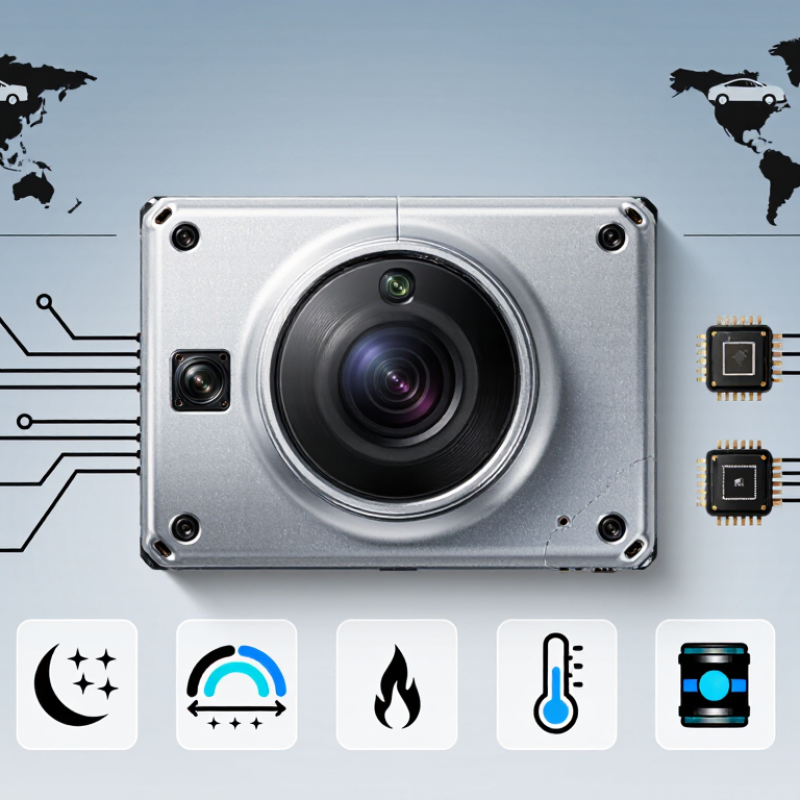
A dash camera module is the core imaging unit inside a dash camera. It typically combines a lens, image sensor, circuit board, and processing components. The lens focuses the road scene onto the sensor, which converts light into image data. Small parts matter. Sensor size, lens quality, and careful focus all affect the final footage.
During recording, the processor turns image data into a video stream and sends it to storage through a connection such as USB or a board-level interface. Some modules also support audio, GPS data, or parking-mode signals, depending on the system design. Performance depends on more than resolution. Low-light tuning, heat control, and stable power can shape results on a bright afternoon or a dim street. In practice, even a capable module may produce soft footage if focus shifts or heat builds. That detail is easy to overlook.
Tips: Ask suppliers for sample footage, interface specifications, and operating-temperature data. Confirm the module fits your camera housing and power design. Test it in daylight and at night; a datasheet cannot show every real-world weakness.
Key Components and Specifications of Dash Camera Modules
A dash camera module is more than an image sensor on a circuit board. Its core parts usually include a lens, sensor, image processor, memory interface, and power-management components. Each affects the footage. A sensor may offer high resolution, but poor low-light performance can still leave license plates unclear at dusk. Lens aperture, field of view, and infrared-cut filtering also shape the final image. Small details matter.
When comparing specifications, check resolution and frame rate together. A module capturing 2K video at 30 frames per second may suit routine driving, while fast motion can benefit from a higher frame rate. High dynamic range helps balance bright skies and dark dashboards, though results depend on tuning and scene conditions. Review the supported memory type, data rate, and connector design too. A mismatch can limit recording reliability, even when the camera itself performs well.
Operating temperature, vibration tolerance, and power input deserve equal attention. A compact module mounted near a windshield may face heat buildup and repeated road shocks. Ask for test conditions, not just a temperature range. Also examine sample footage from night, tunnels, and backlit roads. Specifications are useful, but they do not tell the whole story. I would not assume that the highest pixel count always means better evidence; that shortcut is tempting, and sometimes wrong.
How to Evaluate Dash Camera Module Manufacturers in 2026
When evaluating dash camera module manufacturers in 2026, look beyond resolution claims. Ask for sample footage captured at night, in tunnels, and against bright headlights. Compare the same scene across modules, not edited promotional clips. Small details matter. A sharp daytime image can still lose license-plate detail after dusk.
Review the sensor, lens, image-processing pipeline, and thermal design as a complete system. Request temperature and vibration test reports, plus clear details about operating limits. Ask how firmware changes are controlled and how production batches are traced. Ask for evidence. A neat specification sheet can still hide weak low-light performance, so validate samples in the intended camera housing.
Manufacturing capability matters as much as image quality. Check inspection records, defect handling, component sourcing, and the process for managing design changes. Discuss interfaces, power needs, and customization early; late adjustments can affect fit and reliability. No test is perfect. Even a well-run evaluation may miss problems that appear after months of heat and vibration. Set measurable acceptance criteria, then confirm them with repeatable tests before committing to volume orders.
Leading Dash Camera Module Manufacturers for Global Buyers
Leading dash camera module manufacturers combine optical design, electronics, and dependable production. For global buyers, a useful supplier can explain sensor options, lens angles, image processing, and operating temperature in clear terms. Ask how modules perform in bright sunlight, dim parking areas, and sudden lighting changes. These details shape usable footage, not just a neat specification sheet.
Look beyond sample images. Request test records for vibration, heat cycling, and focus consistency, then compare them with your product requirements. Small details matter. A connector that shifts slightly can complicate assembly, while an unclear firmware update process can delay integration. Some suppliers communicate well before an order but less clearly during revisions; buyers should check response times and change-control procedures early.
Manufacturing capability also deserves close review. Ask about pilot-run quantities, inspection steps, component traceability, and capacity during seasonal demand. For cross-border projects, confirm export packaging, technical documents, and support for different interfaces. A polished sample is useful, but it cannot prove every production batch will match. Even experienced teams can overlook a small compatibility issue, so a limited engineering build can reveal problems before larger orders begin.
Dash Camera Module Resolution Comparison
A reference for global buyers comparing common recording resolutions in dash camera modules.
Pixel counts are calculated from the listed image dimensions: 1920 × 1080, 2560 × 1440, and 3840 × 2160. Resolution alone does not determine image quality; sensor, lens, image processing, and low-light performance also matter.
Global Sourcing, Compliance, and Supplier Verification
2026 Top Dash Camera Module Manufacturers for Global Buyers
Global sourcing begins with a clear specification, not a supplier shortlist. Define the sensor, lens angle, image interface, operating temperature, and vibration limits. Small differences can change performance inside a vehicle. Details matter.
Ask suppliers for current product specifications, component traceability, calibration records, and quality-control procedures. Verify that the stated factory address matches the production site, and speak with the people responsible for inspection. A polished audit file is not proof. Check records against a production sample, including labels, connectors, and image output. Supplier verification takes time, but a rushed review can leave basic questions unanswered.
Compliance requirements differ by destination and product configuration. Have qualified local experts assess applicable electromagnetic compatibility, material, and labeling requirements before shipment. Request supporting test reports and confirm that their model numbers match the module being purchased. Paperwork can lag reality. Record who approved each document and when. During production, agree on written change-control steps for components, firmware, and manufacturing locations. Keep a dated sample and compare it with later batches. This process is not perfect; suppliers may interpret specifications differently, so unresolved differences deserve follow-up rather than assumption.