Top Concrete Screws Manufacturers in China?
China’s concrete screw market includes large export manufacturers, specialist fastener makers, and suppliers with very different levels of technical support. Comparing them takes more than scanning a catalogue. A screw may look substantial in a product photo, yet coating thickness, thread geometry, steel quality, and installation guidance matter on the jobsite. Small differences show up when a crew drills into dense concrete, clears dust from the hole, and drives the fastener flush without stripping the recess.
A practical reminder, paraphrasing the durability-focused work of structural engineer David Darwin—not a verbatim quotation—is: “A fastener performs only as well as its substrate, design, and installation.” That principle helps frame this guide to leading Concrete Screws manufacturers in China. The comparison should consider product range, material and coating options, quality controls, testing documentation, customization, and export experience. Ask for current technical data, not just a polished brochure. Check whether the supplier explains compatible drill sizes and installation limits. Those details are easy to overlook.
No single factory is the best fit for every project. A buyer specifying screws for masonry repairs may need different support from a contractor fastening brackets into structural concrete. Even a promising sample deserves verification. This overview offers a starting point, not a substitute for project-specific engineering review. Some supplier claims may sound alike; the evidence behind them may not.
What Concrete Screws Are and Where They Are Used
Concrete screws are mechanical anchors that fasten fixtures directly to concrete or approved masonry. Installers drill a pilot hole, clear out dust, then drive the screw so its hardened threads engage the base material. No expansion sleeve is needed. The distinction matters: hole diameter, embedment depth, and installation torque all affect holding performance.
Common uses include attaching timber plates, metal brackets, cable supports, shelving rails, and electrical enclosures to concrete walls or floors. On site, dust left in a drilled hole is easy to overlook. It can interfere with installation. Check the fastener’s technical documentation for suitable substrates, corrosion exposure, edge distances, and load limits; cracked concrete or overhead use may require specifically qualified anchors. ICC-ES AC193 sets evaluation criteria for mechanical anchors in concrete, including screw anchors.
The scale of concrete use provides useful context, though it does not measure screw demand. The U.S. Geological Survey’s Mineral Commodity Summaries 2024 estimated worldwide cement production at about 4.1 billion metric tons in 2023. That enormous material footprint supports countless attachment needs, from interior fit-outs to exterior service supports. Still, one anchor does not suit every concrete condition. A small mismatch in hole depth can matter.
How Concrete Screws Are Manufactured and Tested
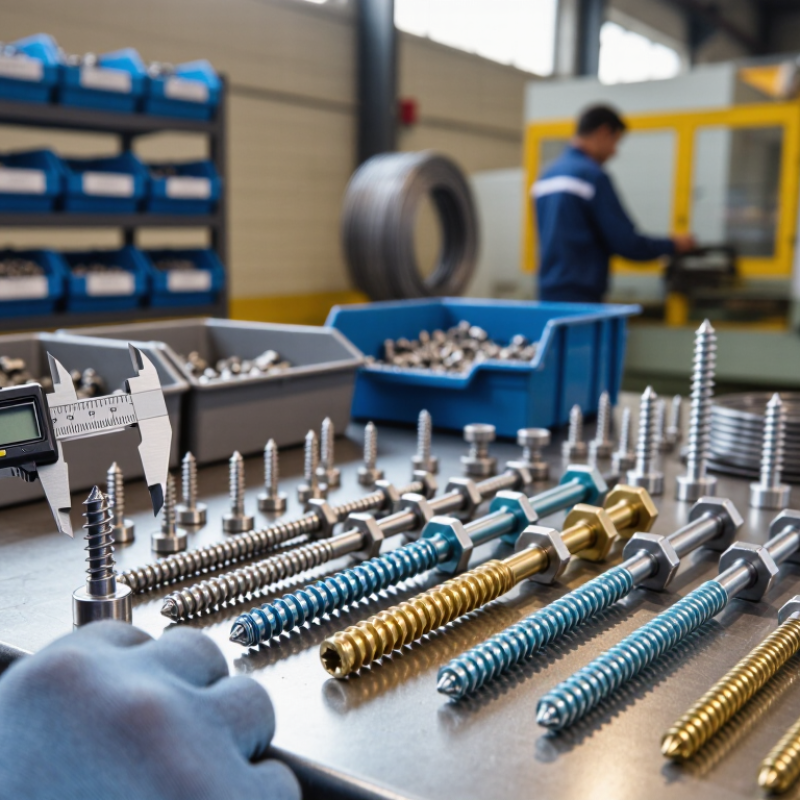
Concrete screws begin as steel wire or rod, cut into blanks by cold heading. Manufacturers then roll or form the threads, shape the drilling point, and apply controlled heat treatment. The finished screw must cut into concrete without losing its thread profile. Coatings are checked for coverage and thickness, while dimensional gauges inspect the head, diameter, and thread pitch. Small defects matter.
Testing moves beyond appearance. ASTM E488/E488M-22 provides methods for measuring anchor strength in tension and shear; test reports record applied load and observed failure. ACI 355.2-22 sets qualification procedures for post-installed mechanical anchors in concrete. Depending on the product and test plan, evaluations may examine installation torque, embedment, and performance in cracked or uncracked concrete. Results are specific to the tested configuration, not a guarantee for every slab or installation. That distinction is easy to miss.
Tips: Check the published evaluation report for concrete strength, hole-cleaning steps, and minimum embedment. A dusty hole can change installation behavior. Use the specified driver setting, and keep a record of test conditions when comparing suppliers.
Criteria for Evaluating Chinese Concrete Screw Manufacturers
Top Concrete Screws Manufacturers in China?
Criteria for Evaluating Chinese Concrete Screw Manufacturers
When assessing a concrete screw manufacturer, look beyond catalogue photos and listed dimensions. Check steel grade, thread profile, point design, and coating thickness. These details affect drilling, grip, and corrosion resistance. Ask whether the screw is designed for cracked or uncracked concrete, and request clear installation guidance, including pilot-hole diameter and embedment depth. Details matter.
Reliable performance depends on repeatable production. Request dimensional inspection records and test data for installation torque, pull-out capacity, and corrosion resistance. Ask how tests were conducted, what concrete strength was used, and whether results cover multiple batches. A single impressive test result tells little without context. Samples can help, but they should match the final production specification.
Review how the supplier handles traceability, quality complaints, and changes to materials or tooling. Consistent documentation makes differences between shipments easier to investigate. A polished catalogue can still hide gaps. I would not treat one sample as proof; site conditions and installation technique also affect results. Compare written evidence, sample quality, and the supplier’s willingness to answer technical questions before making a decision.
Leading Concrete Screw Manufacturers in China
Leading concrete screw manufacturers in China are best assessed by engineering consistency, not catalog size. A dependable producer should specify screw diameter, length, thread design, head type, and compatible pilot-hole size. These details affect installation and holding performance in concrete and masonry. Ask for product drawings, material information, corrosion-protection details, and test data that matches the intended substrate. Manufacturers with documented quality checks can help buyers trace production batches and investigate defects. Details matter.
A practical comparison includes sample inspection, packaging checks, and clear communication about tolerances and delivery schedules. Request samples and verify that the threads are clean, the heads seat properly, and the coating has no visible gaps. Published load data should state the test conditions; concrete strength, edge distance, and installation depth can change results. A screw that performs well in one test may not suit every job. This is easy to overlook. Supplier claims still need independent review against project requirements. Some manufacturers may offer broad customization, but extra options can complicate quality control and lead times. A careful buyer weighs those trade-offs before placing a large order.
How to Select and Source a Suitable Manufacturer
Selecting a concrete screw manufacturer in China starts with the application, not the catalog. Define the base material, expected load, screw diameter, embedment depth, head style, and exposure to moisture. A 6 mm screw in cracked concrete may behave differently from one installed in dense, dry masonry. Ask for dimensional drawings, material grade, coating details, and test methods. Details matter.
Check the factory’s process controls, not just its equipment photos. Ask how it monitors thread rolling, heat treatment, coating thickness, and lot traceability. Request recent inspection records and samples from normal production, not handpicked prototypes. Have a qualified engineer verify load data against your substrate and installation method; marketing figures alone are not design approval.
Before a large order, agree on tolerances, packaging, labels, delivery terms, and defect handling. Test samples first. Use the same drill bit, hole depth, cleaning method, and torque planned for the job. Keep a written specification and retain a reference sample. Communication can still be uneven, so confirm critical changes in writing. Consider third-party inspection when order value or schedule risk warrants it. A good supplier is not always the cheapest, and one successful batch does not guarantee the next will match.