











JHY PCB Blog Hub
Your Source for Expert PCB Design, Manufacturing, and Assembly Insights – Stay Informed with 2025 Trends!
China Top USB Charging Cable Manufacturers for Global Buyers
Choosing a Usb Charging Cable manufacturer is not simply a matter of comparing prices. Global buyers also need consistent product quality, clear communication, reliable production capacity, and specifications suited to their markets. A cable may look ordinary on a desk. Its conductor materials, connector fit, insulation, and strain relief can affect everyday performance and durability. Small details matter.
This introduction to China’s USB charging cable manufacturers gives buyers a practical framework for evaluating potential suppliers. It considers product range, customization options, sample evaluation, quality-control processes, lead times, and export experience. A supplier’s website or catalog can help start the search, but it cannot replace direct verification. Ask for evidence. Request samples, confirm technical details, and review relevant test reports or certifications for the specific product and destination market. Compatibility should be checked rather than assumed, especially when comparing connector types, charging requirements, and data-transfer needs. Buyers may also want to clarify packaging, order quantities, and how the supplier handles defects or production changes.
No manufacturer suits every purchasing plan. Some buyers prioritize flexible customization; others need repeatable specifications and dependable volume production. Even a promising supplier may require closer checks than expected. This guide helps readers build a shortlist, ask more precise questions, and make a better-informed decision before placing an order.
China's Role in the USB Charging Cable Supply Chain
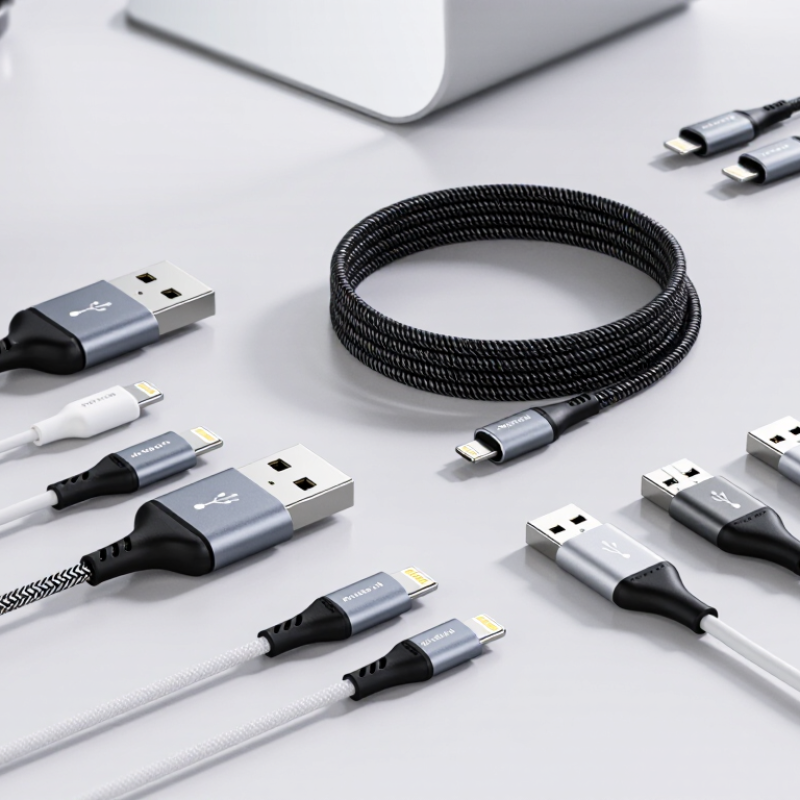
China's role in the USB charging cable supply chain extends beyond final assembly. In many manufacturing hubs, material suppliers, molding workshops, connector makers, and cable factories operate within reachable distance. This proximity can shorten development cycles and make it easier to adjust cable length, jacket material, or packaging. A production line may cut wire, strip insulation, attach connectors, and test continuity in a single facility. Small details matter. Consistent copper strands and secure connector joints affect durability, while neat strain relief can reduce damage from repeated bending. Still, nearby suppliers do not automatically guarantee consistent quality.
For global buyers, the supply chain is strongest when specifications travel clearly from sourcing to testing. A detailed drawing should identify connector type, rated current, cable length, and acceptable tolerances. Buyers can compare samples with production units and request test records tied to specific batches. Ask how incoming materials are checked and how defects are handled. Yet paperwork can look complete while real production varies, especially when components change between orders. No supplier is flawless. Practical oversight, clear communication, and periodic inspection help reveal gaps before cables reach customers.
USB Cable Types and Chinese Manufacturers' Capabilities
USB charging cables vary by connector, construction, and intended use. Common options include USB-A to USB-C, USB-C to USB-C, and USB-A to Micro-USB cables. Some support charging only; others carry data as well. USB-C models may be designed for higher power delivery, but connector shape alone does not confirm their performance. Small details matter.
Chinese manufacturers may offer different wire gauges, shielding, braided or smooth jackets, molded strain relief, and custom lengths. More capable factories can help match cable design to charging and data requirements, then provide samples and test records for review. Ask about rated current, data speed, connector durability, and production checks. Capabilities vary, even between suppliers with similar catalogs. A polished sample is useful, but it cannot tell the whole story. That is worth remembering.
Tips: Share device requirements and target cable length before requesting a quote. Test samples with your intended chargers and devices. Check connector fit and cable temperature during normal use. If a specification is unclear, ask for written confirmation rather than guessing.
China Top USB Charging Cable Manufacturers for Global Buyers - USB Cable Types and Chinese Manufacturers' Capabilities
A practical sourcing overview of common USB cable types and capabilities buyers may request from manufacturers in China. Capabilities vary by factory and product; verify specifications, certifications, and test reports for each model.
| Cable Type | Typical Connector Configuration | Data Standard and Maximum Signaling Rate | Charging Considerations | Manufacturing Capabilities to Request | Buyer Verification Points |
|---|---|---|---|---|---|
| USB-A to USB-C | USB Type-A plug to USB Type-C plug | Often USB 2.0; higher-speed versions exist. Confirm the exact data standard, as connector shape alone does not indicate speed. | Charging performance depends on the source, cable design, and supported charging protocol. USB Power Delivery is associated with USB-C connections, but not every A-to-C combination supports USB PD. | Request conductor and wire-gauge options, connector overmolding, cable length choices, labeling, and applicable charging-protocol compatibility. | Check that stated charging current is supported by the complete cable assembly and intended power source. Confirm USB data support separately from charging claims. |
| USB-C to USB-C, USB 2.0 | USB Type-C plug at both ends | USB 2.0 signaling rate up to 480 Mb/s. | USB-C cables may support USB Power Delivery, but supported power depends on cable rating and configuration. USB-C EPR cables can support up to 240 W when used with compatible equipment. | Request USB-C plug options, cable current and power ratings, e-marker options where required, and traceable assembly testing. | Verify that the cable’s stated power rating, e-marker implementation (if applicable), and USB-C compliance documentation match the product specification. |
| USB-C to USB-C, USB 3.2 Gen 1 | USB Type-C plug at both ends | USB 3.2 Gen 1 signaling rate up to 5 Gb/s. | Charging capability is a separate specification from data speed. Request the supported USB Power Delivery profile and cable power rating rather than inferring them from the data standard. | Request high-speed conductor construction, shielding options, controlled cable length, connector assembly, and production testing for data performance. | Confirm the exact USB generation and test method. Check that the requested length and construction meet the required data performance. |
| USB-C to USB-C, USB 3.2 Gen 2 | USB Type-C plug at both ends | USB 3.2 Gen 2 signaling rate up to 10 Gb/s. | Power delivery and data rate should be specified independently. High-power support may require a suitably rated cable and compatible source and device. | Request signal-integrity design, shielding, connector and cable options, and documented testing for the specified length and speed. | Ask for model-specific test results and ensure the tested cable length and connector configuration match the order. |
| USB-C to USB-C, USB 3.2 Gen 2x2 | USB Type-C plug at both ends | USB 3.2 Gen 2x2 signaling rate up to 20 Gb/s; support depends on both host and device. | Data capability does not establish charging capability. Specify required power rating separately. | Request validation of the complete cable assembly for the required data rate, length, shielding, and connector configuration. | Confirm that both connected devices support the required mode and that test documentation covers the exact cable configuration. |
| USB-C to USB-C, USB4 | USB Type-C plug at both ends | USB4 supports signaling rates up to 40 Gb/s. USB4 Version 2.0 supports up to 80 Gb/s and can support an optional asymmetric 120 Gb/s transmit / 40 Gb/s receive mode under applicable conditions. | Charging depends on the cable’s power rating and the capabilities of the connected equipment; verify independently from USB4 data support. | Request protocol-specific validation, signal-integrity testing, suitable cable construction, and documentation for the exact USB4 version and length. | Check version-specific compliance evidence and confirm the host, device, and cable all support the intended USB4 mode. |
| USB-A to Micro-USB | USB Type-A plug to Micro-USB plug | Commonly USB 2.0, with signaling rates up to 480 Mb/s when implemented to that standard. | Charging limits depend on the cable, charger, and device. Do not assume USB Power Delivery support from this connector combination. | Request connector durability options, cable flexibility, length choices, strain-relief design, and continuity testing. | Confirm connector fit, conductor specification, intended charging current, and compatibility with the target device. |
| Multi-Connector Charging Cable | Typically one input connector with multiple device-end connectors; configurations vary. | Data support may be limited or unavailable on some multi-connector designs. Specify whether the cable is for charging only or also for data transfer. | Charging behavior can vary by connector and connected device. Avoid treating a shared cable’s maximum rating as available to every output simultaneously. | Request a connector-by-connector specification, output labeling, wiring diagram, and tests for each supported charging path. | Verify simultaneous-use behavior, power allocation, polarity, and device compatibility. Confirm any safety and market-specific requirements. |
How Global Buyers Evaluate Chinese Cable Suppliers
Global buyers should compare Chinese cable suppliers on verifiable performance, not catalogue claims. Ask for test records covering charging output, data transfer, connector durability, and cable resistance. USB-IF’s USB Power Delivery 3.1 specification allows power delivery up to 240 watts, so buyers should confirm that the cable’s rated capacity matches its intended use. Higher power needs tighter process control. A sample that works once proves little.
Evaluate factory controls as carefully as product samples. Request material traceability, incoming inspection records, and batch-level test results. Check whether the supplier can explain how it handles failed tests and production changes. The EU’s common-charger rules require USB-C charging for many portable devices, with laptop requirements applying from April 2026. This makes connector compatibility and accurate documentation practical sourcing checks. A polished audit sheet can still miss small production differences; repeat testing matters.
Tips: Send the same test plan to each shortlisted supplier. Check several samples, including cable length, connector fit, and performance under load. Ask for dated reports from an independent laboratory where appropriate. Keep one sample as a reference. It may feel slow, but it can reveal problems before a large order.
Quality Standards, Testing, and Export Compliance
For global buyers, a USB charging cable’s quality should be supported by records, not appearance alone. Ask manufacturers for material specifications, inspection plans, and test reports tied to the exact cable model. Applicable USB specifications may guide connector and charging performance, while destination-market requirements can differ. A familiar certificate is not proof that every configuration is covered.
Testing should include voltage drop under load, connector fit, cable resistance, and repeated bending near the strain relief. Pull tests can reveal weak joints; temperature checks can expose problems during sustained charging. Keep test conditions clear, including current, duration, and sample size. Small details matter. A report from one sample may miss inconsistent crimping across a production run, so buyers should review batch inspection records too. That gap is easy to overlook.
Export preparation needs equal care. Confirm which safety, substance-control, labeling, and documentation rules apply in each destination, and verify that reports match the shipped materials and design. Retain lot numbers, inspection results, and change records for traceability. Packaging labels and invoices should describe the product consistently. Requirements can change, and suppliers may not catch every update; buyers should independently check current destination rules before shipment.
A Step-by-Step Framework for Choosing a Manufacturer
Choosing a USB charging cable manufacturer is a verification exercise, not just a catalog comparison. IDC’s Worldwide Quarterly Mobile Phone Tracker reported 1.24 billion smartphone shipments in 2024, up 6.4% year over year. That scale makes steady supply and consistent specifications practical buying priorities. Define the cable’s use before requesting quotes: connector type, length, data rate, charging wattage, and intended market.
Request technical sheets, material details, and test records from each supplier. USB-IF’s USB Power Delivery 3.1 specification supports power delivery up to 240 W, but only compatible devices, chargers, and cables can use that capacity. Ask how the manufacturer verifies power ratings, connector fit, insulation, and batch consistency. Then order samples and test them under realistic conditions, such as repeated bending and charging with your target devices. A polished sample can still hide uneven production. I would not treat one successful sample as proof; that is an easy mistake. Before a larger order, review inspection steps, defect handling, lead times, and traceability records.
Tips: Compare like with like. Keep one approved sample, record its cable length and performance, and use it as a reference during production checks.


