










JHY PCB Blog Hub
Your Source for Expert PCB Design, Manufacturing, and Assembly Insights – Stay Informed with 2025 Trends!
China Top PCB Board Software Suppliers for Global Buyers?
China has become a major source of PCB design and manufacturing technology for global buyers. Its software suppliers serve startups, contract manufacturers, engineering teams, and large electronics brands. This guide introduces leading China-based providers of Pcb Board Software and explains what international customers should examine before choosing one.
The evaluation goes beyond screenshots and attractive feature lists. Buyers should review schematic capture, multilayer layout, signal integrity analysis, Gerber and ODB++ output, BOM handling, and DFM checks. Compatibility matters. A tool that exports files poorly can create delays between design offices and factories. Support quality also deserves close attention, especially when engineers work across different time zones. Live demonstrations, trial projects, response records, and customer references can reveal more than marketing claims. Look for clear licensing terms, update policies, training resources, and practical integration with ERP or manufacturing systems. Data protection and controlled access should remain part of the discussion.
Small details matter.
A reliable supplier should explain how its software handles impedance rules, library management, version control, and design revisions. It should also identify known limitations instead of promising everything. No ranking is perfect. Product capabilities change, documentation may be incomplete, and some customer feedback can be difficult to verify independently. Therefore, global buyers should test a representative board before signing a long-term agreement. A simple four-layer sample with fine-pitch components, thermal vias, and controlled-impedance traces may expose unexpected problems. Experience suggests that the cheapest license is not always the lowest total cost. Careful comparison creates a stronger basis for technical, commercial, and long-term cooperation.
What PCB Design Software Suppliers in China Provide
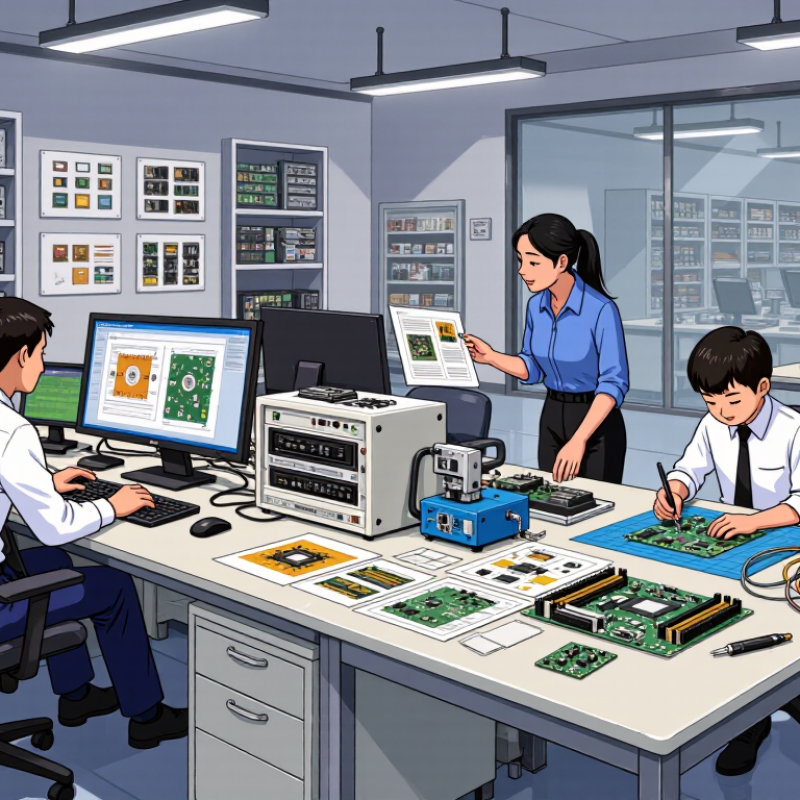
China-based PCB design software suppliers provide more than drawing tools. Many offer schematic capture, multilayer layout, signal-integrity checks, library management, and manufacturing documentation. These functions help global buyers connect design work with production needs.
In practical evaluations, engineers often inspect routing speed, component library accuracy, and compatibility with common file formats. A reliable supplier should explain update schedules, data protection practices, licensing terms, and technical support response times. Some providers also offer online training, customized workflows, and design-rule templates for different factories. Small details matter. A missing footprint or incorrect layer setting can delay a prototype and increase material costs.
Tips: Request a live demonstration using a sample board with dense routing, fine-pitch parts, and controlled impedance. Ask how the supplier handles library corrections and software failures. Test exported manufacturing files before signing a long-term agreement. Check whether support staff understand both software and PCB production. Independent user feedback can reveal issues that sales materials omit. It is also wise to compare trial results from several suppliers, because the cheapest license may create extra engineering work later. My own view is cautious: no platform fits every team, and even a capable tool may require training, workflow adjustments, and repeated verification.
How China’s PCB Software Solutions Support Board Development
China’s PCB software suppliers increasingly support the full board development process, not only schematic drawing. Their solutions often combine circuit design, multilayer layout, simulation, and manufacturing checks in one environment. For global buyers, this connection can reduce repeated file transfers and communication delays. An engineer can import component libraries, set spacing rules, and review signal paths before sending production data. The screen shows more than lines. It shows risk.
During layout, design-rule engines inspect clearances, drill sizes, copper balance, and high-speed routing conditions. Some platforms also compare the design with fabrication capabilities, such as minimum trace width or layer limits. This helps teams identify expensive changes while the board is still virtual. A practical workflow may include a shared review window, marked test points, and a direct export for fabrication documents. Small checks matter.
Automation is not judgment. A rule engine may approve a layout that performs poorly in a real enclosure or under thermal stress. Engineers still need experience with component tolerances, assembly access, and field conditions. That weakness deserves attention. Reliable suppliers provide version control, clear technical documentation, file compatibility, and responsive engineering support. Buyers should test these features with a small project before selecting a long-term solution. A useful trial should measure review speed, error visibility, documentation quality, and support response time, rather than relying on impressive demonstrations.
China Top PCB Board Software Suppliers for Global Buyers? – How China’s PCB Software Solutions Support Board Development
| Solution Category | Primary Development Use | Typical Capabilities | Common Data or File Support | Global Buyer Considerations | Development Benefit |
|---|---|---|---|---|---|
| Schematic Capture | Electrical design and circuit documentation | Symbol libraries, netlist creation, design-rule checks, hierarchical design, and bill-of-materials generation | Schematic files, netlists, component libraries, and BOM data | Check library quality, language support, collaboration features, and export compatibility | Reduces connectivity errors before physical layout begins |
| PCB Layout and Routing | Board placement, routing, and layer-stack planning | Interactive routing, differential-pair control, impedance rules, copper pours, via management, and constraint-based placement | Board layout files, footprints, layer-stack definitions, and constraint sets | Verify support for multilayer boards, high-speed rules, metric units, and manufacturing constraints | Improves signal integrity planning and manufacturing readiness |
| Design Rule Checking | Electrical and physical design verification | Clearance checks, minimum trace and via rules, unconnected-net checks, copper-spacing validation, and layer-specific constraints | Rule files, constraint reports, violation markers, and verification logs | Confirm that rules can be customized to the selected fabricator’s capabilities | Detects layout issues before fabrication files are released |
| Signal and Power Integrity Analysis | High-speed and power-distribution design | Transmission-line analysis, impedance evaluation, crosstalk review, power-integrity analysis, and decoupling assessment | Stack-up data, field-solver models, simulation models, and analysis reports | Review model libraries, solver assumptions, frequency range, and integration with layout tools | Supports reliable operation of high-speed interfaces and dense power networks |
| Thermal and Mechanical Review | Mechanical fit, enclosure integration, and thermal planning | 3D board visualization, component-height checking, keep-out definition, thermal estimation, and enclosure clearance review | 3D mechanical models, board outlines, component-height data, and thermal parameters | Confirm neutral 3D exchange support and compatibility with the buyer’s mechanical workflow | Reduces enclosure conflicts and helps identify thermal risks early |
| Manufacturing Documentation | Preparation of fabrication and assembly packages | Gerber generation, drill-file output, pick-and-place data, assembly drawings, fabrication notes, and revision tracking | Gerber X2 or RS-274X, Excellon drill, ODB++, IPC-2581, BOM, and centroid files | Confirm the manufacturer’s preferred formats, naming rules, units, and revision-control process | Creates consistent production data for overseas fabrication and assembly |
| Design for Manufacturing and Assembly | Manufacturability assessment before production | Panelization review, solder-mask checks, component-spacing analysis, assembly-access checks, and process-rule validation | Manufacturing rule sets, panel drawings, assembly constraints, and DFM reports | Use rules supplied by the actual PCB fabricator or assembler rather than generic defaults | Helps reduce rework, production delays, and avoidable yield problems |
| Library and Component Data Management | Standardization of symbols, footprints, and component information | Centralized libraries, parameter management, lifecycle fields, footprint validation, and approved-part workflows | Symbol libraries, footprint libraries, 3D models, manufacturer part numbers, and BOM attributes | Check data ownership, update procedures, regional component availability, and access controls | Improves design reuse and lowers the risk of incorrect component land patterns |
| Collaboration and Version Control | Distributed engineering and supplier coordination | Role-based access, revision history, design comparison, approval workflows, cloud or server collaboration, and audit records | Project archives, revision packages, change logs, review comments, and release records | Assess data-hosting location, export controls, backup policy, and compatibility with existing PLM or PDM systems | Provides clearer communication between global buyers, designers, and manufacturers |
| Buyer Evaluation Priorities | Selection and deployment planning | Format interoperability, learning requirements, technical support, licensing model, data security, scalability, and post-sale training | Evaluation projects, sample files, compatibility reports, training materials, and support documentation | Validate performance using the buyer’s own board files and manufacturing rules before a large-scale rollout | Improves software-fit decisions and reduces transition risk |
Note: Feature availability, file-format support, licensing terms, and manufacturing-rule compatibility vary by software edition and supplier. Buyers should verify current specifications with the selected provider and PCB manufacturer.
Key Features Global Buyers Should Compare
China Top PCB Board Software Suppliers for Global Buyers?
Global buyers should compare PCB software by production evidence, not attractive screenshots. A 2024 Grand View Research report valued the global electronic design automation market at about USD 14.6 billion in 2023. This growth increases supplier choice, but also makes evaluation harder. Ask whether the platform supports multilayer, HDI, rigid-flex, and high-speed designs. Check impedance control, thermal analysis, signal integrity, and automated design-rule checking. These features reduce costly board revisions.
Interoperability deserves equal attention. The software should exchange reliable data with schematic, mechanical, simulation, and manufacturing systems. Test common formats using a real project, not a sample file. IPC standards should guide footprint libraries, documentation, and fabrication outputs. IPC’s 2023 Global PCB Production Report highlights the continuing importance of regional supply resilience and manufacturing consistency. Therefore, buyers should inspect how suppliers manage local fabrication rules, material libraries, and revision histories.
Security and service often receive less attention. They should not. Compare cloud and on-premise options, access controls, encryption, audit logs, and backup procedures. Measure license flexibility across engineering teams and time zones. Supplier training should include practical troubleshooting, not only recorded demonstrations. A trial project can expose weak routing performance or incomplete libraries. A polished demo can mislead. My own evaluation preference is simple: request a complex board, document every limitation, and calculate engineering hours saved. No platform is perfect, and ignoring small workflow problems may create expensive production delays.
Licensing, Technical Support, and International Service Options
China’s PCB software suppliers increasingly compete on licensing flexibility, technical support, and overseas service. Grand View Research valued the global PCB market at approximately USD 89.7 billion in 2023, with projected growth through 2030. This expansion increases demand for stable design, simulation, and manufacturing data tools.
Support is measurable. Buyers should compare perpetual, subscription, and floating licenses carefully. A floating license may help distributed engineering teams, but unstable network access can interrupt urgent revisions. Technical agreements should define response times, update frequency, bug-fix procedures, and escalation contacts. Practical training matters too. Remote sessions should include real project files, not only standard demonstrations. Translation quality also deserves attention, especially for error messages and manufacturing rules.
International service requires more than an English website. Suppliers should offer regional time-zone coverage, secure remote diagnostics, documented data-handling procedures, and local invoicing options. The IPC Electronics Industry Report has repeatedly identified supply-chain uncertainty and skills shortages as major manufacturing concerns. Therefore, onboarding should include library management, post-processor checks, and knowledge transfer for internal teams. Certification is useful, but it cannot replace responsive engineers. That remains a common weakness. Buyers should request reference workflows, trial access, and written service-level commitments before signing. A cheaper license can become expensive when support depends on one distant specialist.
How to Evaluate and Select a Chinese PCB Software Supplier
Selecting a Chinese PCB software supplier requires more than comparing license prices. For global buyers, the software must support schematic capture, layout, library control, and manufacturing outputs. Ask for a live demonstration using a sample board similar to yours. A polished slide deck proves little. Request evidence from completed projects, user references, and measurable support response times. Keep records. They matter later.
Technical evaluation should cover file compatibility, version control, cloud access, and data protection. Check whether engineers can import existing design files without losing layers, rules, or component properties. Run design-rule checks on a dense board, not only a simple training file. Review export formats used by your fabricators and assembly partners. Ask how updates are tested before release. I once treated this answer as a minor detail; it became a scheduling problem.
Supplier reliability depends on people as much as features. Confirm the training plan, English support, escalation path, and backup contacts. Examine security policies, access controls, audit logs, and contract terms. Look for documented quality procedures and clear software maintenance records. Independent verification is valuable when claims sound unusually broad. A trial period with acceptance criteria exposes hidden limitations. Do not ignore small frustrations. They often predict larger implementation costs.
How to Evaluate Chinese PCB Software Suppliers
The chart presents a practical buyer evaluation framework rather than company-specific results. Functional capability and manufacturing integration receive the highest weights because they directly affect design accuracy, production readiness, and workflow efficiency. Buyers should score each shortlisted supplier against these criteria and verify results through demonstrations, documentation, security reviews, and pilot projects.
Related Posts
-
Why Is Circuit Board Software Essential for PCB Design?
-
7 Best Circuit Board Software for Global Buyers?
-

Unlocking the Secrets of Best Pcb Board Software for Your Next Project
-
Why Choose the Best Pcb Board Software for Your Projects?
-

Optimize Your Designs with the Best Circuit Board Software for Efficient Prototyping
-
10 Best PCB Circuit Board Manufacturers Worldwide?