











JHY PCB Blog Hub
Your Source for Expert PCB Design, Manufacturing, and Assembly Insights – Stay Informed with 2025 Trends!
What Are the Top AC Magnetic Starter Types in 2026?
An AC Magnetic Starter may look like a contactor, overload relay, and a few wires inside a metal enclosure. Yet the choice affects motor starting, equipment protection, and maintenance. In 2026, buyers still compare direct-on-line, reversing, reduced-voltage, and combination starters. The right option depends on the motor, load, and operating conditions—not the product label alone.
The U.S. Department of Energy’s Improving Motor and Drive System Performance: A Sourcebook for Industry reports that motor-driven systems account for about 68% of electricity use in U.S. manufacturing. That figure concerns motor systems, not starters specifically. Still, it shows why suitable motor control matters. IEC 60947-4-1 provides a technical reference for electromechanical contactors and motor starters, including their use in motor circuits. Both sources help frame a practical comparison, but neither ranks starter types for 2026.
This guide will compare common designs by starting method, protection, and typical application. A direct-on-line starter can suit a small pump with a simple duty cycle. A reversing starter fits machinery that must change direction. Reduced-voltage designs can limit starting stress, but add complexity and cost. Austin Hughes and Bill Drury, authors of Electric Motors and Drives, offer useful motor-control expertise; however, no verifiable quotation from them on AC magnetic starter selection is available here. I will not invent one. That gap matters. Real installations also differ, so ratings and manufacturer documentation should guide final selection.
Understanding AC Magnetic Starters and Their Core Components
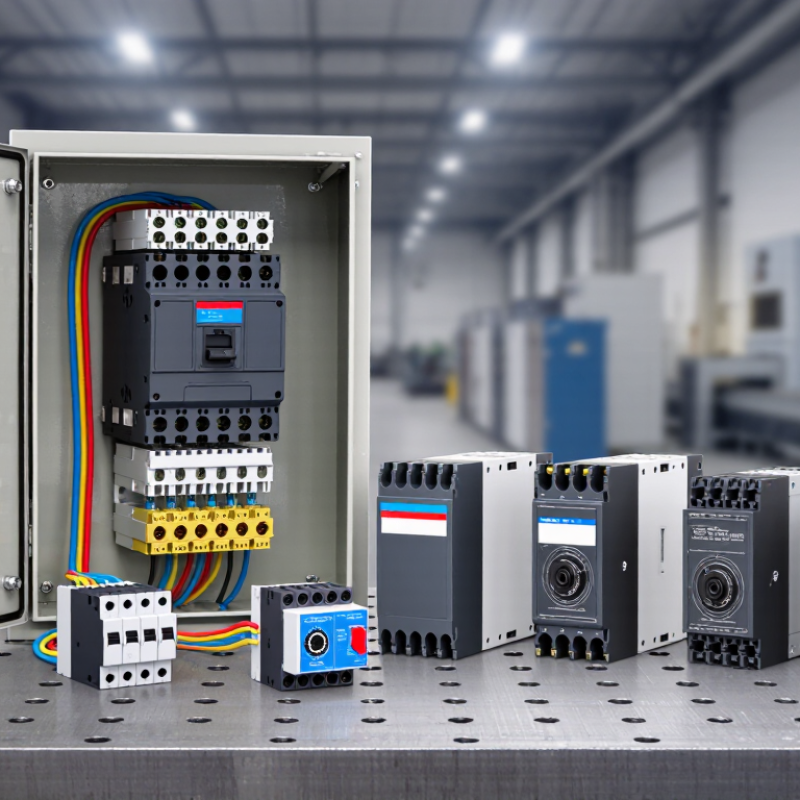
An AC magnetic starter switches a motor on and off using an electrically energized coil. When control voltage reaches the coil, it creates a magnetic field that pulls the armature inward. This movement closes the main contacts and supplies power to the motor. When the coil loses power, a spring opens the contacts. Simple, but important.
Most starters combine a contactor with overload protection. The contactor handles routine switching; an overload relay monitors motor current and can interrupt operation when sustained excess current occurs. A control circuit, often including a stop button and a start button, energizes the coil. The enclosure helps shield internal parts from dust, moisture, and accidental contact, though its rating must suit the installation. Small parts, real consequences.
Starter types vary by application, such as motor size, control voltage, and whether reversing is needed. These differences do not change the basic roles of the coil, armature, contacts, and overload relay. During inspection, look for pitted contacts, loose terminals, or signs of overheating. A starter can appear intact while a worn contact causes unreliable operation. Labels and wiring diagrams are not always easy to interpret, so verify connections against the equipment documentation before maintenance.
How AC Magnetic Starters Control and Protect Motors
What Are the Top AC Magnetic Starter Types in 2026?
AC magnetic starters combine a contactor with an overload relay to start and stop motors safely. When the control circuit energizes the coil, the contactor closes and supplies power to the motor. If the motor draws excessive current for too long, the overload relay opens the control circuit. That matters. A starter’s overload relay does not replace a properly rated fuse or circuit breaker for short-circuit protection.
Across-the-line starters are common for motors that can handle full-voltage startup. They are simple, but starting current can cause a noticeable dip in supply voltage. Reversing starters use interlocked contactors to switch motor phase connections and change direction. Reduced-voltage starters limit starting current, though they can also lower starting torque. The right type depends on motor ratings, load behavior, and the electrical system—not just the machine’s label.
Tips: Check the motor nameplate and relay settings before installation. Confirm that reversing contactors are mechanically and electrically interlocked. Keep the enclosure clean, and inspect terminals for heat discoloration. Small details matter. Field conditions can differ from drawings, so verify the wiring and protection settings during commissioning.
The Main Types of AC Magnetic Starters in 2026
AC magnetic starters combine a contactor with overload protection to control motor power. Their main types differ in how they start, stop, or change a motor’s direction. The right choice depends on the motor and the driven equipment, not just the panel layout.
A non-reversing starter runs a motor in one direction. It suits pumps, fans, and conveyors where direction stays fixed. A reversing starter uses paired contactors and electrical or mechanical interlocking to swap phases safely. It is common on hoists and positioning equipment.
Two-speed starters switch motor windings or connections to provide distinct operating speeds. Not every motor supports this method.
Reduced-voltage magnetic starters, including autotransformer and wye-delta designs, limit starting current. They can help when a large motor causes noticeable voltage dips, though they may also reduce starting torque. That trade-off matters for loaded conveyors and high-inertia machines.
The categories can blur. A starter’s label alone says little about its suitability. Check the motor nameplate, load, starts per hour, and available supply before selecting overload settings and contactor ratings. Small details matter. A brief site review can reveal constraints that a catalog description misses.
Comparing Starter Types by Motor Size and Application
AC magnetic starters combine a contactor with overload protection, but the right arrangement depends on the motor and its work. A direct-on-line starter suits many small motors and straightforward loads, such as a fan or small pump. It applies full line voltage at startup, so check that the supply can handle the inrush current. For conveyors or mixers, starting torque and frequent starts may matter more than motor size alone.
A reversing starter uses interlocked contactors to change motor direction, making it useful for hoists, gates, or machine tables. Star-delta starters can reduce starting current on suitable larger motors, but they require compatible motor windings and may provide limited starting torque. For heavier loads, a reduced-voltage arrangement may be worth evaluating. A simple horsepower rule can mislead; duty cycle, supply capacity, and load inertia change the choice. The nameplate is a better starting point.
Tips: Compare rated current, required starting torque, and starts per hour before selecting a starter. Check overload settings against the motor nameplate and follow the equipment instructions. If a pump starts smoothly but trips under load, investigate the load and wiring rather than simply increasing protection settings. Have a qualified technician verify the design.
How to Select and Install an AC Magnetic Starter Safely
Choose an AC magnetic starter by checking the motor nameplate, not by relying on horsepower alone. Match the contactor’s rating to the motor’s voltage, full-load current, and operating duty. Confirm that the overload relay’s adjustment range covers the nameplate current, and select a coil voltage compatible with the control circuit. Small details matter. Consider the installation environment, too: dust, moisture, vibration, and heat can affect enclosure choice and service life.
Before installation, isolate the power source and verify that the circuit is de-energized with a properly rated tester. Follow the starter’s wiring diagram and applicable electrical codes. Use conductors sized for the load, secure connections to the specified torque, and provide suitable upstream short-circuit protection. Keep the enclosure clear of obstructions, and ensure protective grounding is continuous. If the supply voltage or control wiring is uncertain, ask a qualified electrician rather than improvising.
After wiring, inspect the connections and confirm that overload protection is set according to the motor documentation. Test the control circuit and stopping function before placing the motor under normal load. Keep guards in place, and never bypass an overload relay to get a motor running. Even experienced installers can overlook a loose terminal or a mismatched coil. A careful second check is worth the extra few minutes.
| Starter type | How it operates | Typical applications | Key selection checks | Installation and safety considerations |
|---|---|---|---|---|
| Across-the-line, non-reversing | Connects the motor directly to the supply when the contactor closes; the motor starts at full voltage. | Fans, pumps, conveyors, and other loads that can tolerate normal direct-start current and torque. | Match the starter and overload protection to the motor nameplate current, supply voltage, duty, and expected starts per hour. | Verify the available short-circuit protection and enclosure rating. Confirm the motor turns in the intended direction before placing the machine in service. |
| Reversing, full-voltage | Uses two contactors to interchange two motor phase connections, reversing rotation. Mechanical and electrical interlocks prevent both contactors from closing together. | Hoists, machine tools, positioning equipment, and conveyors requiring forward and reverse operation. | Check motor suitability for reversing duty, expected reversal frequency, load inertia, and whether the application needs a controlled stop before reversal. | Use the specified interlocks and correctly wired control circuit. Isolate power before inspection; never rely on a control stop button as electrical isolation. |
| Two-speed | Switches motor connections to select one of two designed speeds; the motor may use separate windings or a pole-changing winding. | Ventilation systems, machine tools, and process equipment designed to run at two fixed speeds. | Confirm the motor is specifically designed for two-speed operation and identify its winding arrangement and nameplate connection diagram. | Use the correct interlocking and transition sequence for the motor design. Do not connect a standard single-speed motor to a two-speed starter arrangement. |
| Wye-delta (star-delta) | Starts a compatible six-lead motor in wye to reduce starting current, then changes the winding connections to delta for normal running. | Loads with moderate starting-torque requirements where reduced starting current is useful. | Check that the motor is designed to run in delta at the supply voltage, has the required accessible leads, and can accelerate the load at reduced starting torque. | Use the correct timer, interlocks, and transition wiring. An incorrect transition or connection can cause high current, equipment damage, or hazardous operation. |
| Autotransformer reduced-voltage | Applies reduced voltage during starting through transformer taps, then transfers the motor to full-line operation. | Larger motors or loads where reduced starting current is needed and the motor must develop more starting torque than some other reduced-voltage methods provide. | Determine the required starting torque and current, transformer tap, motor rating, and permitted number of starts. Have the design checked for the specific load. | Account for the starter’s size, heat, and clearances. Follow the manufacturer’s wiring diagram and applicable electrical code requirements. |
| Part-winding | Energizes part of a specially designed motor winding first, then energizes the remaining winding after a timed transition. | Motors manufactured for part-winding starting where a step in starting current is acceptable. | Confirm the motor is explicitly rated and connected for part-winding starting; this method is not suitable for every motor. | Set the transition timing as specified for the motor and starter. Incorrect sequencing can cause excessive current or winding damage. |
Selection and installation note: These are established starter arrangements, not a ranking. Final selection depends on the motor nameplate, load, supply, installation conditions, and local electrical codes. Use appropriately rated short-circuit protection and overload protection, provide a suitable disconnect, and have installation and commissioning performed by qualified personnel. Always de-energize, lock out, and verify absence of voltage before working on equipment.


