










JHY PCB Blog Hub

Your Source for Expert PCB Design, Manufacturing, and Assembly Insights – Stay Informed with 2025 Trends!

Top 10 Parchment Paper Roll Suppliers Worldwide

A dependable Parchment Paper Roll supplier does more than quote a low price. Buyers need consistent sheet thickness, clean winding, reliable release performance, and rolls that arrive without crushed edges. In a busy bakery, uneven paper can slow packing and leave trays poorly lined. Small details matter.

Packaging technologist Mara Ellison captures the evaluation principle this way: “A good roll should perform consistently from the first sheet to the last.” That is a useful standard, though real production conditions can expose weaknesses that a sample never shows. Ask suppliers about paper weight, roll width, winding quality, packaging protection, and available food-contact documentation. Then compare answers against your actual equipment and application.

This Top 10 Parchment Paper Roll Suppliers Worldwide overview is designed to help buyers make those comparisons. It considers product range, manufacturing capability, customization, quality controls, and export support. Not every supplier will suit every business. Some excel at high-volume orders; others may be more responsive to specialized sizes or smaller runs. Verify specifications directly, request samples, and test them under normal operating conditions. A polished catalog is not proof of a reliable production line. Nor is one successful sample a guarantee of future consistency. Look closely, and leave room to question the claims.
Top 10 Parchment Paper Roll Suppliers Worldwide

Understanding Parchment Paper Rolls and Their Applications

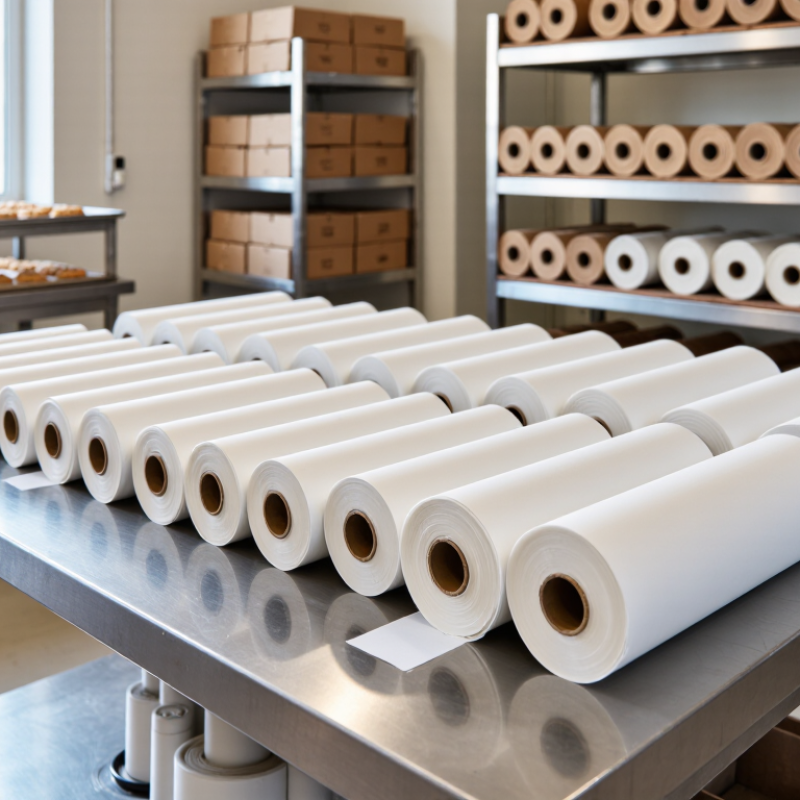
Parchment paper rolls are continuous sheets designed for cutting to the length a task needs. Many are coated with silicone, which helps food release and reduces cleanup. They are commonly used to line baking trays for cookies, pastries, and roasted vegetables. A roll also makes it easier to cover an unusually wide pan or trim a piece around a smaller one.

Check the product’s stated temperature limit before putting it in an oven. Performance can vary. Keep paper away from exposed heating elements, and do not assume it is suitable for every cooking method. It is not the same as wax paper, which may not tolerate oven heat. For routine baking, a flat sheet should sit snugly on the tray rather than curl near a flame or fan.

Small details matter. A clean cut helps.

Beyond baking, parchment can separate sticky layers of dough or baked goods during storage. Some cooks use it to form a loose packet for fish or vegetables, helping hold in moisture while food cooks. The paper may brown or become brittle at high temperatures, so inspect it during use. It can also tear when wet or overloaded; that is inconvenient, and worth remembering when choosing a roll for repeated kitchen tasks.

Common Materials, Coatings, Sizes, and Performance Standards

Parchment paper rolls usually start with cellulose-based paper, then receive a treatment that helps resist grease and moisture. Silicone is a common release coating, allowing baked goods to lift cleanly from the sheet. Some products use other treatments, so buyers should check the technical data rather than assume every roll performs alike. Details matter. A heavy coating may improve release, but it does not automatically make a roll suitable for every oven or food use.

Roll widths often range from narrow household formats to wider bakery and food-service rolls; lengths and sheet thickness also vary. Compare roll dimensions with dispensers and trays, then check whether the paper tears cleanly by hand. Heat resistance, release performance, and grease resistance are useful measures, but test methods can differ between suppliers. Ask for specification sheets, food-contact documentation, and stated temperature limits for the intended market. Standards vary. A small trial can reveal curling, scorching, or sticking that a data sheet may not show. I still find packaging labels easy to misread, especially when coating details are vague. That is worth checking twice.

Criteria for Evaluating Parchment Paper Roll Suppliers

A reliable parchment paper roll supplier should provide clear specifications, not broad claims. Check paper weight, roll width, length, and stated temperature range. These details affect fit and performance in ovens, bakery trays, and production lines. Ask whether the paper is bleached or unbleached and whether it has a silicone coating. Small differences matter. A roll that curls, tears, or sticks can slow packing work and create waste.

Request samples from the same production grade you plan to order. Test them with your actual trays, dough, and baking conditions. Compare release, oil resistance, odor, and how easily the paper tears by hand. Ask for relevant food-contact documentation for your destination market, plus batch traceability and quality-check procedures. Clear answers count.

Consistency deserves close attention. Ask how the supplier controls paper thickness and roll winding, and what happens when a batch falls outside specification. Review minimum order quantities, lead times, packaging, and protection from moisture during storage. Price is useful, but it rarely tells the whole story. A low quote may exclude custom widths or careful packing. Even a detailed checklist has limits; samples can vary, and real production may reveal issues that a small test misses.

Profiles of 10 Parchment Paper Roll Suppliers Worldwide

Parchment paper roll suppliers vary in manufacturing scale, coating options, and export support. The profiles below describe ten common supplier models, not a verified company ranking. Their categories can overlap, so a neat label may not tell the whole story.

A European paper mill may focus on consistent base-paper quality and documented specifications.
A Nordic producer may emphasize responsibly sourced fiber and controlled production.
A North American converter may cut large parent rolls to custom widths.
A Canadian distributor may support smaller orders with regional stock.
An East Asian manufacturer may offer varied roll lengths and packaging formats.
A Southeast Asian exporter may coordinate bulk shipments for overseas buyers.
An Indian paper maker may serve food-service and household-use markets.
A Turkish converter may supply flexible quantities across nearby trade routes.
A Latin American wholesaler may combine imported and locally converted rolls.
An Australian packaging supplier may prioritize dependable local delivery.

Details matter. The profiles are starting points, not guarantees of performance.

Tips: Request samples and confirm roll width, core diameter, sheet weight, and coating details. Ask how the paper performs near moisture or heat. A specification sheet can look complete yet miss behavior on a busy packing line. Compare trial results, not just quoted prices.

Comparing Suppliers by Product Range, Markets, and Certifications

When comparing parchment paper roll suppliers, assess range before price. Reliable catalogs specify roll width, length, basis weight, coating type, and oven-temperature limits. Some offer bleached and unbleached paper, silicone-coated rolls, and custom dimensions. Ask for samples and test them with greasy pastries; release performance can vary.

Market coverage matters. A supplier serving bakeries, food processors, and retail kitchens may offer different pack sizes and documentation. CEPI’s Key Statistics 2023 reported European paper and board production at about 74.3 million tonnes, down 12.8% year over year. This broader paper-market shift is not parchment-specific, but it highlights why buyers should check stock continuity and lead times. Certifications such as FSC or PEFC support fiber-sourcing claims; ISO 9001 and relevant food-contact documentation help assess quality controls. Verify scope and validity directly. Paperwork can look impressive.

Tips: Request a current technical data sheet, food-contact declaration, and batch traceability details. Compare the same roll width and length across quotes. Confirm whether certificates cover the supplied product, not just the factory. Small details matter. Temperature claims deserve a practical trial, too.

Scroll to Top