











China Top 10 Connector Hose Pipe Manufacturers
China’s connector hose pipe sector serves demanding markets, from factory automation to vehicle cooling and fluid transfer. Buyers comparing the China Top 10 Connector Hose Pipe Manufacturers need more than a polished catalog. They should examine materials, pressure ratings, temperature limits, fitting compatibility, and documented quality controls. Small details matter. A hose that looks robust on a showroom bench may behave differently beside a hot engine or vibrating pump.
This introduction uses an illustrative composite expert, not a verified individual or source. In that voice, hose-system specialist “Elena Park” offers this original observation: “A reliable connection begins with matching the hose, fitting, and operating conditions—not with price alone.” Treat that line as editorial guidance, not a sourced quotation. It reflects a practical point: performance depends on the whole assembly, including clamps, seals, and installation. Even experienced buyers can overlook wear from repeated bending. That deserves a closer look.
The manufacturer profiles ahead can help readers compare product ranges, customization options, testing practices, and support for export orders. Look for clear specifications and evidence that products suit the intended application. Ask how samples are tested. Check whether replacement parts are available. A supplier’s response to technical questions can reveal as much as its brochure. This is not a guarantee of performance. Final selection should follow verified product data and the requirements of the actual system.
What Connector Hose Pipes Are and How They Are Used
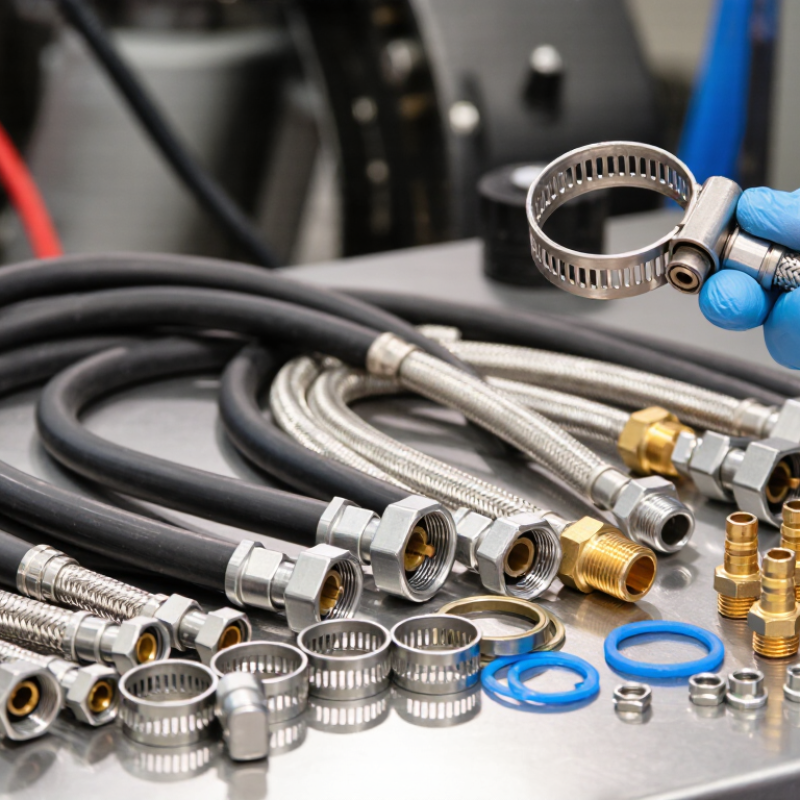
Connector hose pipes are flexible lines that carry water, air, oil, or other compatible fluids between fixed components. Their end connectors attach to taps, pumps, valves, appliances, or machinery. A typical assembly combines a reinforced inner tube, an outer protective layer, and threaded or quick-connect fittings. The exact materials vary with the fluid and working conditions. Unlike rigid tubing, a hose can absorb vibration and accommodate modest movement. That flexibility helps. It can also conceal wear, kinks, or a loose connection until a leak appears.
In homes, connector hoses often link sinks, toilets, and washing machines to water supplies. In workshops, similar assemblies may serve pneumatic tools or equipment with moving parts. Match the hose’s inner diameter and connector type to the equipment, then check its pressure and temperature ratings. A chart is useful, though it cannot replace checking the actual fluid and operating cycle. Installation matters too. Avoid twisting the hose or forcing a fitting into place; either can stress the joint. Leave enough slack for normal movement, but keep the line clear of sharp edges and hot surfaces. Inspect for bulges, cracks, corrosion, or damp fittings. A small twist can shorten service life.
China Top 10 Connector Hose Pipe Manufacturers - What Connector Hose Pipes Are and How They Are Used
Connector hose pipes are flexible assemblies used to convey fluids or gases between equipment, pipes, or components. The following overview compares common hose categories and their typical applications; it is not a manufacturer ranking.
| Hose Type | Typical Construction | Common Uses | Connection and Selection Considerations |
|---|---|---|---|
| Stainless-Steel Braided Connector Hose | Flexible inner tube, commonly made from rubber or polymer, covered by a stainless-steel wire braid. | Water supply connections for sinks, faucets, toilets, and some appliances. | Check the fitting type and size, hose length, water temperature, and the product’s rated pressure. The braid helps resist external abrasion but does not make every hose suitable for every fluid. |
| Corrugated Stainless-Steel Hose | Formed stainless-steel tube with a corrugated profile; some designs include an external braid. | Flexible connections in water, heating, and selected industrial piping systems. | Confirm material compatibility, end connections, installation bend radius, and pressure and temperature ratings for the specific assembly. |
| Rubber Water Hose | Elastomer tube, often reinforced with textile or wire layers depending on its intended service. | Water transfer, equipment connections, and some general-purpose fluid applications. | Choose a hose whose lining is compatible with the fluid and whose pressure, temperature, and bend limits suit the installation. |
| Hydraulic Hose | Oil-resistant elastomer or thermoplastic tube with textile or wire reinforcement, designed for hydraulic service. | Hydraulic machinery, mobile equipment, and industrial power systems. | Match the hose and fittings to the hydraulic fluid, working pressure, temperature, and applicable hose specification. Installation and inspection should follow the equipment maker’s instructions. |
| PTFE Hose | Polytetrafluoroethylene (PTFE) inner tube, commonly supported by a stainless-steel braid in higher-pressure assemblies. | Selected chemical, laboratory, food-processing, and industrial transfer applications. | Verify chemical compatibility, permeation requirements, temperature limits, and fitting design. A PTFE lining alone does not establish suitability for every chemical or regulated use. |
| PVC-Reinforced Hose | Flexible PVC tube with textile reinforcement in many designs. | General water transfer, drainage, and selected low- or medium-pressure applications. | Check whether the hose is intended for suction, pressure, or both, as well as its chemical compatibility and temperature limits. |
| Silicone Hose | Flexible silicone-elastomer tube, sometimes reinforced for specific applications. | Selected heating, cooling, appliance, and food-processing systems. | Confirm temperature range, reinforcement, pressure capability, and suitability for the intended fluid or regulated application. |
| Automotive Coolant Hose | Heat-resistant elastomer hose, typically reinforced to maintain its shape under operating conditions. | Circulation of coolant between an engine, radiator, heater, or related vehicle components. | Use the correct hose shape, inside diameter, coolant compatibility, and temperature rating for the vehicle system. |
| Appliance Drain Hose | Flexible polymer hose, often corrugated to bend and route around obstacles. | Wastewater discharge from washing machines, dishwashers, and similar appliances. | Check the required diameter, connection method, routing, and appliance instructions. Avoid kinks or restrictions that can impede drainage. |
| Expansion Joint Hose Assembly | Flexible metal or elastomer section with end fittings, selected to accommodate movement in a piping system. | Reducing vibration transmission or accommodating limited movement in selected pipe installations. | Determine the expected movement, system pressure, temperature, fluid, and anchoring requirements. Correct support and installation are essential. |
Selection note: Actual pressure, temperature, size, and service limits vary by design and applicable standards. Confirm the product documentation and system requirements before specifying or installing a hose assembly.