10 Tips for Choosing Wall Cladding Panels
Choosing the right Wall Cladding Panels can transform a plain surface into a durable, attractive feature. However, appearance alone should never guide the decision. A warm oak finish may suit a reception area, while moisture-resistant panels perform better in a busy bathroom or covered outdoor space.
This guide shares ten practical tips based on material knowledge, installation experience, and common project requirements. It considers panel composition, surface texture, fire performance, maintenance, moisture exposure, acoustic needs, and long-term value. Small details matter. Check the panel thickness. Inspect the edge finish. Ask how replacement panels will match after several years.
Measure twice.
Reliable manufacturers should provide clear technical data, installation guidance, warranty terms, and care instructions. Independent certifications can also support better decisions, although labels should be checked carefully rather than accepted without question. A product may look premium online but feel fragile under real handling. Samples reveal more than photographs.
There is no universal best panel. That is worth remembering. Budget, climate, building use, design goals, and installer skill all influence the outcome. Some choices may appear efficient but create difficult maintenance later. Others may cost more initially yet reduce repairs and cleaning time. This article examines the practical questions that help buyers compare options confidently, avoid common oversights, and select Wall Cladding Panels that balance visual appeal, performance, safety, and dependable everyday use.
Define Your Wall Cladding Needs and Project Requirements
Choosing wall cladding panels starts with a clear project brief, not a color sample. Define the wall’s location, purpose, and exposure before comparing materials. An exterior facade faces rain, wind, ultraviolet light, and repeated temperature changes. A bathroom needs moisture resistance and reliable edge sealing. A busy corridor needs impact tolerance and surfaces that clean easily. Write these conditions down. It prevents attractive but unsuitable choices.
Measure each wall, including openings, corners, service zones, and fixing points. Check substrate flatness and confirm whether it can support the panel system. Uneven masonry may require battens or leveling work. That changes the budget and installation time. Leave room for movement joints where temperature shifts are significant. I have seen small measurement errors create awkward strips beside doors. They looked minor on paper. They were not.
Set performance targets before setting a visual preference. Review fire behavior, water absorption, acoustic needs, thermal performance, maintenance, and expected service life. Ask for test reports, installation instructions, and cleaning limits from qualified suppliers. Local building requirements must guide the final specification. Request a sample and inspect it under the project’s actual lighting. Also examine the back, edges, fasteners, and cut quality. A perfect sample can hide difficult installation. Your plan may still need revision after a site trial. That is normal, and ignoring it is expensive.
Compare Panel Materials, Durability, and Maintenance Demands
Choosing wall cladding panels starts with comparing material performance, not surface appearance alone. On renovation projects, I have seen attractive panels fail because moisture reached poorly sealed joints. Fiber cement resists impact, fire, and seasonal movement, but cutting it creates dust and requires accurate installation. Metal panels offer strong weather resistance and clean lines. However, coastal air can accelerate corrosion unless the finish and fasteners are suitable. Composite panels are lightweight and flexible, yet their cores and coatings vary widely.
Durability depends on the building’s exposure. A shaded urban wall may need less protection than a south-facing elevation exposed to intense sunlight. Check the panel’s resistance to ultraviolet light, water absorption, temperature changes, and impact. Ask for tested performance data, not vague claims. Small details matter. Examine edge protection, drainage paths, and the warranty conditions. A panel can be durable while its fixing system is weak.
Maintenance demands should fit the property owner’s routine. Smooth surfaces usually need occasional washing with mild detergent and clean water. Textured panels may hold dust, pollen, or soot around ledges. Inspect joints and sealants every year, especially after storms. Some finishes hide dirt well, but that does not mean damage is absent. I once underestimated access costs on a tall facade; cleaning equipment became more expensive than expected. That mistake changed my advice: calculate maintenance labor, replacement access, and local climate before choosing the panel.
10 Tips for Choosing Wall Cladding Panels
Compare panel materials by durability, expected service life, and maintenance demand. Durability and maintenance scores use a 1–5 scale; a higher maintenance score means more frequent upkeep is typically required.
Typical service-life guidance: natural stone and brick veneer can commonly last 75–100+ years when correctly installed; fiber-cement and metal panels often last approximately 40–70 years; vinyl commonly lasts about 20–40 years; and exterior wood cladding commonly lasts about 20–40 years depending on species, exposure, coatings, and maintenance.
Evaluate Appearance, Dimensions, and Compatibility With Your Space
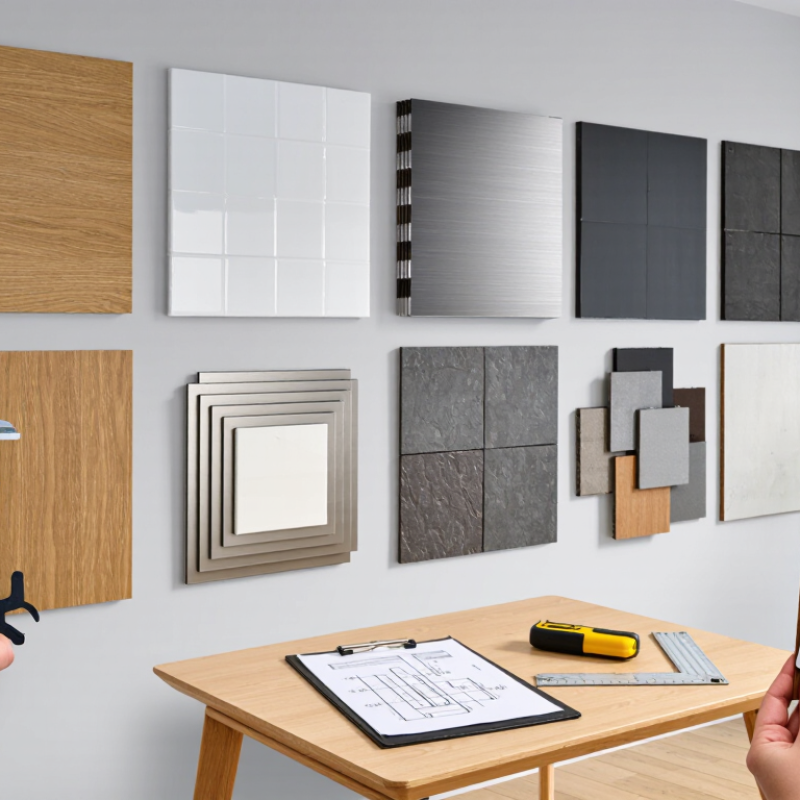
Choosing wall cladding panels starts with your space, not a catalog image. Observe daylight at different hours. A warm oak tone may look yellow under strong afternoon sun. Dark panels can make narrow corridors feel smaller. Request physical samples. Hold them beside flooring, trim, furniture, and existing paint. Do not trust digital color alone. Check surface texture, gloss, grain direction, and edge treatment. A small mock-up often reveals awkward joints or excessive visual repetition. One honest warning: attractive panels can still create a poor room. The U.S. Energy Information Administration’s 2018 Commercial Buildings Energy Consumption Survey, published in 2022, recorded about 6.2 million commercial buildings in the United States. Their varied layouts show why a standard appearance rarely fits every interior.
Dimensions must work with the wall, doors, corners, and services. Measure height and width in several places. Walls are rarely perfect. Allow for expansion, cuts, alignment, and replacement access. Compare panel thickness with window reveals, skirting, electrical boxes, and neighboring surfaces. Confirm the substrate, adhesive, fasteners, moisture exposure, fire requirements, and cleaning routine. The panel may look suitable but fail against a damp masonry wall. Compatibility also affects long-term performance. UNEP and GlobalABC’s 2024 Global Status Report for Buildings and Construction states that buildings use 32% of global energy and produce 34% of global carbon dioxide emissions. Choose cladding that supports the assembly’s thermal and maintenance goals, not appearance alone. Ask for installation guidance and test one section first. Measure twice. Revise the plan when the site disagrees.
Check Installation Methods, Safety Standards, and Environmental Performance
10 Tips for Choosing Wall Cladding Panels
Check Installation Methods, Safety Standards, and Environmental Performance
A suitable wall cladding panel must match the building and its installation conditions. Review whether it uses mechanical fixings, adhesive bonding, or a ventilated rainscreen system. Mechanical fixing can simplify future replacement, while adhesive systems may require strict temperature and surface controls. Check the substrate first. Uneven masonry, moisture, and weak insulation can cause visible failures later.
Ask for tested data, not attractive claims. Confirm fire classification, wind-load resistance, impact strength, water management, and thermal movement limits. Requirements differ by location, building height, and occupancy, so current local regulations should guide the selection. Installation drawings must show joints, corners, flashings, drainage paths, and ventilation gaps. Small omissions matter. A poorly sealed corner can undo an otherwise careful installation.
Environmental performance needs equal attention. Look for verified environmental product declarations, recycled content information, expected service life, and responsible manufacturing evidence. Low-VOC coatings can improve indoor air quality, but they do not automatically prove a panel is sustainable. Consider transport distance, maintenance frequency, repairability, and end-of-life recycling. A panel that lasts longer may be preferable to one with a higher recycled percentage but frequent replacement. Be cautious with incomplete data. Sometimes the most impressive environmental claim is the least useful one. Include a qualified installer early, because design assumptions often change on site.