10 Tips for Buying the Best Electric Dump Truck
Buying the right Electric Dump Truck starts with the work it must do every day, not the largest number on a product sheet. A truck hauling soil across a short, level site faces different demands from one climbing rough, steep access roads. Payload, travel distance, shift length, and charging time all shape a sensible choice. On paper, two models may look close. In practice, a few extra uphill trips can change energy use and turnaround time. Small details matter.
A careful comparison should examine usable battery capacity, rated payload, charging requirements, braking, visibility, and the conditions covered by the warranty. Ask manufacturers for operating data that reflects a similar route and load, then confirm what local service support can actually provide. A quoted range is useful, but it is not a promise for every job. Cold weather, gradients, waiting time, and driving habits can affect results. A spreadsheet can still miss the reality of a muddy site or a delayed shift change. That uncertainty deserves attention, not sales language.
This guide presents ten practical tips for evaluating trucks, suppliers, and ownership costs. It looks beyond the purchase price to charging access, maintenance planning, operator needs, and expected duty cycles. The best fit may not be the most powerful model. It is the one that reliably matches your site’s workload, available infrastructure, and budget—with assumptions checked before purchase.
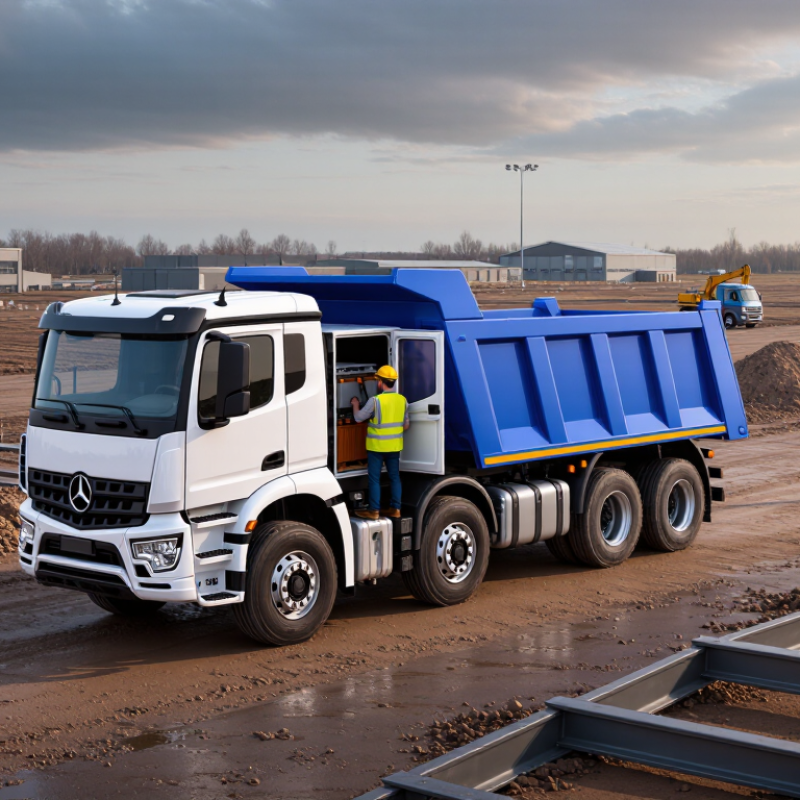
Define Your Hauling Needs and Worksite Conditions
Before comparing electric dump trucks, record what you actually haul. Note the typical load weight, material type, and trips per shift. Wet soil can weigh far more than it looks, while loose aggregate may shift during travel. Check the truck’s rated payload against your heaviest routine loads, not just an occasional light task. Keep a few days of load records. Estimates are often wrong.
Map the route from loading point to dump area. Measure slopes, turning space, narrow gates, and the distance between charging opportunities. A truck that fits on paper may struggle where a ramp is steep or a surface becomes muddy. Inspect the ground after rain, too. Dust matters too. Uneven tracks and sharp debris can affect tire wear and stability, so include them in the site assessment.
Consider how the truck will fit into the work schedule. Record operating hours, expected idle time, and the length of breaks when charging might be possible. Compare these details with the vehicle’s usable range under similar loads and terrain; published figures may not reflect your conditions. Ask for a practical demonstration if possible, using a representative route and payload. One test can still miss seasonal changes, so leave room for uncertainty when planning capacity.
Compare Payload, Dump Capacity, and Operating Performance
A dump truck’s rated payload matters only after you account for its curb weight. Compare the permitted working payload, not just gross vehicle weight, and check how batteries, bodywork, and attachments change it. Dump capacity is a separate measure: a 10-cubic-yard body may reach its volume limit before its weight limit with light material, but exceed payload with dense, wet soil. Check both figures against the material you actually haul.
Also compare cycle performance on your routes. The U.S. Department of Energy’s Alternative Fuels Data Center reports that electric vehicles convert over 77% of grid energy into power at the wheels, versus 12–30% for conventional gasoline vehicles. That efficiency advantage does not guarantee a full shift: steep grades, cold weather, long idle periods, and repeated lifting can change energy use. Ask for usable battery capacity and duty-cycle test results under loads similar to yours.
Look beyond advertised range. NREL’s Fleet DNA commercial-vehicle data show why operating patterns matter: daily distance and stop frequency differ by vehicle vocation. Compare loaded range, charging time, hill-climb performance, and the time needed to raise and lower the body. Request measured results, not estimates. Small details matter. I would also verify axle loads and residual payload after fitting the chosen body; specifications can be easy to misread, and real routes rarely match a perfect test cycle.
10 Tips for Buying the Best Electric Dump Truck
Compare payload, dump-body capacity, and operating performance—not just the purchase price. The chart shows illustrative planning examples for three truck-size classes; specifications vary by configuration and manufacturer. Confirm rated payload and body volume on the exact model, and test energy use and cycle time on your own routes.
Buying tip: Match payload to the material’s density and your site’s haul conditions. Check body volume, gradeability, loaded range, charging time, and dump-cycle performance under the routes and shifts you expect to run.
Assess Battery Range, Charging Options, and Energy Use
A quoted driving range is only a starting point. For an electric dump truck, estimate a full shift using your actual route, payload, and number of stops. Repeated uphill hauls can use more energy than short trips on level ground. Cold mornings may also reduce available range. Real work varies.
Ask for usable battery capacity, not just the largest number on a specification sheet. Then compare it with energy use measured across a representative workday. Record distance, load weight, idle time, and charging breaks. A short field trial can reveal patterns that a brochure cannot. It may not capture every season, though.
Charging needs to fit the site’s schedule. Check connector compatibility, charging power, and how long the truck can sit between shifts. A high-power charger is less helpful if the electrical supply cannot support it. Consider whether overnight charging covers the next day’s work, with a reserve for delays or detours. That margin matters. Energy use deserves attention after purchase, too: smooth acceleration, sensible route planning, and reducing unnecessary idling can improve efficiency, but results depend on the job. Even careful estimates can be wrong. Keep reviewing them.
Review Safety Features, Build Quality, and Maintenance Support
When assessing safety, inspect the truck as if you were standing beside a dusty loading bay, not reading a brochure. Check camera coverage, mirrors, reversing alarms, lighting, and clear sightlines around the cab. Ask to test the braking and warning systems with a representative load. Small details matter. A camera can be clean during delivery and useless after a shift in dust.
The International Energy Agency’s Global EV Outlook 2024 reports nearly 54,000 electric trucks sold worldwide in 2023, up about 35% from 2022. That growth does not prove every model is field-ready. Inspect frame welds, body hinges, battery protection, and corrosion-prone joints; request documented load and durability testing. The U.S. Department of Energy’s Alternative Fuels Data Center notes that all-electric vehicles have fewer moving parts and generally need less maintenance. Yet a damaged battery enclosure or long parts delay can erase that advantage. Ask who can service the truck locally, how quickly technicians respond, and whether critical parts are stocked. Get written maintenance intervals and warranty exclusions. I would still verify those promises with a real fleet operator; polished paperwork can miss the slow, ordinary failures.
Calculate Total Ownership Costs and Verify Dealer Reliability
An electric dump truck’s purchase price is only the visible part of its cost. Build a five-year estimate that includes electricity, charging equipment, battery maintenance, tires, insurance, and expected downtime. Use your actual routes and payloads, not a best-case brochure figure. A truck making repeated short trips on a steep site may use energy differently from one working on level ground. Ask the dealer to show the assumptions behind any range or savings estimate.
Check what happens when the truck needs service. Confirm which technicians are trained to work on its electric systems, how quickly they can reach your site, and whether common parts are stocked nearby. Speak with fleet operators who have used the dealer’s service team, and ask about response times during busy periods. Get warranty coverage, battery testing procedures, and labor charges in writing. Promises sound reassuring. Paperwork is better. I would still allow for surprises; real work rarely follows a spreadsheet perfectly. Check whether the dealer can help plan charger placement, train drivers, and support the truck after delivery. A low quote can become expensive if service is slow or essential parts are far away.