











JHY PCB Blog Hub
Your Source for Expert PCB Design, Manufacturing, and Assembly Insights – Stay Informed with 2025 Trends!
How to Choose an Air Compressor Air Dryer?
Choosing an Air Compressor Air Dryer is not a simple matter of matching horsepower. The correct choice depends on air quality, pressure, flow, temperature, and operating conditions. A small workshop may need a refrigerated dryer for clean, general-purpose air. A pharmaceutical, food-processing, or instrument-air system may require a desiccant dryer with a much lower pressure dew point. The wrong selection can leave water inside pipes, damage pneumatic tools, and interrupt production.
Ron Marshall, a respected compressed-air systems specialist, offers a useful principle: “Select the dryer for the air quality the process requires, not merely for the compressor’s size.” That advice deserves careful attention. A dryer rated for average conditions may fail during summer heat, heavy production, or unusual airflow peaks. Check the inlet temperature, maximum pressure, required flow rate, and local ambient temperature before comparing models. Also review ISO 8573-1 requirements when the application demands documented air purity.
Look beyond the purchase price. Refrigerated dryers usually consume less energy and suit many general applications. Desiccant dryers can reach much drier air, but they may use purge air and require regular media maintenance. Automatic drains, pre-filters, after-filters, and dew-point monitoring also affect reliability. Small details matter.
No selection method is flawless. Real systems change. A future production line may need more capacity than today’s estimate. For that reason, this guide examines practical sizing, dryer technologies, energy use, maintenance demands, and total ownership cost. The goal is dependable dry air, not an impressive specification sheet.
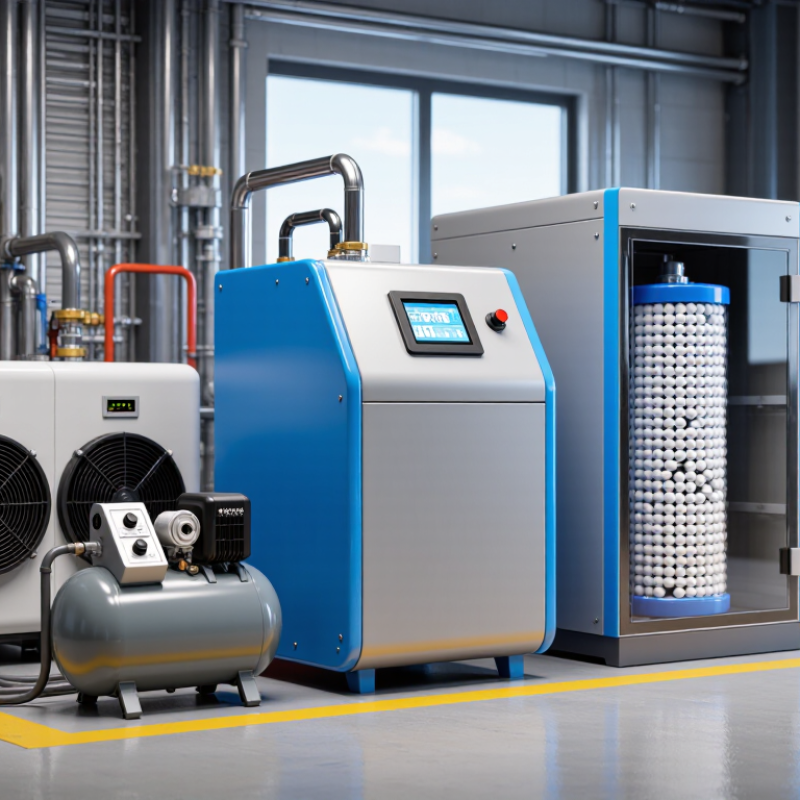
Understanding the Role of an Air Dryer in Compressed Air Systems
How to Choose an Air Compressor Air Dryer?
An air dryer removes moisture from compressed air before it reaches pipes, tools, and production equipment. Compressed air leaves the compressor hot and carries water vapor. As it cools, that vapor becomes liquid. The result can be rust, blocked valves, damaged instruments, and poor product quality. A dryer helps keep the air clean and stable.
The right dryer depends on the required pressure dew point, airflow, working pressure, and surrounding temperature. Refrigerated dryers suit many general workshops because they remove moisture efficiently at moderate dew points. Desiccant dryers achieve much drier air for sensitive instruments, outdoor lines, or moisture-critical processes. Do not choose by compressor horsepower alone. Air demand changes during shifts, and an undersized dryer may struggle when several tools operate together.
Check pressure drop, drain performance, and maintenance access before installation. An automatic drain that fails can quietly send water downstream. That detail is easy to miss. I would also inspect the air receiver and piping layout, because poor cooling or low points can collect moisture after the dryer. In real installations, users sometimes select an extremely dry system without measuring their actual needs. That can increase energy use and replacement costs. Measure the dew point requirement first, then compare dryer capacity under the hottest expected conditions. Clean filters and regular drain checks still matter. No dryer can correct neglected maintenance.
Identifying the Required Air Quality and Dryness Level
Choosing an air dryer starts with the air quality your process can tolerate, not compressor size. A paint booth may need clean, dry air, while a workshop tool may accept more moisture. Define three risks: particles, liquid water, and oil vapor. Then identify the required ISO 8573-1 class from equipment manuals or process specifications. If no specification exists, consult the equipment manufacturer or a qualified air-treatment engineer. Guessing can be expensive. Too little drying causes corrosion, while excessive treatment adds pressure loss and energy use.
Dew point determines how dry the compressed air must be. Match the required pressure dew point to the lowest operating temperature. Air can condense inside outdoor piping, even when the room feels warm. A pressure dew point near +3°C suits many indoor applications. Colder environments may require a below-freezing dew point. This is not universal. Measure inlet temperature, operating pressure, and seasonal conditions before selecting a dryer.
Field technicians often find wet air is blamed on the dryer unfairly. Blocked drains, poor pipe slopes, and missing filtration can create similar symptoms. Small details matter. Keep condensate drains accessible and install suitable filters near sensitive equipment. Leave a reasonable capacity margin, but avoid oversized equipment. Verify dryness with a dew-point meter at the point of use, not only at the dryer outlet. Recheck performance after production loads change.
Comparing Refrigerated, Desiccant, and Membrane Air Dryers
How to Choose an Air Compressor Air Dryer?
Choosing an air dryer starts with the required pressure dew point, not the compressor size alone. Refrigerated air dryers usually deliver around 3°C pressure dew point. They suit general workshops, pneumatic tools, and indoor production lines. They use less energy than desiccant systems, but they cannot protect air lines in freezing conditions.
Desiccant air dryers can reach approximately -40°C pressure dew point or lower. They are suitable for outdoor piping, pharmaceutical processes, instrumentation, and moisture-sensitive equipment. However, they require regular media replacement and may consume purge air. Membrane dryers are compact and have no moving parts. They work well for point-of-use protection and smaller air flows. Their limitations include restricted capacity, pressure loss, and possible sensitivity to oil contamination.
Tips: Check the inlet temperature, operating pressure, flow demand, and room temperature. Leave capacity headroom for future expansion. Install suitable filtration before desiccant or membrane equipment. A clean drain matters more than many buyers expect. Small mistakes grow.
In practice, I would measure moisture problems during the wettest operating period. A dryer that performs well in mild weather may struggle beside a hot compressor room. Oversizing can increase purchase and operating costs, while undersizing creates unstable dew points. No selection is perfect. Review pressure drop, maintenance access, and actual air demand together. One detail is often missed: intermittent compressor use can create condensation after shutdown, even when the dryer is correctly selected.
How to Choose an Air Compressor Air Dryer?
Comparing Refrigerated, Desiccant, and Membrane Air Dryers
Typically delivers a pressure dew point around +3°C. It is a practical choice for general plant air and most indoor applications.
Typically reaches about −40°C, with lower dew points possible. It is suited to outdoor installations, instrumentation, and moisture-sensitive processes.
Often provides approximately −20°C at the rated flow. Its compact, low-maintenance design works well for point-of-use and moderate-flow applications.
Note: Values are representative design points. Actual performance depends on inlet temperature, operating pressure, ambient conditions, flow rate, and dryer configuration. Lower pressure dew points indicate drier compressed air.
Matching Dryer Capacity, Pressure, and Operating Conditions
How to Choose an Air Compressor Air Dryer?
Matching Dryer Capacity, Pressure, and Operating Conditions
Choosing an air dryer starts with the compressor’s real output, not its advertised maximum. Measure flow in actual operating conditions, including peak demand and future equipment. A dryer rated too small can raise pressure drop and leave moisture in the line. I have seen this happen during short production surges. The pressure gauge looked normal, but tools still received wet air.
Check the dryer’s working pressure and inlet temperature carefully. The selected model must handle the system’s maximum pressure without reducing airflow. Hot compressed air also challenges drying performance, especially when the aftercooler is undersized. Ambient temperature matters too. A unit working well in a cool workshop may struggle beside a furnace. It is easy to overlook seasonal changes. That mistake can become expensive.
Tips: Record flow, pressure, temperature, and dew point during the busiest shift. Select capacity with a practical safety margin, but avoid excessive oversizing. An oversized dryer may operate inefficiently at low loads. For general plant air, a refrigerated dryer may be suitable, while sensitive processes often require a lower pressure dew point. Check filters, drains, and maintenance access before installation. My own preference is to verify the calculation with measured data, because catalog conditions rarely match the factory floor.
How to Choose an Air Compressor Air Dryer? - Matching Dryer Capacity, Pressure, and Operating Conditions
| Application or Operating Condition | Recommended Dryer Type | Typical Pressure Dew Point | Capacity Matching Guidance | Common Working Pressure | Important Inlet Conditions | Selection Notes |
|---|---|---|---|---|---|---|
| General factory air for tools, actuators, and workshops | Refrigerated dryer | Approximately +3°C at rated pressure | Select a dryer with a rated flow at least equal to the compressor's maximum delivered flow. A practical design margin is usually 10–20%. | Commonly 7–10 bar(g); verify the dryer pressure rating before purchase. | Compressed-air inlet is commonly limited to approximately 40–50°C. Provide aftercooling and adequate ventilation. | Suitable when the air system will not be exposed to freezing conditions and a positive dew point is acceptable. |
| Instrument air, pneumatic controls, and outdoor distribution | Heatless or heated desiccant dryer | Typically −40°C | Size for maximum demand, not average demand. Allow approximately 15–25% capacity margin and account for purge-air consumption. | Commonly 7–10 bar(g); higher-pressure models are available when specified. | Use a suitable coalescing prefilter. Inlet air should be cooled and free of liquid water and excessive oil. | Provides a much lower dew point than refrigeration drying and reduces the risk of condensation in cold piping. |
| Critical processes requiring very dry air | Desiccant dryer with dew-point monitoring | −40°C to −70°C, depending on process requirements | Use a 20–30% capacity margin where demand fluctuates or continuous dew-point performance is essential. | Often 7–10 bar(g); confirm minimum operating pressure because purge demand can increase at low pressure. | Install liquid separators, coalescing filters, and particulate afterfilters as required by the process. | Lower dew points generally increase energy use, purge requirements, or regeneration demand. |
| Food, pharmaceutical, and clean-process air | Refrigerated or desiccant dryer, selected with validated filtration | Usually +3°C for non-critical areas; −40°C or lower for moisture-sensitive processes | Size for peak flow and include approximately 15–25% reserve. Confirm whether the stated flow is actual or standard flow. | Typically 7–10 bar(g), subject to process equipment requirements. | Specify compatible materials, hygienic drainage, appropriate filtration, and oil-control requirements. | The dryer alone does not define air quality; filtration, compressor oil management, drains, and maintenance are also essential. |
| Cold rooms, winter operation, or exterior air lines | Desiccant dryer or refrigerated dryer with low-ambient protection | Desiccant: commonly −40°C; refrigerated: usually around +3°C | Use peak flow with at least 10–20% reserve. Consider the lowest ambient temperature and reduced dryer performance at changing conditions. | Commonly 7–10 bar(g); verify pressure drop at low temperature and maximum flow. | Prevent downstream air temperature from falling below the actual pressure dew point. Insulate or heat-trace vulnerable piping where necessary. | A +3°C pressure dew point may be unsuitable when compressed air lines or equipment can cool below 3°C. |
| High and variable compressed-air demand | Refrigerated dryer with cycling control or appropriately controlled desiccant dryer | Refrigerated: approximately +3°C; desiccant: typically −40°C | Base selection on the maximum simultaneous flow. A receiver can reduce short-term peaks, but it should not be used to undersize the dryer. | Often 7–10 bar(g); calculate pressure drop at maximum flow. | Check compressor sequencing, receiver size, inlet temperature, ambient temperature, and operating hours. | Variable-speed or cycling controls can reduce energy consumption during periods of low demand. |
| High-pressure compressed air systems | High-pressure refrigerated or desiccant dryer | Approximately +3°C for refrigeration; commonly −40°C for desiccant | Use the dryer rating at the actual inlet pressure and flow. Do not size from a low-pressure flow rating without applying the manufacturer's conversion data. | May range from 16 to 40 bar(g), depending on the equipment design. | Confirm maximum allowable working pressure, pressure relief protection, inlet temperature, and pressure drop. | Higher pressure changes air density and dryer performance; the pressure vessel rating must exceed the system's maximum pressure. |
| Oil-flooded compressor installation | Refrigerated dryer for general air; desiccant dryer for low-dew-point air | Approximately +3°C or −40°C, depending on the chosen technology | Match the dryer to the compressor's maximum free-air delivery and provide approximately 10–20% reserve. | Commonly 7–10 bar(g) | Install an effective oil separator and coalescing filter upstream of a desiccant dryer. Liquid oil can damage desiccant material. | Drain performance and filter maintenance directly affect dryer reliability and pressure drop. |
| Energy-sensitive plant with a stable dew-point requirement | High-efficiency refrigerated dryer or heat-regenerated desiccant dryer | Refrigerated: approximately +3°C; desiccant: typically −40°C | Size at the highest expected flow and evaluate part-load efficiency, not only the full-load capacity. | Usually 7–10 bar(g) | Record operating hours, ambient temperature, inlet temperature, pressure, and demand profile before selection. | A dryer with a lower nominal capacity may consume more energy if it operates near overload or has a high pressure drop. |
| Core sizing rule: Dryer capacity should be based on the compressor's maximum delivered flow at the actual inlet pressure, inlet temperature, ambient temperature, and required pressure dew point. Check the manufacturer's correction factors for pressure, temperature, and flow before final selection. The selected dryer should also satisfy the system's maximum working pressure and allowable pressure-drop limits. | ||||||
| Unit reminder: Confirm whether capacity is stated as actual cubic metres per minute (m³/min), normal cubic metres per minute (Nm³/min), standard cubic feet per minute (scfm), or inlet cubic feet per minute (icfm). These flow units are not interchangeable without applying the relevant reference conditions. | ||||||
Evaluating Energy Use, Maintenance Needs, and Total Cost
Choosing an air compressor air dryer starts with the required dew point, not the purchase price. A refrigerated dryer often suits general manufacturing with stable indoor temperatures. Desiccant dryers reach much lower dew points, but they usually consume more energy.
During a plant audit, I compared compressor readings before and after dryer installation. A high pressure drop forced the compressor to work harder throughout each shift. Even a small loss can increase electricity use over thousands of operating hours. Check the dryer’s rated flow at your actual inlet temperature and pressure. Catalog figures can look attractive.
Maintenance also affects total cost. Inspect pre-filters, automatic drains, condensers, valves, and desiccant condition at defined intervals. Clogged filters raise pressure loss and may contaminate downstream equipment. Failed drains can send liquid water into air lines. That damage is expensive. I once saw a neglected drain stop a packaging line, despite the dryer itself still running.
Calculate energy, service labor, replacement parts, installation, and downtime together. Heatless desiccant models may waste purge air, while heated systems can reduce purge demand but require additional controls. Variable production makes sizing difficult. Oversizing feels safe, yet it may operate inefficiently at light loads. Measure seasonal demand when possible. Leave room for honest uncertainty. Forecasts are useful, but real operating data should challenge them.


