










How to Choose the Best Jewelry Equipment for Your Business?
Choosing the right Jewelry Equipment is a business decision, not simply a shopping task. A jeweler’s bench may need a reliable polishing motor, precise scales, and safe, consistent lighting. A production workshop may depend more on casting capacity, ventilation, and equipment that can handle repeat orders. The details matter. A machine that saves minutes on one piece may create extra work across a full day.
The scale of the market makes these choices increasingly relevant. Grand View Research estimated the global jewelry market at USD 353.26 billion in 2023 and projected a 4.7% compound annual growth rate from 2024 to 2030. That figure describes jewelry sales, not equipment spending, but it signals a large and evolving field. Demand alone, however, cannot tell a business which tools to buy. Product mix, material, output volume, staff skills, and after-sales support all shape the right choice.
Start with the work you actually do. List the processes that slow production, note the tools requiring frequent repair, and compare machine specifications with your daily workload. Ask suppliers about training, spare parts, warranties, and maintenance requirements. Then check those promises against written documentation. Be cautious with impressive capacity claims. They may not reflect real workshop conditions. And a bigger machine is not always better. Some businesses buy for imagined growth, then leave costly features unused. A modest setup may be wiser, though underbuying can limit quality and throughput. The best choice is rarely obvious; it deserves a careful review before purchase.
Define Your Jewelry Business Needs and Production Goals
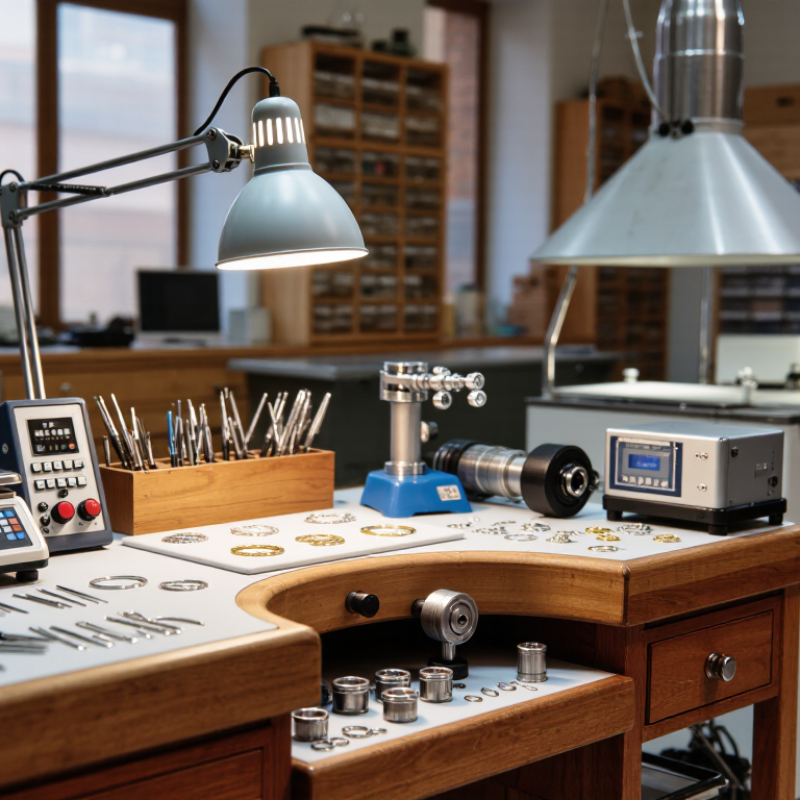
Define your jewelry business needs before comparing equipment. A repair studio needs reliable soldering, polishing, and stone-setting tools. A small production workshop may need casting capacity, rolling mills, and repeatable measurement. Be specific. Record your main materials, product types, weekly order volume, and current bottlenecks. A bench crowded with unused tools is a costly mistake.
Set measurable production goals, such as pieces completed per week, acceptable defect rates, or turnaround time. The World Gold Council’s Gold Demand Trends: Full Year 2023 reported global gold jewelry demand of 2,093 tonnes, up 3% year over year. That figure does not predict your sales, but it shows why material choice and product mix deserve careful planning. If your orders are mostly delicate rings, precision and consistent finishing may matter more than high-volume casting capacity.
Map each production step, from forming metal to final polishing, and note where delays or rework occur. Then choose equipment that addresses those specific gaps. A laser welder may help with localized repairs, while a dependable polishing system could improve finishing consistency. Check workspace, power supply, training needs, maintenance, and service access before committing. I would not buy for an imagined future workload alone; plans change, and that assumption can be expensive. Start with capacity you can use now, while leaving room to expand.
How to Choose the Best Jewelry Equipment for Your Business? — Define Your Jewelry Business Needs and Production Goals
| Business need or goal | Typical production profile | Equipment to consider | Selection priorities | Planning notes |
|---|---|---|---|---|
| Starting a small handmade jewelry studio | One-off or short-run pieces; output varies with design complexity and available work hours. | Bench pin and workbench, jeweler’s saw, files, pliers, mandrels, basic soldering setup, polishing motor, and a reliable scale. | Versatility, safe operation, serviceability, and room to add tools as demand grows. | Prioritize essential hand tools and appropriate ventilation and eye protection before buying specialized machinery. |
| Producing custom or made-to-order pieces | Low-volume work with frequent changes in size, materials, and design details. | Precision measuring tools, flexible bench tools, soldering equipment, a setting toolkit, and optional CAD software with a compatible 3D printer or casting partner. | Accuracy, quick changeovers, repeatable sizing, and compatibility with the materials and stone settings used. | Compare the cost of in-house printing and casting with outsourcing; the best option depends on order volume and workflow. |
| Making consistent small-batch collections | Repeated designs produced in batches, with a need for consistent dimensions and finish. | Rolling mill, flex-shaft tool, polishing and finishing equipment, Casting Equipment if justified, and suitable molds or production fixtures. | Repeatability, production time per piece, batch capacity, and ease of maintaining the equipment. | Track labor time, scrap, and rework by design to identify which process is worth upgrading first. |
| Expanding into higher-volume production | Regular batches or multiple production stages, often requiring predictable throughput and documented quality checks. | Production-grade casting or forming equipment, polishing systems, dust collection, workholding fixtures, and inspection tools. | Throughput, uptime, operator training, maintenance support, workspace requirements, and process safety. | Confirm electrical, ventilation, water, and installation requirements; compare total operating costs, not just purchase price. |
| Offering engraving or detailed personalization | Small customized jobs that may involve different shapes, materials, and artwork files. | Engraving tools or a suitable laser system, secure workholding, design software, and material-specific test pieces. | Marking quality, supported materials, file workflow, ventilation, guarding, and operator training. | Verify that the chosen process is appropriate for each material and finish; follow equipment safety guidance. |
| Repairing and resizing jewelry | Variable jobs with a focus on careful handling, accurate sizing, and controlled heat or finishing. | Soldering setup, ring mandrels, sizing tools, pliers, polishing equipment, magnification, and a suitable ultrasonic cleaner where appropriate. | Fine control, safe handling of set stones, accessibility for inspection, and easy cleanup between jobs. | Check material and gemstone care requirements before using heat, chemicals, ultrasonic cleaning, or abrasive finishing. |
Planning tip: Estimate weekly demand, production time per piece, budget, workspace, and required quality level before comparing equipment. Capacity depends on design complexity, operator skill, and workflow.