China Best Mining Loaders How Should Global Buyers Choose?
Choosing China Best Mining Loaders requires more than comparing prices, horsepower, or bucket capacity. Global buyers must connect equipment specifications with actual site conditions. Underground mines may demand compact dimensions, strong articulation, low emissions, and reliable braking systems. Open-pit operations may prioritize payload, cooling performance, ground clearance, and easy maintenance access. Mining Loaders should match the tunnel width, rock conditions, haul distance, and daily production target.
Experienced buyers usually begin with a practical duty profile. Record the loader’s operating hours, average load size, gradient, ambient temperature, and service intervals. Then request verified technical data, not only attractive catalogue figures. Ask for test reports, component brands, warranty terms, operator training, and spare-parts availability in the destination country. A factory visit can reveal assembly quality, welding consistency, and testing procedures. Sometimes, photographs are not enough.
Supplier evaluation also needs commercial and technical discipline. Compare total ownership cost, including fuel or electricity, tires, filters, planned maintenance, transport, and downtime. Confirm whether the manufacturer can provide manuals, remote diagnostics, and local service support. Independent inspections may help verify payload, cycle times, safety features, and emissions performance before shipment. These checks are especially valuable when the buyer lacks direct experience with Chinese equipment.
No supplier is perfect. A lower price may conceal longer delivery times or limited support. A famous component may still perform poorly if installation is weak. Buyers should record every promise in the contract and review unclear details with qualified engineers. The right decision is not always the cheapest one. It is the loader that performs safely, consistently, and economically under real mining conditions.
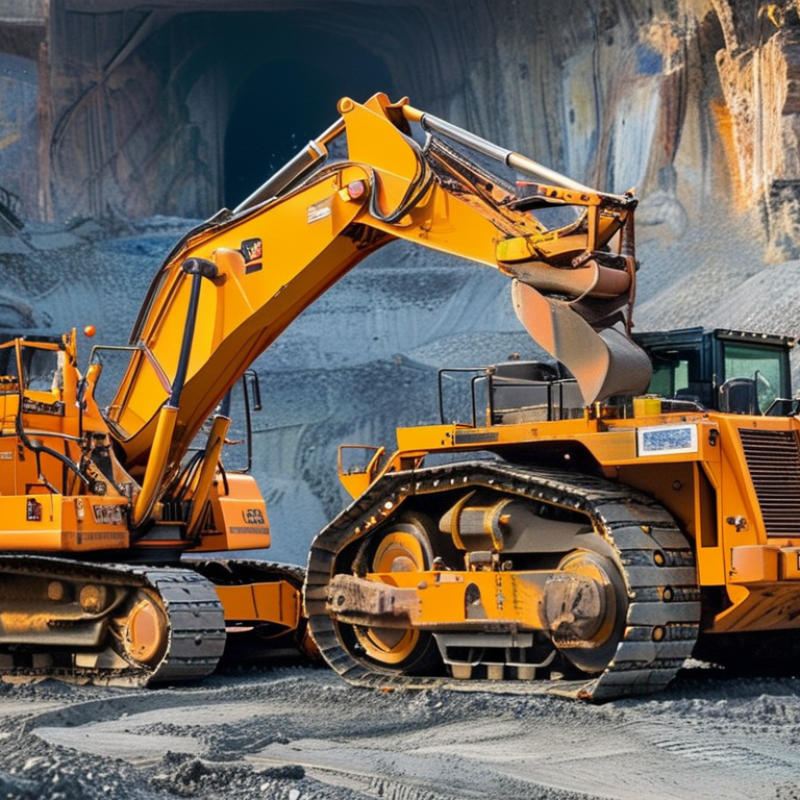
Define Loader Types by Payload (1–10 t), Power (100–600 kW), and Mine Scale
China Best Mining Loaders: How Should Global Buyers Choose?
Payload is the clearest starting point. A 1–3 tonne loader suits narrow tunnels, small headings, and short haul distances. Machines carrying 4–7 tonnes fit medium underground mines with wider drifts and regular production cycles. A 8–10 tonne loader needs stronger floors, larger turning areas, and reliable ventilation. Bigger is not always better.
Power normally ranges from 100 to 600 kW, but horsepower alone cannot predict productivity. Buyers should compare hydraulic flow, breakout force, cooling performance, and transmission response. A 150 kW loader may work efficiently in a compact mine. A 500 kW unit can waste fuel if road grades, loading points, or ventilation systems are inadequate. Check the full duty cycle, not just the brochure figure.
Mine scale changes the decision. Small operations may value simple controls, low maintenance access, and compact dimensions. Large mines often need fleet compatibility, rapid charging or refueling, remote diagnostics, and strong parts support. Request payload tests with wet ore, uneven ground, and realistic bucket fill. Ask for service records, factory inspection data, safety documentation, and field references from comparable sites. Published capacity can look precise. Actual performance may vary. I would leave a margin for operator skill, tire wear, seasonal water, and unexpected delays. A carefully measured 5-ton loader may outperform a poorly matched 10-ton machine.
Match Key Specs: Bucket 1.5–6.5 m³, Breakout Force, and Cycle Time
Choosing a mining loader starts with the bucket, but bucket volume alone can mislead. Options from 1.5 to 6.5 m³ suit very different production conditions. A 1.5 m³ bucket may fit narrow underground headings and smaller haul units. Larger buckets can move more material per pass in open pits. Yet oversized buckets may overload trucks, increase tire stress, or slow maneuvering.
Breakout force matters when the loader attacks compacted ore or a stiff pile. It must lift the bucket through the material without excessive wheel spin. Compare rated breakout force with rock density, fragmentation, and bucket geometry. A strong number on a specification sheet is useful, but it is not the whole story. Bucket fill factor, hydraulic response, and operator visibility also affect real output.
Cycle time deserves a practical test. Measure loading, reversing, turning, dumping, and returning, not only hydraulic movement. A loader completing a 30-second cycle may outperform a larger machine taking 45 seconds. Fuel use, ramp width, ventilation, and maintenance access should enter the calculation. Field trials are valuable. However, one short trial can flatter performance. Repeated measurements across different faces give a more reliable picture. I would also question unusually precise productivity claims, because wet muck, uneven floors, and changing haul distances rarely behave neatly.
Verify Compliance: ISO 3471 ROPS, ISO 3449 FOPS, and Stage V/Tier 4
Choosing China’s best mining loaders requires more than comparing payload, price, and photos. Compliance should be checked before commercial performance. A loader may appear strong. That is not enough.
Ask for evidence that the exact cab and frame meet ISO 3471 ROPS requirements. ROPS protects the operator during a rollover, but only when the tested structure matches the supplied configuration. Check the serial number, test report, seating layout, and approved modifications. ISO 3449 FOPS verification is equally important. It addresses falling objects from above, such as loose rock in a mining area. Inspect roof panels, mounting points, protective screens, and visibility from the operator’s seat. Small changes can affect real protection.
Engine compliance needs the same discipline. Stage V and Tier 4 are not interchangeable labels for every market. Confirm the applicable emission rule, engine family, test cycle, and after-treatment system. Request records for diesel particulate filters, selective catalytic reduction, sensors, and maintenance intervals. A reliable supplier should explain how the system performs in dust, heat, and long shifts. Independent inspection is worthwhile before shipment. Match documents to the machine’s serial number, not a similar model. I have seen buyers focus on certification pages while overlooking cab changes and missing service records. That mistake is easy to make. It is also expensive. Keep a written verification list and require clear answers from the manufacturer.
Compare Lifecycle Cost: Fuel Use, 10,000–20,000 h Life, Parts, and Uptime
Choosing a mining loader requires more than comparing purchase prices. Fuel use can dominate operating cost over 10,000–20,000 working hours. A machine using two extra liters per hour may consume thousands of additional liters during long shifts. Measure fuel by duty cycle, payload, haul distance, idle time, and ground conditions. A loader working on steep ramps will not match laboratory figures.
Service life also depends on maintenance quality. Review oil-analysis records, cooling-system design, tire wear, and transmission history. Ask how quickly common parts arrive at remote sites. A low-cost component is not truly affordable if it causes a week of downtime. Calculate cost per operating hour, including planned service, emergency repairs, labor, fuel, tires, and lost production. Keep the assumptions visible. They are often imperfect.
Tips: Request field data from comparable mines, not only brochures. Check availability of filters, hydraulic parts, and trained technicians. Compare uptime using maintenance logs. A 95% availability claim needs clear definitions. Also test operator visibility and control comfort during a full shift. Small ergonomic problems can increase fatigue and fuel use. No spreadsheet predicts every failure. That is why buyers should include a repair contingency and review the estimate after each 1,000 operating hours.
Score Chinese Suppliers by Warranty, ≥95% Uptime, Support, and Resale Value
China Best Mining Loaders: How Should Global Buyers Choose?
A 95% uptime promise sounds strong, but buyers must define the measurement. Is uptime based on scheduled hours, engine hours, or production shifts? The Global Mining Guidelines Group stresses consistent reliability and maintenance data for meaningful equipment comparisons. Ask suppliers for twelve months of field records, not polished examples. My checklist is imperfect, because harsh sites rarely produce perfect data.
Warranty terms deserve equal scrutiny. A useful warranty should state coverage hours, response times, excluded components, and parts availability. McKinsey’s mining productivity research identifies maintenance delays as a major source of lost production. Therefore, a longer warranty means little if replacement parts need weeks to arrive. Request three service cases from comparable climates. Check repair timestamps and final outcomes.
Support quality often separates a good loader from an expensive problem. Deloitte’s 2024 Tracking the Trends report highlights digital maintenance and operational resilience as continuing mining priorities. Buyers should test remote diagnostics, technician coverage, training, and emergency support before signing. Resale value also matters. The International Energy Agency reports that critical-mineral demand is rising sharply, which may support demand for productive used equipment. Yet resale depends on documented servicing, hour-meter credibility, component condition, and local parts access. Do not assume a low purchase price creates a strong lifecycle return.