











JHY PCB Blog Hub

Your Source for Expert PCB Design, Manufacturing, and Assembly Insights – Stay Informed with 2025 Trends!

How to Choose the Right Duct Air Heater

Choosing a Duct Air Heater is not just a matter of matching a product to a duct size. The right choice depends on the air volume, required temperature rise, available power, and how the system will be controlled. Get one of these details wrong, and the heater may struggle to maintain temperature or cycle more often than expected. Small details matter.

Start with the application. A heater serving a workshop may face different operating hours and temperature demands than one used in a ventilation system. Check the manufacturer’s airflow and temperature limits, then compare them with your system’s measured or specified conditions. Electrical supply matters too: voltage, phase, current, and connection requirements must suit the installation. Do not rely on a quick estimate when the equipment schedule or a qualified technician can confirm the figures.

Safety and compatibility deserve equal attention. Look for suitable over-temperature protection, airflow interlocks, and controls that match the system. Confirm duct dimensions, mounting clearances, insulation, and access for inspection. These points can seem routine, yet they are easy to overlook when comparing prices. A low purchase cost may not reflect operating needs, maintenance access, or installation work. There is no universal best option. Even a carefully selected heater can perform poorly if airflow changes later, so leave room to review the assumptions. This guide explains the key specifications, practical trade-offs, and questions to ask before choosing a Duct Air Heater.
How to Choose the Right Duct Air Heater

Identify the Heating Requirements and Duct Conditions

Before selecting a duct air heater, define the actual heating load, not just the room’s target temperature. Record airflow in cubic feet per minute, entering-air temperature, desired outlet temperature, and operating hours. A common ASHRAE heating estimate is 1.08 × airflow × temperature rise, giving the required output in BTU per hour. Measure it cold. If airflow varies, size for the lowest expected flow and verify the heater’s minimum-flow requirement.

Inspect the duct where the heater will sit. Check its dimensions, insulation, leakage, static pressure, and available straight length. The U.S. Department of Energy’s Energy Saver guidance estimates that leaky or poorly insulated ducts can waste 20–30% of the air moving through them. That loss can undermine a heater that looks adequate on paper. Look for loose joints, crushed sections, and insulation gaps; a quick visual check can miss leakage behind the duct.

Confirm the duct material’s temperature rating, electrical supply, and required clearances against the heater’s installation data. Compare the heater’s pressure drop with the system’s fan capacity, especially when filters are loaded. Small detail, big consequence. A calculated temperature rise may still be wrong if airflow is guessed rather than measured, so verify conditions during operation and revisit the estimate when seasons or equipment settings change.

Compare Duct Heater Types and Heat Sources

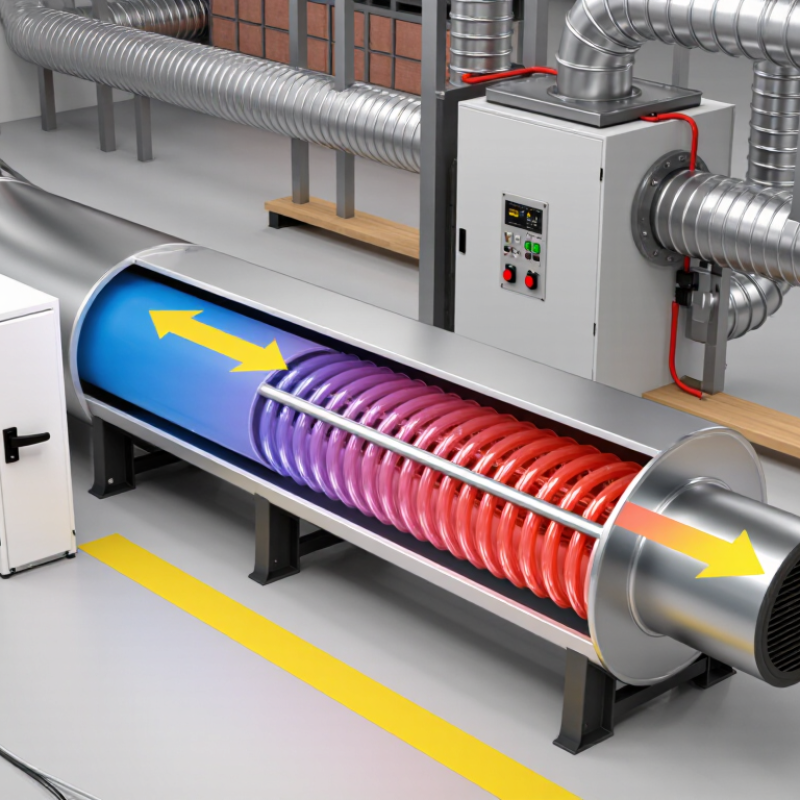
Electric resistance heaters are compact and respond quickly when a thermostat calls for heat. They suit smaller systems or sites without a hot-water loop. Their trade-off is electrical demand: check available circuit capacity and the heater’s required airflow before selecting a unit. Low airflow can cause overheating, so correctly sized controls and airflow interlocks matter. That matters.

Hot-water and steam coils use heat from a boiler or central plant. They can work well in buildings already using those systems, but output depends on water temperature and flow. A coil may need more space, and maintenance should account for leaks, corrosion, and freezing risk. Electric elements are often simpler to install, though operating costs depend on local energy prices and usage. There is no universally cheaper option.

Indirect-fired gas heaters transfer combustion heat through a heat exchanger, keeping flue gases separate from supply air. They may suit applications needing higher heat output, but require suitable venting and qualified installation. Compare the heat source, controls, service access, and pressure drop—not just the rated capacity. A neat equipment schedule can still miss a practical issue: whether the duct delivers steady airflow at the heater’s actual operating point. Check manufacturer data against measured system conditions, and leave room for inspection.

How to Choose the Right Duct Air Heater - Compare Duct Heater Types and Heat Sources

Heater Type Heat Source and Operation Key Advantages Limitations Common Applications Selection Checks
Electric resistance duct heater Electric current heats resistance elements installed in the airstream. Units may use staged or modulating control. Fast response; precise control; no on-site combustion; generally straightforward to integrate with ventilation controls. Can require substantial electrical capacity. Operating cost depends on electricity rates and heating demand. Small to medium air-handling systems, supplemental heat, and locations without a suitable hydronic or fuel supply. Confirm available voltage and electrical capacity, airflow, element watt density, control stages, and required high-temperature protection.
Hot-water coil Hot water from a boiler, heat pump, or other hydronic source circulates through tubes and fins; duct air passes over the coil. Can use an existing central heating plant; supports zoned control; avoids electric resistance heating at the duct. Requires piping, a circulating system, and freeze protection where exposed to cold outdoor air. Heat output depends on water temperature and flow. Buildings with an available hydronic system, including air-handling units and ventilation systems. Match coil capacity to entering-water and entering-air conditions. Check water flow, pressure drop, valve control, condensate management, and freeze protection.
Steam coil Steam condenses inside the coil, transferring heat to the airstream. A trap and correctly arranged piping return condensate. Can deliver high heat output in facilities with a reliable steam supply; suitable for some large industrial and institutional systems. Needs steam infrastructure and careful condensate handling. Poor piping or drainage can cause water hammer, uneven heating, or coil damage. Facilities that already operate a steam distribution system, such as some industrial plants and large campuses. Check steam pressure, coil rating, trap and piping layout, condensate drainage, control-valve selection, and protection against freezing.
Indirect-fired gas heater A gas burner heats a heat exchanger; a separate airstream carries combustion gases to a flue, while clean air is heated across the exchanger. Uses gas as the primary fuel while keeping combustion products separate from supply air. Requires a gas connection, combustion-air provisions, venting, and burner maintenance. The heat exchanger adds design and service considerations. Ventilation and make-up-air systems where gas heating is preferred and combustion products must remain outside the supply airstream. Verify fuel supply, venting route, combustion-air requirements, temperature limits, clearances, and applicable codes.
Direct-fired gas heater A gas burner heats the airstream directly, so combustion products mix with the heated air. High heating effectiveness and a relatively direct heat-transfer path; commonly used in purpose-designed make-up-air applications. Combustion products enter the supply air. Application, ventilation, fuel controls, and code requirements must be carefully assessed. Suitable industrial or commercial make-up-air systems designed for direct-fired heating and the resulting air-quality requirements. Confirm the application is permitted, ensure adequate airflow and ventilation, and check burner safeguards, gas controls, and applicable codes.

Calculate the Required Capacity and Airflow

Choose a duct air heater by matching heat output to the required airflow and temperature rise. Use this estimate: capacity (Btu/h) = 1.08 × airflow (CFM) × temperature rise (°F). The 1.08 factor reflects air’s density and specific heat under standard conditions, as described in the ASHRAE Handbook—Fundamentals (2021). For example, heating 2,000 CFM by 50°F requires about 108,000 Btu/h of sensible heat. A useful starting point. It is not a final selection: altitude, air conditions, and heat loss can change the result.

Use the temperature entering the heater and the target supply temperature, not a room thermostat setting alone. Then confirm actual airflow at the heater; a fan’s free-air rating may not reflect flow through a filter, coil, and long duct run. ASHRAE Standard 111 covers measurement and testing methods for building air systems. Check the heater’s specified minimum airflow and maximum outlet temperature against measured conditions. A small airflow shortfall can push outlet temperatures higher than expected. Still, calculations can look cleaner than real ductwork. Recheck after installation, especially if dampers or filters change.

Check Materials, Controls, and Safety Features

How to Choose the Right Duct Air Heater

Check the heater’s materials against the air, temperature, and environment it will face. A unit near damp process air may need more corrosion-resistant components than one serving a dry indoor space. Confirm that the casing and heating elements suit the expected operating temperature and duct conditions. Small details matter. Also check that the heater can be accessed for inspection without dismantling nearby ductwork. That point is easy to overlook during a rushed installation.

Controls should match how the system actually runs. A modulating controller can adjust heat gradually, while staged control switches heating elements in steps. Check sensor placement, temperature limits, and compatibility with the existing control system. Safety features deserve equal attention: look for independent over-temperature protection and an airflow interlock that prevents heating when airflow is inadequate. Verify electrical ratings and required clearances against the installation documents. I would not assume a control display alone proves the system is safe; sensors and protective devices need appropriate installation and testing. The right choice depends on the application, and a qualified HVAC professional can confirm the heater’s suitability before purchase.

Verify Installation, Compliance, and Maintenance Needs

Choosing a duct air heater means checking its installation as carefully as its heat output. Confirm duct dimensions, airflow direction, service clearance, and the heater’s approved orientation. Verify that airflow switches and over-temperature limits match the installation instructions and applicable codes. UL 1996 covers electric duct heaters, while local requirements may add provisions. Check that the installation preserves required ventilation under ASHRAE Standard 62.1. Small detail, big consequence: a blocked access panel can turn routine inspection into a shutdown.

Plan maintenance before purchase. The U.S. Energy Information Administration’s 2018 Commercial Buildings Energy Consumption Survey reports that space heating accounts for 32% of commercial-building energy use. That figure is not specific to duct heaters, but it highlights the value of reliable upkeep. Have qualified technicians inspect electrical terminals, heating elements, and safety controls with power isolated. Record airflow and temperature rise, then compare readings with the unit’s nameplate limits. Keep filters and upstream coils clean; restricted airflow can trigger shutdowns or overheating. Maintenance records are not always complete. Assign someone to track inspection findings and document repairs.

How to Choose the Right Duct Air Heater: Verify Installation, Compliance, and Maintenance Needs

Estimated heater output rises with airflow when the required temperature rise is held at 20°C. Values use the sensible-heat estimate kW ≈ 0.000335 × airflow (m³/h) × temperature rise (°C), assuming air density of approximately 1.2 kg/m³ and specific heat of approximately 1.005 kJ/kg·°C. Treat these as preliminary sizing estimates: confirm actual design conditions, available electrical supply, duct airflow and temperature limits, safety interlocks, and applicable local codes with a qualified professional. Include filter, element, and connection inspections in the maintenance plan.

Scroll to Top