How to Choose the Perfect Vintage Shoe Cabinet?
Choosing a Vintage Shoe Cabinet means balancing character with daily use. Designer William Morris offered a useful standard: “Have nothing in your houses that you do not know to be useful, or believe to be beautiful.” That idea fits a cabinet with worn brass pulls, figured oak, or a softly faded finish. Looks matter. So does fit. Measure the wall, skirting board, and door swing before falling for a piece. Check its depth against your largest shoes, not just a neat pair of flats.
Open every door and drawer. Look for loose hinges, split joints, swollen panels, and repairs that may affect stability. A faint old-wood scent is different from persistent damp or mustiness. Ask what the cabinet is made from and whether its finish has been altered; a seller may not know every detail. That’s worth remembering. For narrow hallways, shallow tilt-out compartments can save space, but inspect their mechanisms carefully. For a larger household, shelves may offer easier access and better airflow. No single layout suits every home. Even a beautiful cabinet can disappoint when shoes catch on the frame or the doors block a busy passage. Use this guide to compare materials, construction, storage capacity, condition, and price, then choose a Vintage Shoe Cabinet that feels right in your room—not only in a photograph.
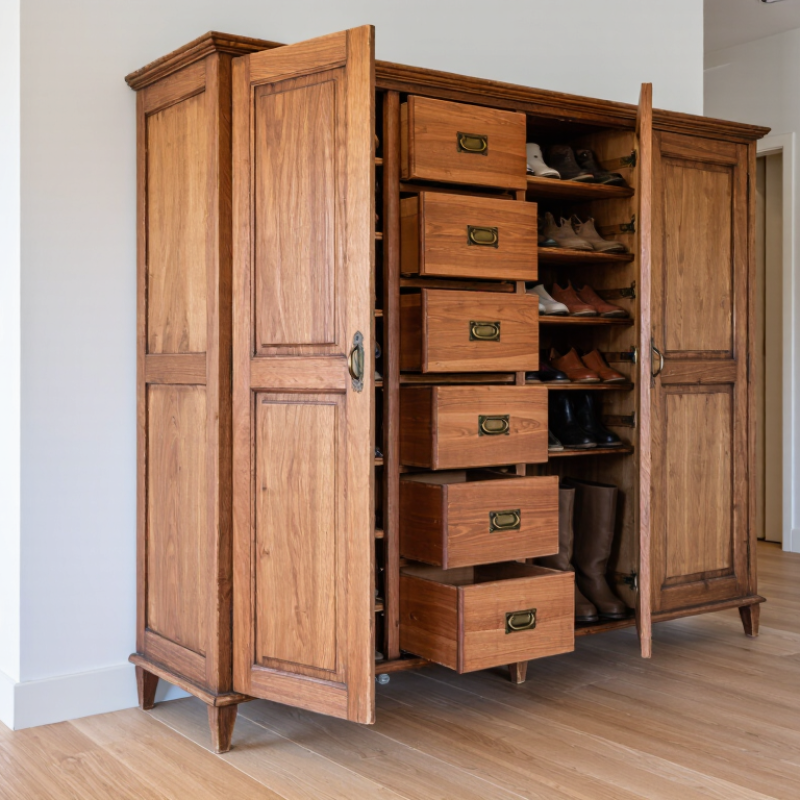
Determine Your Storage Needs and Available Space
Before choosing a vintage shoe cabinet, count the shoes you actually wear, not every pair you own. Include boots, slippers, and seasonal footwear; they need different shelf heights. Measure the cabinet’s intended spot, then check door swings, skirting boards, and the walking route. Measure twice. A cabinet that fits the wall can still obstruct the entry.
Room size alone is a poor guide. The U.S. Census Bureau’s 2023 Characteristics of New Housing report puts the median floor area of newly completed single-family homes at 2,286 square feet, but that figure says little about entryway storage. Measure your own usable space instead. Record width, height, and depth, then leave comfortable clearance for opening doors and passing with bags. For narrow halls, a shallow cabinet may work better than a deep one, even if it holds fewer pairs. Check internal shelf spacing against your tallest shoes; vintage designs can have fixed compartments that are awkward for modern footwear. In practice, a small gap for damp shoes is easy to overlook. It matters. Recheck your measurements before buying, especially if the cabinet has protruding handles or a bowed back.
Explore Vintage Styles, Periods, and Design Features
Vintage shoe cabinets borrow details from different periods, and those details affect both appearance and use. Victorian-inspired pieces may have dark wood, turned legs, and carved fronts. They can feel formal, so check whether their depth suits your hallway. Mid-century designs often use cleaner lines, tapered legs, and warm-toned timber. Their simpler shape can make a narrow entry feel less crowded.
Look closely at the doors, hinges, and interior spacing. A slatted or vented front can help air circulate around shoes, while adjustable shelves fit different footwear. Measure your tallest boots before choosing a cabinet; a beautiful piece is frustrating if the doors will not close. Style labels are not always reliable. Some cabinets mix period details, and that is not necessarily a flaw. Still, ask about materials and construction, and inspect joints for looseness or signs of moisture damage.
Tips: Match the cabinet’s scale to the wall, not just the room. Open every door, check shelf clearance, and notice any persistent musty smell. A little wear can add character, but unstable shelves need attention. I would not overlook that distinction.
How to Choose the Perfect Vintage Shoe Cabinet?
Explore vintage styles, periods, and design features. The chart compares the approximate length of five design periods that can inspire vintage furniture choices.
Period dates are approximate and may vary by source; design movements can overlap. For a cabinet, look for Arts and Crafts craftsmanship, Art Nouveau curves, Art Deco geometry, Mid-Century Modern simplicity, or Postmodern bold shapes. Check the cabinet’s condition, proportions, and usable shoe-storage depth before choosing.
Match Cabinet Capacity to Your Shoe Collection
Count your shoes before choosing a vintage cabinet. Include everyday pairs, occasional heels, boots, and shoes stored for another season. A household’s collection often grows beyond the neat row by the door. Leave a little room.
Check the inside dimensions, not just the cabinet’s outer measurements. Measure your longest shoes, then compare their length and height with each shelf. Boots may need more vertical space, while bulky sneakers can reduce the number of pairs that fit side by side. Measure twice. Slanted shelves and dividers can also change usable capacity, so ask for interior details when they are not listed.
Treat stated capacity as an estimate. Vintage cabinets may have shelves that are fixed, uneven, or shallower than they appear in photographs. If possible, inspect the cabinet with a tape measure and check that the doors close without pressing against the shoes. A slightly underfilled cabinet is usually easier to use than one packed tightly. I might still misjudge a pair’s bulk, especially with winter shoes, so keeping one shelf flexible can save frustration later.
Inspect Materials, Craftsmanship, and Condition
A vintage shoe cabinet should feel stable before its finish catches your eye. Press gently on opposite corners and watch for rocking, loose joints, or a back panel pulling away. Open each door. It should move without scraping, and its hinges should hold the door level. Look closely at the edges: peeling veneer, dark glue lines, and fresh filler can reveal repairs that deserve questions. Solid wood and veneer can both serve well; the quality of the construction matters more than a label.
Inspect the craftsmanship in the details. Even drawer gaps, aligned shelves, and securely fitted joints suggest careful work, while uneven cuts may signal rushed repairs. Then check for musty odors, swollen panels, soft spots, and active-looking insect holes. The USDA Forest Products Laboratory’s Wood Handbook (FPL-GTR-282, 2021) places wood’s fiber saturation point near 30% moisture content. Below that point, wood shrinks as it dries, which can contribute to gaps or misaligned doors. Not every scratch is a problem. I would still pause over a cabinet that looks flawless but has a strong odor or freshly painted interior; appearance can hide condition, and old repairs are not always easy to judge.
Evaluate Price, Placement, and Ongoing Care
A vintage shoe cabinet should fit your budget after repairs, not just at the listed price. Check the doors, hinges, and drawer runners for looseness. Look closely at veneer edges and feet; small chips may be manageable, while swollen wood can signal moisture damage. Ask about the cabinet’s measurements and materials. A low price is less appealing if delivery costs more than expected. I would also leave room for uncertainty: old finishes can hide flaws that only become visible in daylight.
Placement affects both usefulness and preservation. Measure the entryway, then leave space for the door to open and people to pass comfortably. Keep the cabinet away from radiators, damp walls, and strong direct sunlight. Before loading it, make sure the floor is level. Dust with a soft, dry cloth, and test any cleaner on a hidden spot first. Avoid soaking the wood. A cabinet may need gentle adjustment over time; that is normal, though easy to overlook.
Tips: Store only clean, dry shoes inside. Use a shallow tray for damp soles, but remove it to dry. Check hinges every few months. If a door sticks, do not force it; inspect the alignment before tightening screws.