











JHY PCB Blog Hub

Your Source for Expert PCB Design, Manufacturing, and Assembly Insights – Stay Informed with 2025 Trends!

How to Choose the Best Home Car Charging Station

Choosing a Home Car Charging Station is less about buying the most powerful unit and more about matching equipment to your car, home, and routine. The International Energy Agency’s Global EV Outlook 2024 reports that nearly 14 million electric cars were sold worldwide in 2023, representing about 18% of new car sales. More drivers now need a dependable place to recharge. Yet a global trend cannot tell you whether your garage wiring can support a particular charger.

The U.S. Department of Energy’s Alternative Fuels Data Center says Level 2 chargers can add roughly 10 to 20 miles of driving range per charging hour. Actual results depend on the vehicle and installation. That difference matters when you plug in after work and need enough range by morning. Check your vehicle’s connector, the charger’s power rating, cable reach, weather protection, and smart features. Just as important, have a qualified electrician assess your electrical panel and available circuit capacity before choosing a unit.

The best option may be a simple, reliable charger—not the one with the longest feature list. Compare installation costs, warranty terms, and your utility’s rates or charging plans. A charger’s advertised speed is only part of the story. Your car may accept power more slowly, or your home may need electrical upgrades. It is easy to overlook those details. I would not choose a model until the real installation requirements are clear.
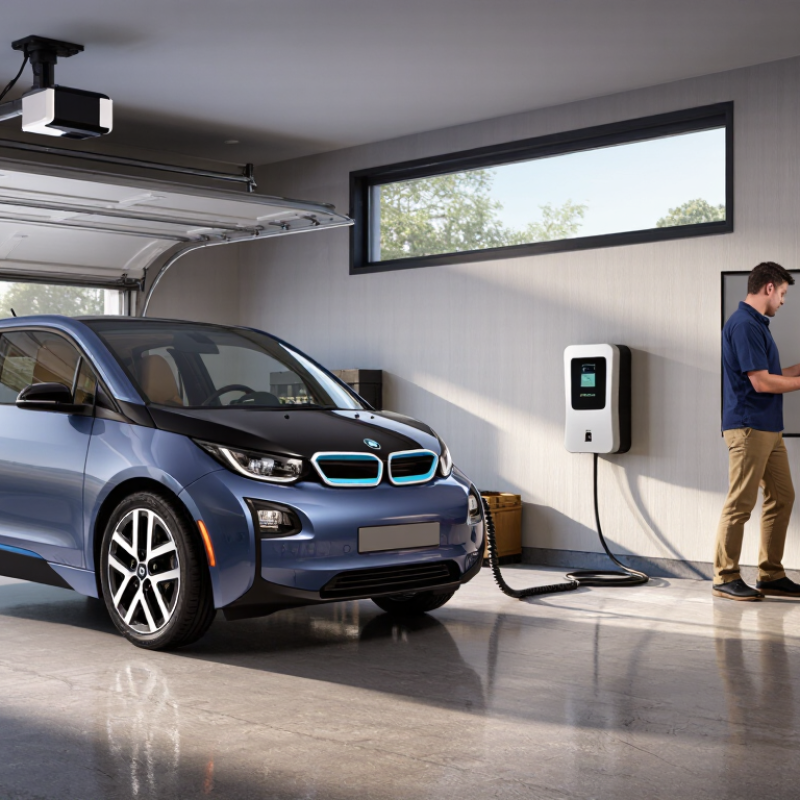
How to Choose the Best Home Car Charging Station

Estimate Daily Charging Needs: U.S. Drivers Average 37 Miles per Day (FHWA)

FHWA reports that U.S. drivers average about 37 miles per day. That figure offers a useful starting point when choosing a home charging station, but it may not match your routine. A short commute can become a longer day with errands, detours, or a weekend trip. Real life varies.

Many electric cars use roughly 3 to 4 kilowatt-hours per mile. At that range, a 37-mile drive takes about 9 to 12 kilowatt-hours from the battery. Allow extra energy for charging losses, and check your vehicle’s efficiency information for a more personal estimate. Cold mornings, highway speeds, hills, and cabin heating can all raise consumption. A station does not need to replace a full battery overnight if you usually drive less than the national average. The key question is how much energy you need to add during the hours your car is parked.

Compare that daily need with the station’s output, your car’s charging limit, and the available electrical capacity at home. A modest setup may cover a typical commute during an overnight parking window; frequent long drives may call for more charging speed. Avoid sizing around one unusually busy day. Still, the 37-mile average is only a rough guide, and household routines can shift.

Match EVSE Output to Your Car: Level 2 Uses 208–240 V (U.S. DOE)

A Level 2 home charging station uses 208–240 volts in the United States, according to the U.S. Department of Energy. That voltage range is only part of the match. Check your car’s manual for its maximum AC charging rate; the vehicle’s onboard charger sets a limit, even when the EVSE can supply more. More amps do not always mean faster charging.

Look at the station’s amperage and your home circuit’s capacity together. A 240-volt EVSE rated for higher current may need a properly sized dedicated circuit, while a lower-output unit may suit overnight charging. An electrician can assess the wiring, breaker, and available panel capacity before installation. Small details matter: the cable should reach the parked car without stretching across a walkway, and the connector should be easy to handle in cold weather.

Keep it practical. A station with more output than your car accepts may add cost without shortening charging time. On the other hand, choosing too little output could make a short overnight window inconvenient. I’d compare the car’s AC limit, your daily driving, and the home circuit—not just the largest number on a product label. It is easy to overlook the circuit. The label is tempting.

Size the Circuit Correctly: NEC Article 625 Requires 125% Load Sizing

Choosing a home car charging station starts with the circuit, not the charger’s advertised speed. Under NEC Article 625, EV charging is treated as a continuous load, so branch-circuit capacity must be at least 125% of the charger’s rated current. A 32-amp charger therefore needs a 40-amp circuit; a 40-amp charger needs 50 amps. The U.S. Department of Energy’s Alternative Fuels Data Center lists Level 2 equipment at 208 or 240 volts, but voltage alone does not determine whether your panel has enough capacity. Check the panel rating, existing loads, wire size, and breaker together.

Tips: Match the circuit to the charger’s maximum current, then have a qualified electrician verify the calculation and installation. For example, a 50-amp breaker does not make an undersized wire safe. NEC requirements can also vary by adopted edition and local amendments. The detail that is easy to miss is available panel capacity: a home may have space for a breaker but not enough electrical capacity for the added load. A load calculation can reveal that before equipment is purchased. It is worth checking twice.

Compare Safety Listings and Connectors: UL 2594 and SAE J1772 Standards

When choosing a home charging station, check its safety certification and connector separately. UL 2594 covers safety requirements for electric vehicle supply equipment. Look for a certification mark that applies to the exact model, not just one of its parts. The mark is useful, but it does not confirm that your home’s wiring or installation is suitable.

SAE J1772 specifies a common AC charging connector and communication between the vehicle and charger. Confirm that the connector matches your vehicle’s inlet, especially if you may change vehicles later. The U.S. Department of Energy’s Alternative Fuels Data Center estimates Level 2 charging can add about 10–20 miles of range per hour. Actual results vary with the vehicle, temperature, and circuit capacity. Treat that figure as a guide, not a promise.

Tips: Before buying, photograph your vehicle’s charging inlet and compare it with the station’s connector details. Ask a qualified electrician to check the planned circuit and installation. Keep the model number and certification information; they make verification easier. Small detail, big difference. Safety listings matter, but they cannot fix a poor installation.

Choose a Home EV Charging Station: Compare Standards

The chart compares the primary focus of each standard—not a safety score. UL 2594 addresses EV supply equipment safety; SAE J1772 covers the conductive charging connection and related interface. Check that the specific charger model is listed or certified to applicable safety requirements and that its connector is compatible with your vehicle.

Compare Costs and Smart Features Using Your Utility’s Time-of-Use Rates

A home charging station’s purchase price is only part of its cost. Check your utility’s time-of-use schedule before comparing equipment. If electricity is cheaper overnight, a charger with reliable scheduling can shift most charging to those hours. For example, a car plugged in at 6 p.m. could wait until a lower-rate window begins at 10 p.m. The actual savings depend on your plan, charging habits, and any monthly fees. Check the fine print.

Smart features are useful when they solve a specific problem. Look for adjustable start times, charging limits, and clear records of energy use. If your utility offers hourly rates, confirm that the charger can follow those rates automatically; a basic timer may not be enough. A feature list can sound impressive, but it matters less if setup is confusing or the connection drops. That part is easy to overlook.

Compare the expected yearly savings with the charger and installation costs, not just the advertised price. Include electrical upgrades if your panel needs them, and ask an electrician for a site-specific estimate. Even a careful calculation is only an estimate: schedules change, and a car may need an occasional daytime charge. I’d check a few recent bills before deciding. A simple spreadsheet can reveal whether smart scheduling is worth paying extra for in your home.

Scroll to Top