




JHY PCB Blog Hub
Your Source for Expert PCB Design, Manufacturing, and Assembly Insights – Stay Informed with 2025 Trends!
China Best U240B Suspension Glass Isolator Supplier?
Choosing the best China supplier for a U240b Suspension Glass Isolator takes more than comparing prices. Buyers need clear product specifications, consistent manufacturing, and evidence that each unit meets the stated requirements. The details matter: glass dimensions, metal fittings, cementing quality, and the supplier’s inspection process can all affect suitability for a project. Small differences count.
A careful supplier should explain its production capability and provide relevant test reports, certificates, and traceable quality records. Ask how samples are inspected, how defects are handled, and whether packaging protects the glass during transport. A polished brochure is not proof. Verify the documents and compare them with the product offered.
The U240b Suspension Glass Isolator should be assessed against the electrical and mechanical needs of its intended application, not chosen by name alone. Confirm that the model designation, drawings, test conditions, and delivery terms match your requirements. If information is missing, request clarification before placing an order. That may take longer.
This guide explores practical ways to evaluate Chinese suppliers, from reviewing technical data to checking communication and after-sales support. It does not assume that one factory is best for every buyer. Even a strong supplier can have limitations, and a low quote may leave important questions unanswered. A sound decision comes from evidence, clear requirements, and a willingness to check the details.
What Is a U240B Suspension Glass Insulator?
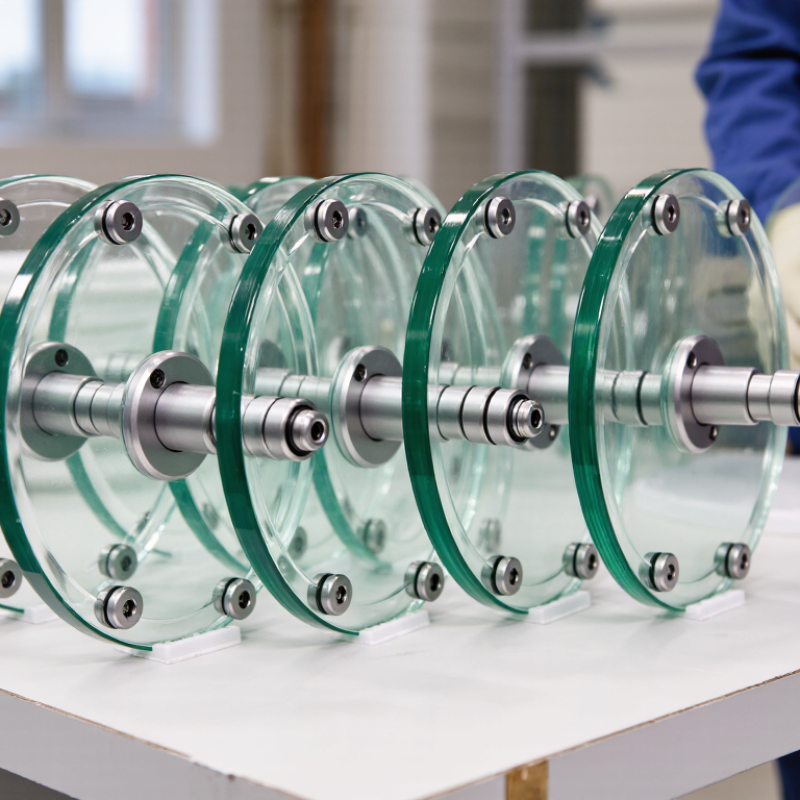
A U240B is a cap-and-pin suspension insulator used in overhead transmission strings. Its toughened-glass disc supports the conductor while helping isolate it electrically from the tower. Under IEC 60305 classification, “240” indicates a nominal electromechanical failing load of 240 kN. That is a strength rating, not a promise of service life.
The actual string design also depends on voltage, pollution, wind, and required insulation distance. In the field, crews check each unit’s glass surface, metal fittings, and connection points for damage or corrosion.
Glass offers a useful inspection cue: a punctured disc may shatter, making a failed unit easier to spot from the ground. Still, the number alone can mislead. A 240 kN rating does not mean every installation performs identically.
The International Energy Agency’s 2023 report, Electricity Grids and Secure Energy Transitions, estimates that over 80 million kilometres of grids must be added or refurbished by 2040. That expansion makes dependable insulator selection important, but each project needs engineering checks.
Confirm the unit’s dimensions, coupling, electrical characteristics, and test documentation against the line specification before purchase. Small details matter.
Key Design Features and Technical Specifications of the U240B
U240B usually identifies a cap-and-pin suspension glass insulator with a 240 kN electromechanical failing load. That figure is a specified failure threshold, not a recommended continuous service load. The toughened-glass disc provides visible damage indication: a damaged unit may shatter, helping crews identify it during inspection. A small detail, but useful.
Key dimensions depend on the exact drawing. Disc diameter, unit spacing, creepage distance, and ball-and-socket coupling must match the string design. IEC 60305 sets characteristics for cap-and-pin insulators, while IEC 60120 covers coupling dimensions. Buyers should verify these values against the approved specification rather than assume every U240B has identical geometry. Pollution severity and system voltage also affect the required creepage distance. A mismatch can matter.
The International Energy Agency’s 2023 report, Electricity Grids and Secure Energy Transitions, says annual grid investment needs to rise above USD 600 billion by 2030. That expansion puts added focus on consistent component testing and supply quality. For a U240B, request mechanical and electrical test records, glass inspection criteria, and metal fitting details. Check the actual batch documentation. A catalogue value alone is not enough, and I would not treat a familiar designation as proof that every production run is identical.
| Category | Parameter | Typical U240B Specification | Design or Application Note |
|---|---|---|---|
| Product identification | Insulator type | Cap-and-pin suspension insulator made with toughened glass | Designed to be assembled into strings for overhead transmission and distribution lines. |
| Mechanical | Specified electromechanical failing load | 240 kN | The “240” designation corresponds to the nominal mechanical class; acceptance testing should follow the applicable standard and purchase specification. |
| Dimensions | Nominal disc diameter | Approximately 330 mm | Typical IEC-style U240B dimensions; confirm the approved drawing for the selected design. |
| Dimensions | Nominal unit spacing | Approximately 170 mm | Also described as the nominal distance between the metal fittings of one unit. |
| Insulation | Nominal creepage distance | Approximately 550 mm | Required creepage distance depends on site pollution severity and the applicable line-insulation design criteria. |
| Fittings | Connection type | Ball-and-socket coupling; commonly 24 mm coupling size for this class | Check the coupling designation and dimensions against the string hardware and relevant IEC requirements. |
| Materials | Insulating body | Toughened electrical-grade glass | Glass units allow visual inspection; damaged glass generally indicates that the unit should be removed from service. |
| Materials | Metal fittings | Galvanized ferrous-metal cap and pin | Coating type and thickness should be specified for the operating environment and verified against the order documents. |
| Standards | Common reference standards | IEC 60305 and IEC 60383-1 | Confirm the editions and any national or utility-specific requirements that apply to the project. |
| Electrical performance | Power-frequency and impulse withstand values | Design- and test-report-dependent | These values are not determined by the U240B designation alone. Request certified type-test data for the exact unit design. |
| Service conditions | Environmental suitability | Specify for the project’s altitude, pollution, temperature, and seismic conditions | Outdoor performance depends on the complete insulator string, fittings, installation, and local environmental conditions. |
| Procurement checks | Documents to verify | Approved dimensional drawing, routine-test records, type-test reports, and material/coating details | Confirm tolerances, marking, packing, and inspection requirements in the technical agreement before purchase. |
How U240B Glass Insulators Are Manufactured and Tested
A U240B suspension glass insulator begins with carefully proportioned glass ingredients, melted in a controlled furnace. The molten glass is pressed into a shell, then rapidly cooled to create a toughened surface. Each shell is checked for visible defects before metal caps and pins are assembled with cement. Small flaws matter. A chip near the edge can become a stress point under load.
The U240B designation generally indicates a nominal electromechanical failing load of 240 kN; confirm the rating against the product drawing and test certificate. IEC 60383-1 sets out test methods for glass and ceramic line insulators, including mechanical and electrical checks. Manufacturers may use temperature-cycle tests, visual inspection, dimensional checks, and mechanical-load testing to verify production consistency. IEC 60437 provides a method for assessing radio interference voltage. These references define procedures, not a guarantee that every unit performs identically. Test records should identify the sample, measured results, and acceptance criteria. A clean glass surface is reassuring, but inspection alone cannot prove internal strength.
Common Applications of U240B Suspension Glass Insulators
U240B suspension glass insulators are commonly fitted in strings on overhead transmission lines. They support conductors while keeping them electrically separated from towers. Depending on the line design, they may be used on suspension structures or in tension strings at dead-end points. They can also appear in outdoor substations where string insulators suit the equipment layout. The exact application depends on the system voltage, mechanical loading, and fitting dimensions. Check the project drawings.
Field conditions matter. Wind, ice, salt spray, and industrial dust can all affect service performance. Glass surfaces make some chips or cracks easier to notice during visual inspections, but appearance alone cannot confirm electrical condition. Keep that limitation in mind. Crews should also check metal fittings, connection pins, and signs of corrosion. A string may look sound while a small hardware issue goes unnoticed. Before replacement, verify the insulator’s rated mechanical load and coupling type against the approved design. U240B is a designation, not a substitute for checking the actual specification.
U240B Suspension Glass Insulators: Common Applications
The U240B designation indicates a nominal electromechanical failing load of 240 kN. This is a rated test value, not a recommended continuous operating load.
Common applications: overhead transmission-line suspension strings, long-span crossings, and locations requiring high mechanical strength. Actual selection depends on line design, system voltage, pollution level, and required creepage distance.
How to Evaluate U240B Suspension Glass Insulator Suppliers in China
China Best U240B Suspension Glass Isolator Supplier?
How to Evaluate U240B Suspension Glass Insulator Suppliers in China
Choosing a U240B supplier takes more than comparing quotations. The IEA’s 2023 report, Electricity Grids and Secure Energy Transitions, says annual grid investment must exceed USD 600 billion by 2030 to meet global needs. That growth makes consistent component quality important. Ask suppliers for drawings, rated mechanical failing-load evidence, and batch-level test records. Check that testing follows applicable requirements, including IEC 60383-1 for glass and ceramic line insulators above 1 kV. A certificate alone is not enough.
Inspect how each unit is made. Ask about glass tempering, cementing, metal-cap galvanizing, and traceability from raw materials to finished lots. Request type-test reports and routine-test records, then confirm the tested design matches the U240B product offered. Review sample surfaces for chips, cracks, uneven cement, or loose fittings. Small defects matter. Factory visits or independent inspections can help, although a short visit cannot prove every batch is consistent.
Tips: Compare the same specifications across quotations, including dimensions, mechanical rating, packing, and test scope. Ask for recent shipment references with customer details protected. I would also check how the supplier handles rejected samples; responses can reveal more than polished brochures. Some paperwork may look complete, yet still leave gaps. Ask follow-up questions.


