











JHY PCB Blog Hub

Your Source for Expert PCB Design, Manufacturing, and Assembly Insights – Stay Informed with 2025 Trends!

7 Best Tractor Hydraulic Rams for Global Buyers

A Tractor Hydraulic Ram may look like a simple steel tube, but it controls demanding work every day. It lifts a loader, tips a trailer, or adjusts an implement under load. The wrong size can mean slow movement, poor fit, or premature seal wear. Small details matter.

This guide to the 7 Best Tractor Hydraulic Rams for Global Buyers compares practical features, including bore and stroke, mounting style, pin dimensions, operating pressure, seal quality, and corrosion protection. A few millimeters can affect installation. Buyers should match these details against the tractor’s service manual and the supplier’s specifications, rather than relying on photos or broad compatibility claims. Check replacement-part availability, warranty terms, and shipping support, too. These can vary by destination.

There is no universal best ram. A compact farm tractor and a heavy loader need different capacities, and local service access can change the sensible choice. An attractive price may not tell the whole story. A polished product listing can still leave important measurements unclear, so ask for a drawing or written confirmation before ordering. This is not glamorous work. The comparisons ahead aim to make trade-offs easier to judge, while leaving room for buyers to verify fitment with a qualified dealer or technician.
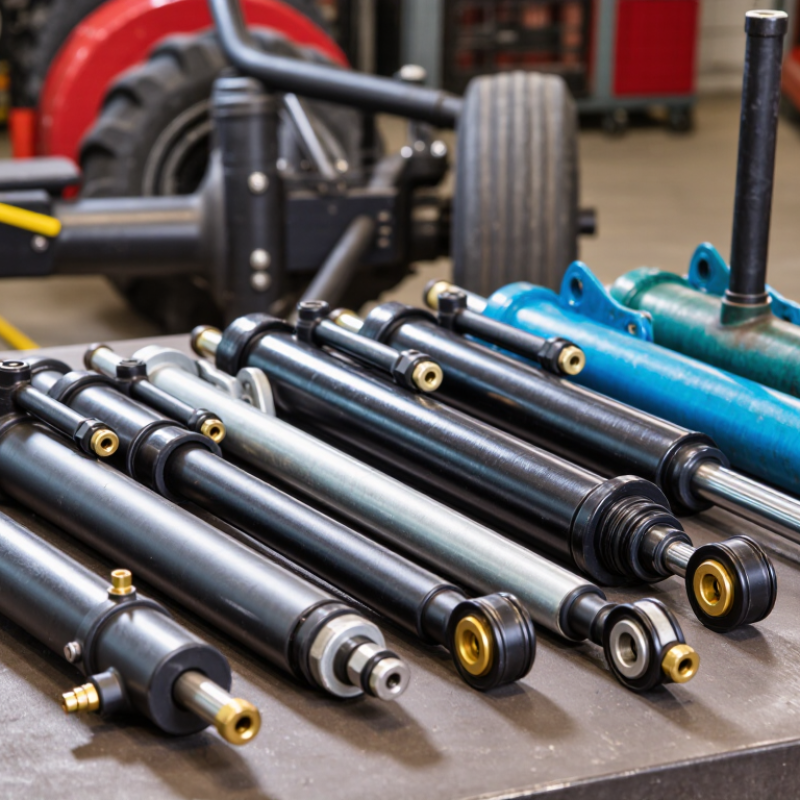
7 Best Tractor Hydraulic Rams for Global Buyers

Understanding Tractor Hydraulic Rams and Their Main Functions

A tractor hydraulic ram, commonly called a hydraulic cylinder, turns pressurized oil into straight-line force. It raises a loader, tilts a trailer, or moves a three-point hitch. A single-acting cylinder uses hydraulic pressure in one direction and relies on gravity or a load to return. A double-acting cylinder uses pressure both ways, giving more controlled movement. That matters when an implement must lower steadily, not drop.

Force depends on pressure and piston area, so bore size alone does not determine lifting ability. The OECD-FAO Agricultural Outlook 2024–2033 projects global agricultural and fish production to grow 14% by 2033, relative to its 2021–23 baseline. That is broad sector context, not a forecast for tractor-cylinder demand. When selecting a ram, match its stroke, mounting-pin dimensions, working pressure, and hose connections to the tractor and implement. Check clearance through the full movement; a few millimetres can matter. Clean oil and intact seals help prevent sluggish motion and leaks. Still, a neat force calculation cannot capture every real-world loss. Account for friction and side loading, which can shorten service life.

Key Types of Hydraulic Rams Used in Tractors

Tractor hydraulic rams are usually grouped by how they move and how much stroke they provide. A single-acting cylinder uses oil pressure in one direction; gravity or the implement’s weight returns it. This arrangement can suit simple lifting or tipping tasks. Double-acting cylinders use pressure to extend and retract, giving more controlled movement. They are common on loaders, where the boom and bucket need precise positioning. Smooth movement matters when handling a full bucket.

Telescopic rams contain nested stages that extend in sequence. They provide a long stroke without taking up as much space when retracted, though their seals and stages need careful inspection. On some tractors, three-point hitch lift systems use external cylinders; the exact action and layout vary by machine. The categories can overlap, which makes parts searches frustrating.

Construction is another useful distinction. Tie-rod cylinders are assembled with external rods, while welded-body cylinders have a more compact, permanently joined housing. Neither type is automatically right for every tractor. Check the bore, stroke, mounting points, hose connections, and rated pressure before selecting a replacement. A ram that fits the brackets may still move too slowly or fail to provide enough force. Measure twice. Then verify the tractor’s service information, especially when the original cylinder has been modified or replaced before.

7 Best Tractor Hydraulic Rams for Global Buyers: Key Types Used in Tractors

This chart compares whether hydraulic pressure typically powers extension and retraction for each configuration. A value of 1 means the movement is hydraulically powered; 0 means it is not. These are common configurations, not a performance ranking, and some categories can overlap.

How to Evaluate Hydraulic Rams for Global Tractor Buyers

A hydraulic ram should fit the tractor’s job, not just its category. Measure the required stroke and the distance between mounting points with the implement raised and lowered. A ram that is too long may bind; one that is too short can limit movement. Check bore size, rod diameter, and rated working pressure against the tractor’s service information. Guessing from appearance is risky.

Pay close attention to ports, pin dimensions, and mounting style. Small differences can mean extra adapters or a poor fit. Ask for a dimensional drawing and confirm whether hoses and fittings are included. For buyers working across climates, review seal materials, corrosion protection, and the stated operating temperature range. Cold mornings matter. So does dusty fieldwork. A glossy coating alone does not prove long service life.

Compare the seller’s test records, warranty terms, and availability of replacement seals. Clear documentation is useful when the ram needs inspection far from the point of sale. Also check shipping protection; a bent rod can arrive inside an intact-looking package. I would not treat a high pressure rating as proof of better performance without checking the tractor’s requirements. Details are easy to miss, and even careful measurements deserve a second check before ordering.

Seven Hydraulic Ram Options and Their Key Features

Seven hydraulic ram options suit different tractor tasks. A single-acting cylinder lifts with hydraulic pressure and lowers by gravity; it is simple, but depends on the implement’s weight. A double-acting cylinder powers both directions, giving better control for loaders and steering. Telescopic rams provide long extension from a short retracted length, useful on trailers. Tie-rod cylinders are easier to service, while welded-body designs tolerate compact installations. Cushioned-end rams soften movement near stroke limits. Sensor-equipped cylinders report position, though wiring adds upkeep. Small details matter.

The OECD-FAO Agricultural Outlook 2023–2032 projects global agricultural and fish production growth of 1.1% annually over the decade. That outlook does not predict ram demand directly, but it underscores why buyers should match components to varied field conditions. ISO 6020-2:2015 provides dimensional guidance for a compact hydraulic-cylinder series; it does not replace checking pressure ratings or mounting fit. Compare bore, rod diameter, stroke, seal material, fluid compatibility, and operating temperature. A polished specification sheet can still miss a dusty, cold morning. Measure twice. Ask suppliers for test records and confirm that the cylinder’s rated pressure matches the tractor circuit.

Compatibility, Installation, and Maintenance Considerations

Choosing among the seven best tractor hydraulic rams starts with matching the cylinder to the machine, not just the advertised lifting force. Check the required stroke, bore, closed length, pin diameter, and mounting width against the tractor’s linkage. Measure the available space with the attachment lowered and raised. A ram that fits at rest may bind near full extension. A neat fit can still be wrong.

Confirm that the ram’s pressure rating suits the tractor’s hydraulic system, and that port size and hose connections match. For international purchases, ask for dimensioned drawings and confirm seal materials suit the hydraulic fluid and expected working temperatures. Small differences matter. I would not rely on a product photo for pin spacing; that detail is easy to overlook.

During installation, support the attachment securely and release hydraulic pressure before disconnecting lines. Keep the rod aligned with its mounting points, and do not force pins into place. Side loading can damage seals and shorten service life. After installation, cycle the ram slowly without a load, then inspect fittings for leaks. Keep hands clear of moving parts. For maintenance, wipe dirt from the exposed rod, check for scoring or fluid seepage, and follow the tractor maker’s service guidance. Inspection intervals vary, and that uncertainty deserves attention.

7 Best Tractor Hydraulic Rams for Global Buyers - Compatibility, Installation, and Maintenance Considerations

A practical comparison of common hydraulic-cylinder configurations. “Best” depends on the tractor, implement, load, and operating conditions; confirm all specifications against the machine and implement manuals before purchase.

Hydraulic Ram Type Common Tractor Application Compatibility Checks Typical Configuration to Compare Installation Considerations Maintenance Focus
Double-Acting Implement Cylinder Loader attachments, blades, adjustable implements, and other functions that need powered movement in both directions. Confirm the tractor valve has the required work ports and that the hoses, couplers, and cylinder connections match. Check available hydraulic pressure and flow in the manuals. Two hydraulic ports; bore, rod diameter, stroke, and closed length must match the implement’s required force and travel. Connect the two work lines to the correct ports. Keep hoses clear of tires, linkage, and pinch points throughout the full movement range. Inspect hoses and couplers for leaks or damage; keep the exposed rod clean and check for scoring or corrosion.
Single-Acting Lift Cylinder Applications where hydraulic pressure raises or extends the load and gravity or a mechanical load returns it. Verify that the tractor valve supports the required single-acting operation and that the implement can safely return the cylinder without powered retraction. One pressure port; confirm stroke, mounting dimensions, and the return method specified for the implement. Route the pressure line safely and follow the tractor manual’s instructions for operating a single-acting circuit. Check the rod, seals, and hydraulic connections. Investigate slow movement or drift rather than compensating by increasing load.
Telescopic Dump Cylinder Dump trailers and other applications needing a long extension from a compact retracted length. Match the cylinder’s stage arrangement, mounting points, required lifting capacity, hydraulic supply, and maximum extension to the trailer design. Multiple nested stages; compare retracted length, total stroke, mounting geometry, and the manufacturer-rated operating limits. Install in the specified orientation and ensure the trailer structure and tipping geometry are designed for the cylinder’s load path. Keep stage surfaces clean; inspect for leaks, damaged seals, and uneven extension. Follow the cylinder maker’s service guidance.
Steering Cylinder Hydraulic steering systems on tractors or compatible equipment designed for cylinder-operated steering. Confirm the exact steering-system design, port arrangement, mounting dimensions, and required cylinder travel. Steering components are not interchangeable by appearance alone. Usually a double-acting design; match stroke, rod arrangement, pin size, and steering linkage geometry precisely. Center the steering system and follow the equipment service procedure for fitting, bleeding, and checking full-lock clearance. Check for leaks, loose pins, abnormal play, and damaged hoses. Have steering faults assessed promptly.
Three-Point Hitch Lift Cylinder Hitch systems or retrofit arrangements that use a hydraulic cylinder to raise and lower an implement. Check whether the tractor uses an internal lift system, an external cylinder, or a specific retrofit. Verify hitch geometry, valve function, and load limits. Stroke and mounting position determine hitch movement; use the specified cylinder dimensions and rated pressure for the system. Confirm that the implement clears the tractor and that linkage cannot bind through the full lift range. Inspect pivots, pins, seals, and hydraulic lines; check for settling or uneven lift according to the service manual.
Loader Bucket Tilt Cylinder Tilting or dumping a front-loader bucket and compatible loader attachments. Match the loader’s linkage style, pin-to-pin lengths, pin diameters, stroke, port position, and rated working conditions. Typically double-acting; the correct retracted and extended lengths are as important as the nominal stroke. Support the loader safely before service. Check that the cylinder and hoses do not contact the frame or linkage at either travel limit. Lubricate specified pivot points and inspect pins, bushings, rods, and hoses for wear or impact damage.
Remote-Auxiliary Cylinder for Implements Compatible implements such as cultivators, mowers, and other equipment with a hydraulic adjustment function. Confirm whether the implement requires single- or double-acting control, the correct coupler type, and sufficient tractor valve capacity. Choose bore, rod, stroke, and mounting style from the implement requirements; do not select by tractor size alone. Relieve hydraulic pressure before connecting or disconnecting lines, using the equipment manual’s procedure. Secure hoses against snagging. Keep couplers clean, check for seepage and hose abrasion, and use the hydraulic fluid specification stated in the tractor manual.

Fitment and safety note: There is no universal cylinder size or pressure rating for these applications. Before ordering, compare the original cylinder or equipment specifications for bore, rod diameter, stroke, retracted length, pin and port dimensions, operating pressure, and mounting orientation. Depressurize the system and support raised equipment with approved mechanical supports before installation or maintenance.

Scroll to Top