What Are the Best Rescue Drones from China?
A rescue drone can help teams search large or hazardous areas without sending people into danger too soon. Chinese manufacturers offer platforms for tasks such as locating missing hikers, surveying flood damage, and delivering small emergency supplies. Yet “best” depends on the mission. A compact aircraft may suit a mountain search, while a heavier model may carry a loudspeaker or additional sensors.
Useful comparisons look beyond advertised range. They examine practical flight time, thermal-camera clarity, obstacle sensing, wind tolerance, mapping tools, and how easily crews can replace batteries in the field. A bright thermal image can reveal a person near dusk, but trees, wet ground, and temperature differences can complicate identification. Conditions matter. Operators still need training, clear procedures, and coordination with emergency services.
This guide considers what makes a Rescue Drone dependable and compares the capabilities of leading options from China. It focuses on real search-and-rescue needs, including setup time, payload limits, image transmission, maintenance, and support availability. Specifications can change between versions, and laboratory figures may not reflect a windy hillside or a rain-soaked rescue site. Not every mission fits. Some claims deserve a closer look, too. Readers should confirm current specifications with manufacturers and assess each aircraft against their team’s skills, budget, and operating environment before choosing.
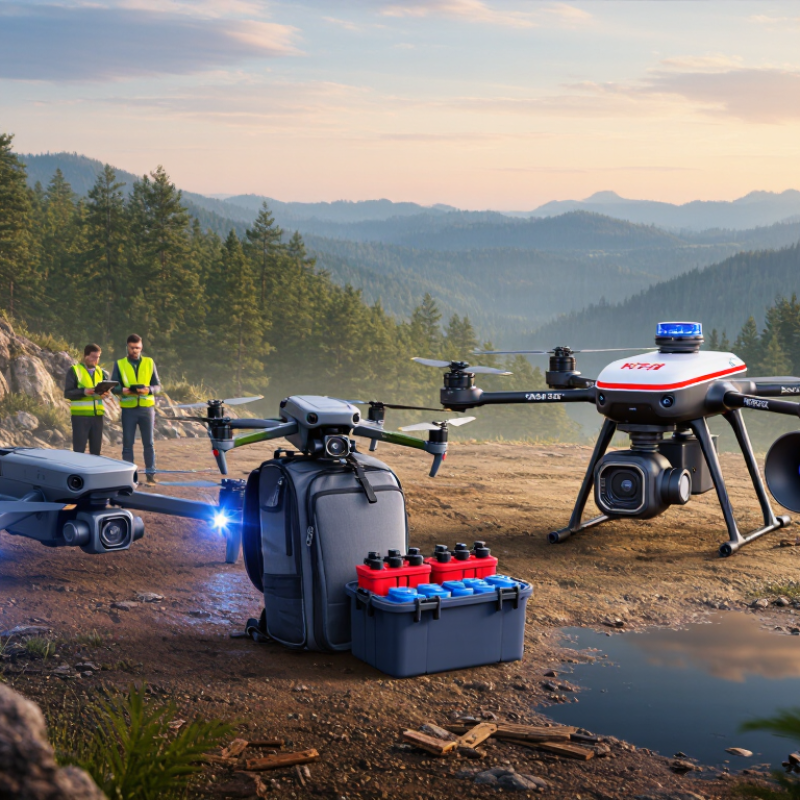
How to Evaluate Chinese Rescue Drones
Evaluating Chinese rescue drones starts with the mission, not the advertised range. A mountain search needs stable thermal imaging, while flood response may demand water resistance and a loudspeaker. The World Meteorological Organization’s 2023 Atlas reports 11,778 weather, climate, and water-related disasters from 1970 to 2021, causing more than two million deaths. That scale makes dependable performance more important than a dramatic specification sheet.
Check flight time with the actual payload attached. A thermal camera, spotlight, and speaker can shorten endurance. Ask for test conditions, battery-cycle results, wind limits, and documented performance in rain or cold. NIST’s response-robot test methods offer a useful model: assess mobility, sensing, and task performance through repeatable trials. Look for independent evidence, not just factory demonstrations. A spreadsheet can still mislead.
Connectivity deserves close scrutiny. Test video transmission behind hills, near buildings, and where cellular coverage drops; record delays and lost connections. The World Bank’s 2019 Lifelines report estimates that infrastructure disruptions cost low- and middle-income countries about $390 billion annually. A drone cannot replace resilient communications or trained crews. Confirm spare-battery availability, repair support, operator training, and clear data-handling practices before procurement. I would still want a real-site trial: published specifications rarely capture gusts, glare, or a cold operator’s hands.
Leading Chinese Drone Models for Search and Rescue
Chinese search-and-rescue teams benefit from choosing aircraft by mission, not by a single “best” model. Compact multirotors can hover above streets and inspect building edges, while thermal cameras help crews scan dark rooms or wooded slopes. A loudspeaker and spotlight can make a drone useful after a survivor is spotted. Small details matter: battery swaps, cold-weather performance, and a clear live video feed may shape a mission more than advertised range.
For wider search zones, fixed-wing or vertical-takeoff hybrid aircraft can cover more ground between landings. A practical fleet pairs these with multirotors for close inspection. The World Meteorological Organization’s 2022 Global Status of Multi-Hazard Early Warning Systems report found that only half of countries reported having adequate early-warning systems. It also reported nearly six times higher disaster mortality in countries with limited warning coverage than in those with substantial or comprehensive coverage. Drones cannot replace warning networks, but rapid aerial views can help responders locate blocked roads and prioritize checks.
A blunt caveat. Thermal cameras do not see through concrete, smoke can obscure ordinary cameras, and flight time shrinks in wind. NIST’s response-robot testing work emphasizes measurable performance, including mobility and sensing, rather than claims alone. Teams should test aircraft with local crews, realistic terrain, and actual rescue equipment. I would not treat a neat map as proof that every area has been searched.
Key Sensors and Equipment for Rescue Operations
Choosing a rescue drone from China should begin with the mission, not a specification sheet. A daylight camera helps teams inspect roofs, roads, and riverbanks from a safe distance. A thermal camera can reveal heat signatures at night or through light smoke. It cannot reliably identify a person in every condition. Pairing thermal and daylight views gives operators useful context. No sensor sees everything.
Useful equipment extends beyond cameras. A stabilized zoom lens can inspect a damaged structure without bringing responders close. A loudspeaker may deliver short instructions, while a spotlight can illuminate a landing area. Mapping software helps mark search paths and share coordinates with ground teams. In dense streets or steep valleys, satellite positioning can drift. Treat mapped locations as guidance, not certainty.
Battery endurance, payload weight, and weather limits deserve equal attention. Extra sensors add weight and may reduce flight time, so teams should test the full setup before deployment. Check whether batteries can be changed quickly and whether footage can reach authorized responders securely. A neat specification can still mislead. Wind, rain, glare, and operator workload may matter more than a camera’s headline resolution. Keep controls simple, practice handoffs, and record what the equipment misses as well as what it detects.
Performance in Search, Mapping, and Emergency Delivery
For rescue drones from China, useful performance is measured by finding people quickly, building reliable maps, and delivering small emergency loads safely. In search work, a thermal camera can reveal a person through darkness or light vegetation, but it cannot see through dense canopy. Crews should compare detection distance, hover stability, and image clarity in realistic conditions. NIST’s response-robot test methods stress repeatable evaluation rather than headline specifications. That distinction matters.
Mapping needs more than crisp images. Agüera-Vega and colleagues reported approximately 2.5-centimeter vertical RMSE in a 2017 photogrammetry study under controlled conditions with ground control points. Field results can worsen with poor satellite reception, wind, or rushed setup. That number is easy to overvalue. Emergency teams should also check map alignment and update speed before directing ground crews.
For emergency delivery, prioritize dependable return-to-home behavior, clear payload limits, and landing accuracy near the handoff point. A compact first-aid kit or radio battery may be more useful than maximum payload capacity. Flight endurance shrinks in cold weather and gusts, so advertised range is not a reliable mission plan. I would not trust a delivery test that ignores failed handoffs; teams need a safe alternate drop location and a human confirmation step.
How to Choose a Rescue Drone for Different Missions
The best rescue drone depends on the mission, not a feature list. For flood searches, prioritize stable flight, reliable communications, and enough endurance to scan riverbanks without frequent battery changes. A thermal camera can help locate people after dusk, but it does not replace careful visual checks. Range matters. So does a clear return-to-home plan when signals weaken.
For mountain incidents, low-light imaging, wind resistance, and accurate positioning may matter more than payload capacity. A compact aircraft can reach narrow valleys, yet steep terrain may block its signal. Test the planned route and check battery reserves before deployment. Small details matter, such as whether the camera can distinguish a person from warm rocks.
For urban fires or collapsed structures, assess heat tolerance, obstacle sensing, and the ability to send live video to responders. If the drone must carry a flotation aid or medical kit, verify its payload limit and release accuracy under realistic conditions. Keep controls simple enough for trained teams to use under pressure. Not every mission needs the most advanced model. Review maintenance, spare batteries, training, and local operating requirements, too. A specification sheet cannot predict every gust or signal gap. That is worth remembering.
What Are the Best Rescue Drones from China?
How to choose an airframe for different rescue missions
How to read the chart: The bars show broad, indicative endurance ranges in minutes for common airframe classes, not specifications for any particular drone.
Mission fit: Multirotors can hover for close inspection and delivery; fixed-wing aircraft are suited to covering large areas but generally need space to launch and land; VTOL hybrids combine vertical takeoff with efficient forward flight. Actual endurance varies with payload, weather, battery condition, and flight profile.