2026 Best Printed Circuit Board Assembly Techniques and Trends?
The landscape of Printed Circuit Board Assembly (PCBA) is rapidly evolving. As technology advances, manufacturers face both exciting opportunities and complex challenges. In 2026, understanding the latest techniques and trends is crucial for success in this competitive market.
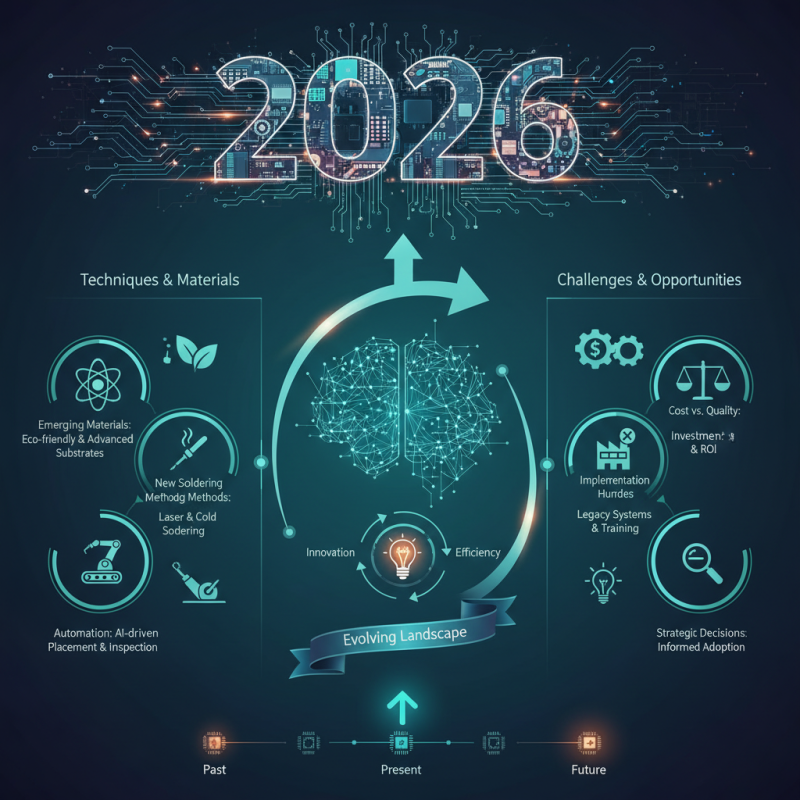
Emerging materials and automation are reshaping PCBA practices. New soldering methods and environmentally friendly materials are becoming popular. However, implementing these innovations can be daunting. Not every factory is equipped for swift transitions, leading to potential setbacks.
Many companies grapple with balancing cost and quality. While new techniques promise better performance, they often come at a premium. It’s essential to evaluate whether these investments will yield a significant return. Therefore, staying informed about the best practices in PCBA can guide strategic decisions. Embracing change is vital, but careful consideration is equally important.
Advancements in PCB Assembly Techniques for 2026
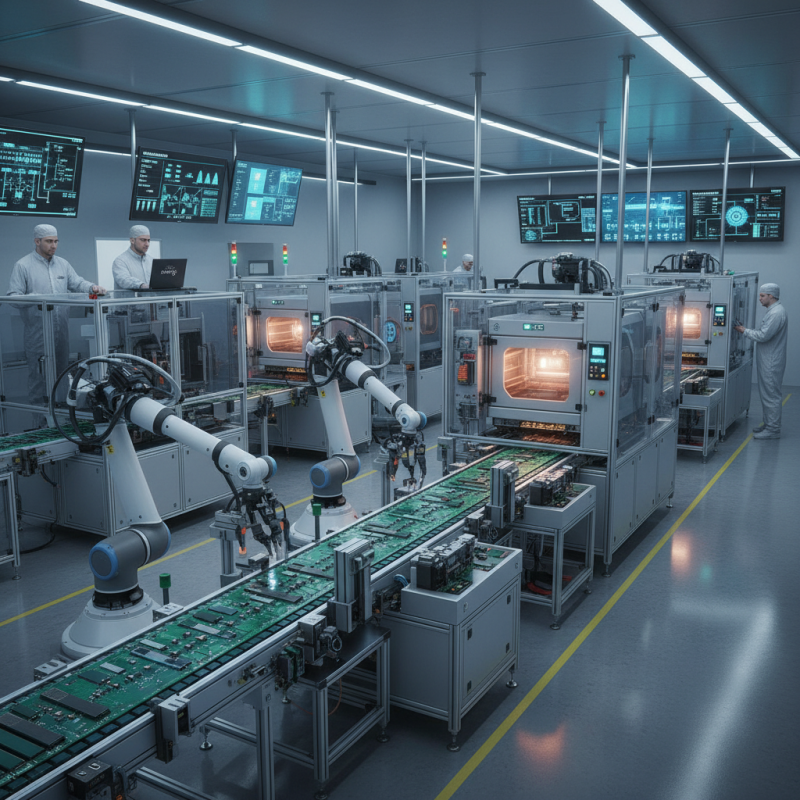
The year 2026 promises to be pivotal for printed circuit board (PCB) assembly techniques. New methods are emerging that enhance efficiency and precision. Industry reports indicate that automation and robotics in PCB assembly could improve production speeds by up to 50%. This significant advancement minimizes human error, yet raises questions about workforce adaptation.
Surface mount technology (SMT) continues to evolve, with finer pitch components and advanced soldering techniques. According to a recent study, using laser soldering can reduce defects by 30%. However, many companies face challenges in training staff for these technologies. The skills gap remains a critical area for investment and growth.
Additionally, the trend towards sustainable materials in PCB assembly is gaining traction. Reports suggest that companies using eco-friendly materials could see a 20% increase in market appeal. Yet, sourcing these materials often presents logistical hurdles. Balancing sustainability and efficiency will be a tough challenge for many manufacturers. As the landscape shifts, ongoing evaluation and adaptation will be crucial.
Key Trends Shaping the Future of PCB Assembly in 2026
The landscape of printed circuit board (PCB) assembly is evolving rapidly. As we look toward 2026, key trends are shaping this industry. One significant trend is the adoption of automation. According to a recent industry report, over 70% of PCB manufacturers plan to invest in automated processes. Automation boosts production efficiency but brings challenges. Skilled labor may become increasingly scarce as machines take over.
Another important trend is the rise of miniaturization. Modern electronic devices demand smaller components. This has led to the development of advanced surface mount technology (SMT). In fact, analysts predict that compact SMT solutions will dominate 60% of the market by 2026. This shift requires manufacturers to adapt their assembly techniques continuously. However, the drive for smaller does not always equate to better quality, leading to potential reliability issues.
Sustainability is another critical consideration. More companies are prioritizing eco-friendly materials and processes. Research indicates that 40% of manufacturers will focus on sustainable practices in 2026. While this feels like a step forward, the transition can be fraught with difficulties. Balancing innovation and environmental impact remains a complex challenge. The need for sustainable solutions must not overshadow the importance of quality and performance.
Best Practices for High-Quality PCB Manufacturing and Assembly
The world of printed circuit board (PCB) manufacturing is evolving rapidly. Keeping up with high-quality assembly techniques is essential. It's not just about the technology but also the methods. Effective communication among teams plays a vital role in ensuring high-quality outcomes. Misunderstandings can lead to significant issues down the line.
One key practice is meticulous design reviews. Teams should review design files thoroughly before production. This prevents errors that could be costly later. Remember, oversights in the design phase can lead to assembly complications. Small mistakes might seem insignificant. However, they can result in functional failures. Attention to detail is critical here.
Tips for enhancing quality include prioritizing component placement accuracy. Use automated assembly methods wisely, but don’t neglect manual checks. Sometimes, human eyes catch errors that machines overlook. Testing at various stages is important. Early detection saves time and money. Adjust processes based on feedback continuously. Reflection on past projects can highlight areas for improvement. Adaptation is key in this fast-paced industry.
2026 Best Printed Circuit Board Assembly Techniques and Trends
Emerging Technologies Impacting PCB Assembly Processes
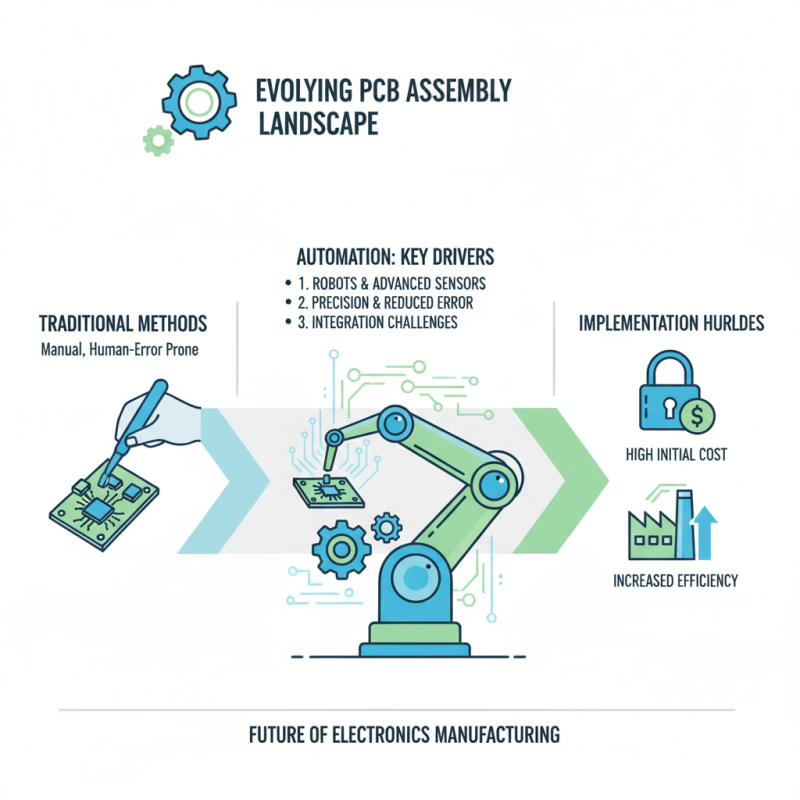
The landscape of PCB assembly is rapidly evolving due to emerging technologies. Automation is one key factor driving change. Robots, equipped with advanced sensors, can perform precise assembly tasks. They reduce human error but might introduce new challenges in integrating their operations. Companies often struggle with the cost of implementing such technologies.
Another noteworthy trend is the rise of artificial intelligence in PCB assembly. AI algorithms can optimize production processes by predicting potential failures. However, this reliance on AI raises questions about job displacement. Workers may need to adapt to new roles, which can be uncomfortable. Training programs need to be robust and flexible.
Moreover, the materials used for PCBs are changing. Biodegradable options are being developed to meet environmental demands. While this is a step forward, manufacturers face challenges in terms of performance. New materials can behave unpredictably during assembly. This unpredictability calls for more rigorous testing protocols. Embracing these technologies may lead to unexpected hurdles, yet they are essential for future progress.
Sustainability and Efficiency in PCB Assembly Techniques for 2026
Sustainability and efficiency are crucial in PCB assembly for 2026. Companies are exploring eco-friendly materials. Biodegradable substrates and non-toxic solders are gaining popularity. These innovations reduce environmental impact significantly. A shift towards energy-efficient machinery is also noticeable. Machines that consume less energy help lower carbon footprints.
Consider using a modular design for your assembly process. It allows for easy upgrades and repairs. This not only reduces waste but also enhances efficiency. When designing, opt for components that are readily available. This can minimize material waste and shorten lead times.
Recycling plays a vital role in PCB assembly. Many companies are implementing take-back programs. These initiatives encourage recycling of old PCBs. However, challenges remain. Not all materials are easy to recycle, and processes can be costly. This is an area needing improvement. Focus on finding solutions that can streamline recycling methods.
2026 Best Printed Circuit Board Assembly Techniques and Trends
| Technique |
Description |
Sustainability Impact |
Efficiency Gain |
| Automated Optical Inspection (AOI) |
Utilizes advanced imaging technology to detect defects on PCBs. |
Reduces waste by catching errors early in the production process. |
Improves production speed by minimizing rework time. |
| Lead-Free Soldering |
Replaces traditional lead-based solder with eco-friendly alternatives. |
Enhances environmental safety and complies with regulations. |
Streamlines the soldering process with optimized materials. |
| Flexible PCBs |
Allows for various shapes and sizes, enabling compact designs. |
Less material waste due to optimized layout and reduced board size. |
Enhances design efficiency and reduces assembly costs. |
| Additive Manufacturing |
3D printing technology applied to produce PCB substrates. |
Minimizes scrap material and allows for on-demand production. |
Reduces lead times and lowers overall manufacturing costs. |
| Smart Manufacturing |
Integrates IoT and AI for optimized production processes. |
Enhances resource management and lowers energy consumption. |
Improves overall operational efficiency and reduces downtime. |