











JHY PCB Blog Hub
Your Source for Expert PCB Design, Manufacturing, and Assembly Insights – Stay Informed with 2025 Trends!
What Is the Best PE Tape for Packaging in 2026?
Choosing the best Pe Tape for packaging in 2026 starts with the carton, not the product label. A tape that holds firmly on clean, dry corrugated board may lift from dusty, recycled, or cold surfaces. Box weight, sealing method, storage temperature, and transit time all affect performance. There is no universal winner. It depends.
The OECD’s Global Plastics Outlook (2022) estimates that packaging generated 40% of global plastic waste in 2019. That figure concerns packaging broadly, not adhesive tape alone, but it underscores why material choices deserve scrutiny. Buyers should compare film thickness, adhesive type, unwind force, tensile strength, and adhesion on the actual box surface. For repeatable checks, ASTM D3330 covers peel adhesion testing for pressure-sensitive tape, while ASTM D3654 addresses shear adhesion. Test methods help, but they cannot fully reproduce a damp warehouse or a rough, recycled-fiber carton.
A practical shortlist should include performance after storage, not just a strong first pull. Check whether the tape seals by hand or machine, resists edge lifting, and dispenses cleanly at line speed. Ask suppliers for technical data sheets and test conditions; compare like with like. Recycling compatibility also needs careful wording, since acceptance depends on local systems and the complete packaging design. A small trial on real cartons may reveal issues a datasheet misses. That is inconvenient, but useful.
What PE Packaging Tape Is and How It Works
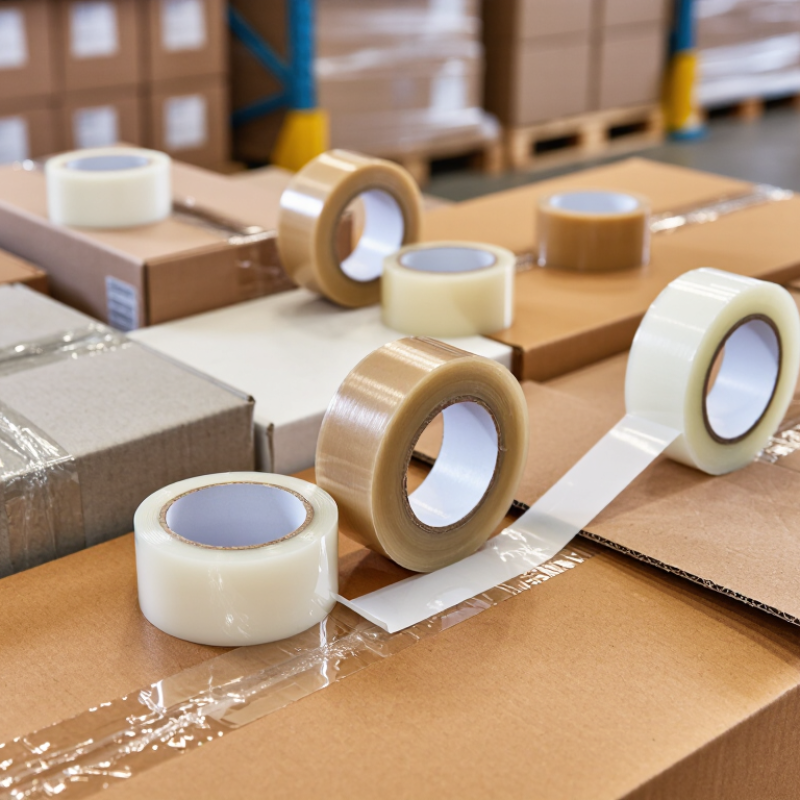
What is PE packaging tape? It is adhesive tape with a backing made from polyethylene (PE), a flexible plastic film. A pressure-sensitive adhesive sits on one side. Press the tape onto a clean surface, and the adhesive flows into tiny surface irregularities, creating contact without heat or water. Firm pressure helps. A quick hand test can be misleading: initial tack may feel strong, while the bond changes with time or temperature.
The PE film bends around curved bundles and uneven edges, and it can help resist moisture during handling. Depending on its construction, it may bundle goods, close flexible packaging, or protect surfaces. The film provides flexibility and support; the adhesive determines how well the tape grips cardboard, plastic, or other materials. Dust, oil, cold surfaces, and rough fibers can weaken contact.
There is no single PE tape for every package. Check the surface, load, storage temperature, and whether the tape must peel away cleanly. Press a short strip onto the actual carton, then inspect the edges the next day. A small trial is useful. It is not perfect, though: one test cannot represent every shipment, and tape that holds a light bundle may fail under pulling or vibration.
Which Material and Performance Properties Matter
What Is the Best PE Tape for Packaging in 2026?
Which Material and Performance Properties Matter
The right polyethylene (PE) tape depends on the carton, load, and packing line—not just the roll’s stated strength. For flexible parcels, a conformable film backing can follow uneven seams; thicker or tougher PE film may resist punctures during handling. Acrylic adhesives often suit longer storage and temperature variation, while rubber-based adhesives can grab quickly on clean, dry board. Test on the actual carton surface. Dust, recycled fibers, and cold storage can change adhesion noticeably.
Look beyond “high tack.” Check peel adhesion, holding power, tensile strength, and elongation using comparable test methods, such as ASTM D3330 and D3654. A tape that feels secure by hand may still creep under a heavy box’s sustained load. That matters. Eurostat’s 2024 packaging-waste release reports that the EU generated 36.1 kg of plastic packaging waste per person in 2022. This makes tape weight and end-of-life compatibility worth checking, though PE film alone does not guarantee that a package can be recycled with its tape attached.
For a practical trial, seal cartons at room temperature and after a cold hold; then check seam lift, splitting, and residue. Record tape width, application pressure, and time before testing. Small detail. A neat lab result can mislead if the packing line applies tape unevenly. Choose a specification that balances secure closure with consistent unwind and minimal excess material.
| PE Tape Construction | Typical Carrier and Total Tape Thickness | Key Material Characteristics | Typical Adhesive Options | Best-Fit Packaging Uses | Main Advantages | Points to Check Before Buying |
|---|---|---|---|---|---|---|
| LDPE film tape | Carrier: about 50–100 μm Total tape: commonly about 80–150 μm | Soft, flexible film with high stretch and good conformability. Typical LDPE film elongation is often in the hundreds of percent, depending on grade and test method. | Rubber-based for quick tack; acrylic for better aging and UV resistance. | Bundling, bag closure, temporary packaging, and applications on curved or uneven surfaces. | Conforms well and is easy to handle around irregular shapes. | Check holding power under sustained load; a highly stretchable backing does not by itself guarantee strong adhesion. |
| LLDPE film tape | Carrier: about 25–75 μm Total tape: commonly about 55–125 μm | Flexible polyethylene film with good puncture and tear resistance for its thickness. Properties vary with resin grade, film orientation, and formulation. | Rubber-based or acrylic, selected for the required tack, aging, and surface compatibility. | Securing poly mailers, lightweight bundles, and flexible packaging components. | Can provide a useful balance of flexibility, strength, and material efficiency. | Confirm tear resistance and unwind behavior on the intended dispenser and at the planned application temperature. |
| HDPE film tape | Carrier: about 20–50 μm Total tape: commonly about 45–100 μm | Generally stiffer than LDPE film and can offer good tensile strength at relatively low gauge. Stretch and flexibility depend on film grade and orientation. | Usually acrylic or rubber-based, depending on the required tack and service conditions. | Light-duty bundling, flat-surface packaging, and applications where a thinner, firmer film is useful. | Can be thin and relatively firm while retaining polyethylene’s moisture resistance. | Check conformability on corners and rough surfaces; a stiffer film may lift more readily on demanding shapes. |
| Co-extruded PE film tape | Carrier: commonly about 40–100 μm Total tape: commonly about 70–150 μm | Two or more PE layers can be designed to combine properties such as a tough outer layer and a softer, more conformable layer. Performance depends on the layer structure. | Acrylic or rubber-based; adhesive is selected separately from the film construction. | General-purpose packaging where a balance of handling, flexibility, and durability is needed. | Layer design allows the carrier to be tailored to the application without relying on a single film grade. | Ask for carrier thickness, total thickness, and test data for the finished tape; “co-extruded” alone does not specify performance. |
| Cross-laminated PE tape | Carrier: commonly about 70–150 μm Total tape: commonly about 100–200 μm | PE film layers oriented in different directions can provide more balanced tear resistance than a single-orientation film. Exact strength depends on construction. | Often rubber-based for high initial tack or acrylic where aging resistance is important. | Heavy-duty bundling, reinforcement, and packaging that may face pulling or tearing forces. | Can resist tear propagation and provide robust handling in demanding applications. | Compare tensile and tear test results in both directions, plus adhesive holding power on the actual package surface. |
How Packaging Conditions Affect Tape Performance
Choosing the best PE tape in 2026 depends less on a label than on the conditions around the carton. Cold cartons can slow adhesive contact, while dusty or oily surfaces weaken the bond. That bond matters. On a chilled packing line, let cartons warm when practical and test adhesion before increasing production. A tape that holds indoors may behave differently near a loading dock.
Heat can soften adhesive and increase stretch, especially when a box carries weight or sits in direct sun. Humidity may affect different tapes in different ways, but condensation is a clear warning: moisture can interfere with adhesion. Apply steady pressure across the tape, especially over seams and corners. Small gaps invite lifting.
Storage matters, too. Keep rolls sealed, away from heaters, and use older stock first. I would not treat a clean test panel as the whole story; cartons vary in coating, recycled content, and texture. Try the tape on real boxes through temperature and handling changes, then check for lifted edges and loose seams. A modest trial beats a confident guess.
How PE Tape Types Compare Across Packaging Uses
What Is the Best PE Tape for Packaging in 2026?
How PE Tape Types Compare Across Packaging Uses
PE packaging tapes differ in backing, adhesive, and reinforcement. Standard PE film tape suits light cartons, bag sealing, and bundling, especially when flexibility matters. Reinforced PE tape, with embedded fibers, can hold heavier or awkward loads more securely. PE foam tape is different: it cushions or fills gaps, but is usually not the best choice for closing shipping cartons. Adhesive matters, too. Acrylic formulations can handle aging and temperature changes well; rubber-based adhesives often grab quickly. Actual performance depends on carton surface, dust, and storage temperature.
Packaging choices also affect waste handling. The OECD’s Global Plastics Outlook (2022) reports that packaging accounted for about 40% of plastic waste generated globally in 2019. That figure is not tape-specific, but it makes material compatibility worth checking. A PE backing alone does not guarantee that a taped package will be recyclable; the adhesive and local sorting process also matter. Test the complete package, not just the tape roll.
Tips: Apply tape to a clean, dry carton and press along the full strip. Test a few sealed boxes under real storage conditions before ordering in bulk. Small details matter. A tape that works in a warm packing room may fail on a cold loading dock. There is no universal winner, and even a careful choice can disappoint when carton quality varies.
How to Select the Best PE Tape for Your Packaging Needs in 2026
The best PE tape depends on the carton, contents, and shipping conditions—not just price. U.S. Census Bureau data put fourth-quarter 2024 e-commerce sales at $352.9 billion, or 16.1% of retail sales. That scale makes dependable parcel sealing important.
Start with the box: rough or recycled corrugated surfaces may need stronger adhesion than clean, smooth cartons. Check the tape’s backing thickness, adhesive type, width, and unwind feel. A roll that tears neatly and applies without wrinkles can save time on a busy packing line. Fit matters.
Match tape performance to the journey. Cold storage, dust, humidity, and long transit can weaken a seal, so test samples on the actual carton and in realistic conditions.
The U.S. EPA’s 2018 materials report estimated that containers and packaging generated 82.2 million tons of municipal solid waste; 28.1% was recycled. That figure covers many packaging materials, not PE tape alone, but it highlights why right-sizing and avoiding excess tape deserve attention.
Ask suppliers for test methods and results, then check adhesion after storage and handling. Test it first. I would not choose by price alone; that shortcut can fail when cartons arrive open. A small trial may reveal issues a specification sheet misses.


