









Best Electrostatic Collector Manufacturer in China?
Choosing the Best Electrostatic Collector Manufacturer in China requires more than comparing prices or catalog claims. A reliable supplier should explain how its collector performs under your actual dust load, gas temperature, moisture level, and operating schedule. Ask for drawings, material specifications, test records, and clear maintenance guidance. Details matter: electrode alignment, power controls, and access doors can shape performance long after installation.
Harry J. White, author of Industrial Electrostatic Precipitation, is a foundational technical authority in this field. His work points to a practical principle: collector performance depends on the complete system and its operating conditions, not one headline efficiency figure. That distinction helps buyers assess manufacturers more carefully. Request evidence for stated performance, and check whether the proposed design suits your process rather than a generic example. A polished brochure is not proof. Neither is the lowest quotation. The right manufacturer should answer technical questions plainly and identify design limits instead of promising perfection. Some uncertainty remains until the equipment is tested in real operating conditions. That deserves honest discussion. This guide examines the capabilities, engineering support, quality controls, and service commitments that can help identify a dependable Chinese Electrostatic Collector manufacturer.
What Is an Electrostatic Collector and How Does It Work?
Best Electrostatic Collector Manufacturer in China?
What Is an Electrostatic Collector and How Does It Work?
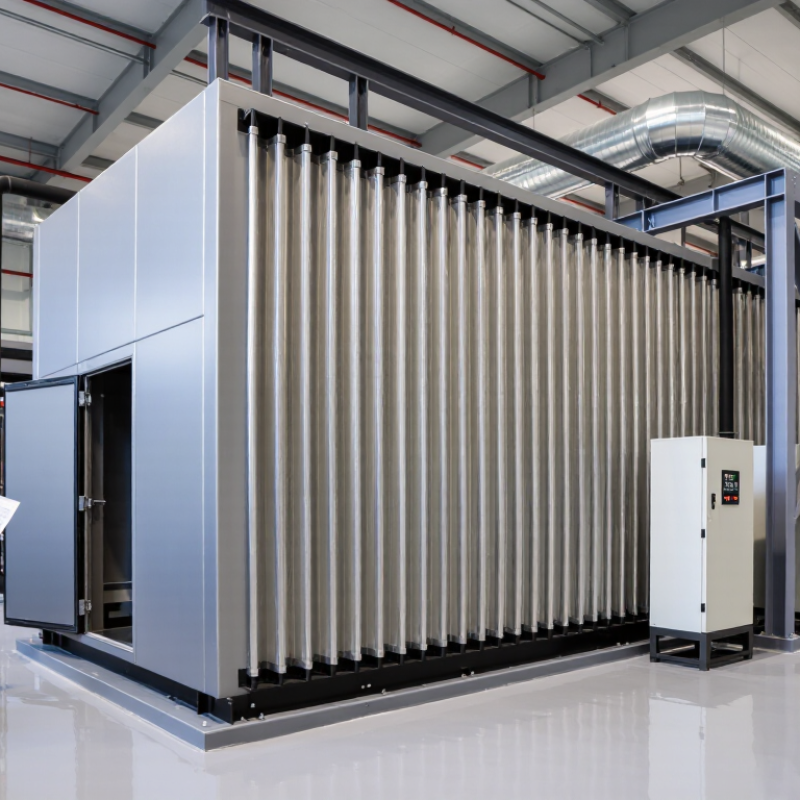
An electrostatic collector removes airborne particles by giving them an electrical charge. Inside the unit, a high-voltage field ionizes the air and charges dust, smoke, or fine droplets. The charged particles then move toward oppositely charged collection plates. Cleaner air leaves the collector, while captured material remains on the plates. That is the basic process. It is not a simple screen, and it does not remove every gas or odor.
Performance depends on particle type, airflow, plate condition, and operating settings. For example, oily aerosol may cling differently from dry workshop dust. A collector handling too much air can allow particles to pass through. Regular inspection matters: check for buildup, damaged insulators, and unstable voltage. In practice, these details are easy to overlook. I would also verify performance under the actual operating conditions, rather than relying only on a brochure figure.
Tips: Match the collector to the particle and airflow. Keep access panels clear for inspection, and follow the equipment manual when cleaning plates. If readings fluctuate, record airflow and voltage before changing settings. Small checks help, though they cannot replace proper testing.
Best Electrostatic Collector Manufacturer in China? - What Is an Electrostatic Collector and How Does It Work?
| Topic | How It Works or What to Check | Practical Notes |
|---|---|---|
| What an electrostatic collector is | An electrostatic precipitator (ESP) removes suspended particles from a gas stream by electrically charging them and collecting them on oppositely charged or grounded surfaces. | ESP designs are used in industrial exhaust and some indoor-air applications. Their construction and operating conditions vary by application. |
| 1. Particle charging | A high-voltage electric field, often produced around discharge electrodes, creates ions that transfer electrical charge to particles in the gas. | The charging process depends on factors such as particle size, gas properties, electrode arrangement, and electrical operating conditions. |
| 2. Particle collection | The electric field drives charged particles toward collecting plates or tubes, where they deposit instead of continuing with the gas flow. | Collection surface area, gas flow distribution, particle characteristics, and electrical performance all affect removal efficiency. |
| 3. Dust removal | In many dry ESPs, collected dust is dislodged from the electrodes by mechanical rapping and falls into hoppers. Wet ESPs use liquid to wash collected material from collection surfaces. | Dry and wet designs suit different dust, moisture, and process conditions. Dust handling and wastewater management may be part of the system design. |
| Typical target pollutants | ESP systems are principally used to collect particulate matter, including dust, smoke, and some liquid aerosols, when the system is designed for the specific stream. | An ESP is not generally a standalone solution for removing gaseous pollutants such as carbon monoxide or most volatile organic compounds. |
| Removal performance | Well-designed ESPs can achieve high particulate collection efficiency, but actual performance depends on the application and operating conditions. | Request test data or a documented performance guarantee for the specified gas flow, inlet loading, particle properties, temperature, and outlet limit. |
| Key design inputs | Important inputs include gas volume and temperature, pressure, particle size and resistivity, dust loading, moisture, corrosive components, and required outlet emissions. | Accurate process data helps determine ESP size, electrode configuration, materials, power supply, and whether pre-treatment or downstream equipment is needed. |
| Advantages | ESP systems can handle large gas volumes and, in suitable designs, operate with relatively low gas-side pressure drop compared with some filtration systems. | Suitability depends on process conditions. High-voltage equipment requires appropriate controls, safeguards, and maintenance. |
| Maintenance considerations | Maintenance may include inspecting electrodes and insulators, checking high-voltage components, clearing hoppers, and verifying rapping or washing systems. | The maintenance schedule should reflect dust characteristics, operating hours, site conditions, and the equipment supplier’s instructions. |
| How to assess a manufacturer | Compare application experience, engineering documentation, material specifications, control and safety features, commissioning support, and service capabilities. | Ask for references for comparable processes, drawings, a clearly defined scope, performance-test methods, warranty terms, and a list of exclusions. |
Note: Final equipment selection and expected emissions performance should be based on site-specific process data and applicable local regulations.