











JHY PCB Blog Hub

Your Source for Expert PCB Design, Manufacturing, and Assembly Insights – Stay Informed with 2025 Trends!

Why Choose a Vacuum Sequence Valve for Industrial Use?

Why Choose a Vacuum Sequence Valve for Industrial Use?

Industrial vacuum systems rarely operate under ideal conditions. Dust, moisture, pressure changes, and uneven production loads can disturb process stability. A Vacuum Sequence Valve helps manage these changes by controlling when vacuum zones open, close, or release pressure. This timing protects pumps, reduces unnecessary energy use, and supports more consistent production.

Vacuum technology expert John F. O’Hanlon has emphasized, “A vacuum system is only as good as its weakest component.” His observation reflects a practical reality. A valve may appear small, but its performance can influence the entire system. In a packaging line, for example, poor sequencing may cause weak gripping, delayed release, or product damage. A properly selected valve creates cleaner transitions between operations. Small details matter.

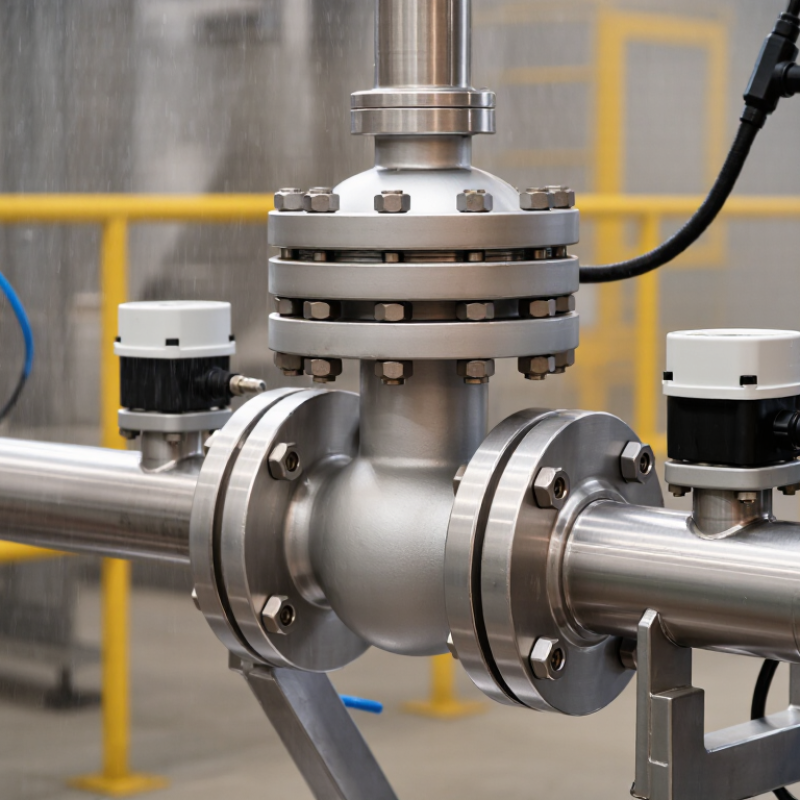
Engineers should examine pressure range, flow capacity, response time, materials, sealing design, and maintenance access. Stainless steel construction may suit demanding environments, while compact designs can simplify installation near robotic tooling. No valve solves every process problem. Real plants are less tidy than diagrams. Therefore, selection should follow actual measurements, equipment limits, and operating experience. A Vacuum Sequence Valve becomes valuable when it matches the system’s timing, load, and environmental demands. The choice must be verified. Reliable results come from testing, not assumptions.
Why Choose a Vacuum Sequence Valve for Industrial Use?

What Is a Vacuum Sequence Valve and How Does It Work?

Why Choose a Vacuum Sequence Valve for Industrial Use?

A vacuum sequence valve controls when one vacuum operation begins or ends. It responds to pressure changes, rather than relying only on electrical timing. Inside, a spring-loaded poppet or diaphragm moves when the preset vacuum level is reached. The valve then opens, closes, or releases air to control the next circuit. In a packaging line, for example, one suction cup can secure a carton before another actuator moves it.

This sequence reduces mistimed motion and protects vacuum-sensitive components. The U.S. Department of Energy reports that compressed-air systems may lose 20–30% of their output through leaks. A well-adjusted sequence valve cannot repair every leak, but it can prevent unnecessary vacuum demand. That distinction matters. A valve is not a substitute for maintenance.

Industrial users should check response pressure, flow capacity, seal compatibility, and adjustment stability. Grand View Research has identified continued growth in industrial vacuum equipment demand, driven by automation, packaging, and material handling. More automation means more switching cycles. Small timing errors become expensive when repeated thousands of times daily. A practical installation includes a gauge near the valve, short tubing, and regular leak testing. Field experience also shows a common weakness: operators may set the threshold during a warm shift, then ignore colder conditions. Temperature, hose length, and load weight can change performance. Calibration should follow real operating conditions, not just the catalog setting.

Key Components and Operating Principles of Vacuum Sequence Valves

Why Choose a Vacuum Sequence Valve for Industrial Use?

A vacuum sequence valve coordinates several vacuum functions in one controlled circuit. Its main components include a valve body, sensing chamber, spring, poppet or spool, adjustment screw, and sealing elements. The body connects to vacuum ports and directs airflow between circuits. The sensing chamber monitors pressure changes. The spring establishes the switching threshold. Seals are equally important, because small leaks can weaken holding force and create unstable operation.

The operating principle is straightforward. When the primary vacuum circuit reaches its preset level, pressure acts against the sensing element. This force overcomes the spring load and moves the poppet or spool. The valve then opens, closes, or redirects flow to a secondary circuit. That action creates a repeatable sequence, such as gripping a part before lifting it. A differential between switching and reset points can prevent rapid cycling. Clean air matters here. Dust or oil may slow the moving element.

In practical installations, technicians should set the valve while observing real load conditions. A dry test may look perfect. Production can behave differently. Material porosity, hose length, and filter resistance all change response time. A common mistake is choosing a setting too close to the pump’s maximum vacuum. The valve may then switch late or fail to reset. Check fittings, seals, and response pressure during maintenance. No setting is permanent; wear and temperature can gradually shift performance.

Industrial Applications That Benefit from Vacuum Sequence Control

Why Choose a Vacuum Sequence Valve for Industrial Use?

Industrial Applications That Benefit from Vacuum Sequence Control

Vacuum sequence valves help machines apply suction in the correct order. This matters in packaging lines, robotic pick-and-place cells, woodworking equipment, and automated material handling. A valve can delay one vacuum circuit until another circuit reaches its target level. That prevents premature gripping, unstable lifting, and dropped parts.

The U.S. Department of Energy reports that compressed air can represent about 10% of industrial electricity use. Its guidance also identifies leakage as a potential loss of 20–30% in poorly maintained systems. Vacuum equipment often shares these air losses. Sequence control can reduce unnecessary air demand by isolating inactive circuits and releasing suction when a task ends. Small leak. Large bill.

In practical installations, technicians should watch response time, filter condition, hose length, and valve sizing. A valve that is too small may create slow pickup cycles. One that is too large can waste air during switching. The ISO 50001 energy-management framework supports measuring performance before and after efficiency changes. That makes vacuum control easier to verify, not merely assume. Operators I have observed often focus on pump capacity first, yet poor sequencing may be the real issue. This is where experience challenges the obvious answer. Data logging remains essential, because production speed and energy savings do not always improve together.

Advantages of Using Vacuum Sequence Valves in Production Systems

Why Choose a Vacuum Sequence Valve for Industrial Use?

Vacuum sequence valves improve production control by releasing vacuum in a defined order. This prevents several actuators from competing for limited vacuum capacity. In packaging, pick-and-place, and material-handling lines, that control can reduce unstable gripping and missed transfers. Operators also gain clearer fault patterns because each vacuum zone responds at a known stage.

The U.S. Department of Energy reports that compressed-air leaks can waste 20% to 30% of compressor output. Vacuum systems face similar losses through leakage, oversized piping, and unnecessary pump operation. A sequence valve cannot repair poor maintenance. It can, however, isolate inactive circuits and limit vacuum demand during each cycle. That may reduce pump loading, but actual savings require measurement.

Small detail. Big effect.

ISO 50001 guidance supports measured energy management rather than assumed efficiency. Engineers should record pump runtime, vacuum level, cycle frequency, and rejected parts before installation. After commissioning, compare the same indicators under similar production conditions. The European Commission’s Joint Research Centre also emphasizes monitoring and control in industrial energy performance. A practical design includes accessible adjustment points, suitable seals, and protection from dust or liquid carryover. In field conditions, response timing may drift. That part is easy to overlook. Regular inspection remains necessary, especially where flexible tubing ages or production recipes change.

Why Choose a Vacuum Sequence Valve for Industrial Use? - Advantages of Using Vacuum Sequence Valves in Production Systems
Performance Dimension Typical Industrial Characteristics Production-System Advantage Typical Use in Industry
Vacuum-Level Control Adjustable switching points commonly selected within the valve’s rated vacuum range, often from atmospheric pressure down to approximately 10-3 mbar for suitable designs. Allows one vacuum source to serve multiple process stages or isolate a chamber when the required pressure level is reached. Vacuum packaging, chamber evacuation, pick-and-place equipment, and controlled degassing.
Automatic Process Sequencing The valve changes state when a preset pressure threshold is reached, without requiring continuous operator intervention. Coordinates evacuation, isolation, venting, and transfer steps in a repeatable sequence. Multi-stage vacuum systems, vacuum furnaces, coating equipment, and automated assembly lines.
Energy Efficiency The valve can isolate unused vacuum lines and prevent continuous pumping of sections that have already reached the target pressure. Reduces unnecessary pump operating time, leakage-related losses, and demand on centralized vacuum infrastructure. Facilities using central vacuum systems with several machines or production zones.
Cycle Repeatability Mechanical or pneumatic actuation provides consistent switching when the sensing point, hysteresis, and operating conditions are properly specified. Improves consistency between production cycles and helps reduce variation caused by manual valve operation. Packaging cycles, material handling, forming, and automated leak-test stations.
Response Time Switching time depends on valve size, actuator type, pressure differential, control signal, and line volume; compact designs can respond in fractions of a second. Supports faster transitions between process steps and helps maintain production throughput. High-cycle robotic handling, rapid chamber isolation, and automated transfer systems.
Leak-Tight Isolation Designed with seals and seat materials selected for the required vacuum level, temperature, and media compatibility. Limits air ingress and protects vacuum stability during holding, transfer, and maintenance operations. Vacuum chambers, analytical equipment, semiconductor-related processes, and clean manufacturing.
Process Protection Can be configured to prevent premature venting, backstreaming, pressure loss, or exposure of sensitive components to unsuitable conditions. Helps protect workpieces, coatings, pumps, and other equipment from abnormal pressure changes. Heat treatment, thin-film coating, drying, and sensitive component processing.
System Integration Available with pneumatic, electric, or mechanically actuated configurations and with common industrial control interfaces. Simplifies connection to programmable logic controllers, pressure switches, sensors, and safety interlocks. Automated production cells, skid-mounted vacuum systems, and machine-tool control panels.
Maintenance Efficiency Isolation of individual branches allows selected equipment or chambers to be serviced without shutting down the entire vacuum network. Reduces maintenance-related downtime and supports more efficient fault isolation. Centralized plant vacuum distribution and production lines with parallel equipment.
Scalability The same sequencing principle can be applied to single-chamber systems, parallel branches, and multi-stage vacuum networks. Makes it easier to expand production capacity without redesigning the complete control concept. Growing manufacturing facilities, modular process equipment, and laboratory-to-production scale-up.
Safety and Interlocking Can be combined with pressure sensors, limit switches, emergency shutoff circuits, and controlled vent valves. Helps prevent unsafe door opening, incorrect chamber pressurization, and operation outside defined process conditions. Vacuum ovens, furnaces, chambers with access doors, and automated material-transfer systems.
Material Compatibility Seal and body materials must be selected according to temperature, corrosiveness, particle load, and the gases or vapors present. Improves service life and reduces contamination or premature seal failure in demanding processes. Chemical processing, solvent vapor handling, food packaging, and high-temperature vacuum equipment.
Engineering note: Actual pressure range, leak rate, flow capacity, switching accuracy, cycle life, response time, and temperature rating depend on the valve design and application. Final selection should be based on the required vacuum level, conductance, media compatibility, actuation method, duty cycle, and applicable safety requirements.

Selection, Installation, and Maintenance Considerations

Why Choose a Vacuum Sequence Valve for Industrial Use?

Selecting a vacuum sequence valve begins with the process, not the catalog. Define the required vacuum range, flow rate, switching speed, and operating temperature. Confirm that the valve suits the gas, moisture level, and expected particle load. Seal material matters. A seal that performs well in dry service may deteriorate in humid conditions. I have seen projects overlook pressure recovery time, causing unstable chamber performance. That detail deserves attention.

Installation quality strongly affects reliability. Keep vacuum lines short and remove chips, oil, and dust before connection. Even a small particle can prevent proper seating. Mount the valve according to its specified orientation and support heavy tubing separately. Check electrical connections, actuator settings, and control signals before applying full vacuum. Perform a leak test at the working pressure, then repeat it after several operating cycles. Small leaks hide easily.

Maintenance should follow both time and cycle count. Inspect seals, fittings, and sensing ports for wear or contamination. Record switching time and ultimate pressure during scheduled checks. A gradual response change often appears before complete failure. Replace damaged seals with compatible materials, not simply similar-looking parts. Keep spare components clean and sealed. Do not skip isolation procedures during service. That shortcut is risky. Maintenance records can also reveal a poor initial selection, which is uncomfortable but useful.

Why Choose a Vacuum Sequence Valve for Industrial Use?

Selection, installation, and maintenance should be based on the required vacuum range, pressure differential, sealing compatibility, cleanliness, and service conditions.

Typical industrial vacuum classification ranges shown as absolute pressure in mbar. Exact limits may vary by application and engineering standard.

Selection

Match the valve to the operating pressure band, required flow capacity, switching differential, temperature, and process-gas compatibility.

Installation

Install with clean, leak-tight connections, correct flow direction, suitable supports, and minimal dead volume near the vacuum chamber.

Maintenance

Inspect seals, verify actuation and switching pressure, check for leaks, and replace contaminated or worn sealing components.

Scroll to Top