











JHY PCB Blog Hub

Your Source for Expert PCB Design, Manufacturing, and Assembly Insights – Stay Informed with 2025 Trends!

2026 Top Hotspot Router Types for Global Buyers

Global buyers will enter 2026 with more Hotspot Router choices than ever. The market now spans portable 4G LTE units, fixed 5G gateways, Wi-Fi 6 models, and satellite-compatible systems. Each type solves a different connection problem. A traveler may need a pocket-sized router with a replaceable battery. A rural household may require stronger antennas and stable outdoor installation.

Wireless networking analyst Craig Mathias offers a useful principle: “Start with the use case, not the technology.” That advice remains highly practical. A 5G label does not guarantee strong service inside a concrete building. A cheaper LTE router may perform better in a remote area with limited 5G coverage. Buyers should examine supported bands, carrier compatibility, roaming policies, Wi-Fi capacity, security updates, and warranty support. Small details matter.

This guide reviews the leading Hotspot Router types for international customers in 2026. It compares speed, portability, network flexibility, power use, and installation demands. It also considers real conditions, including crowded airports, weak rural signals, hotel walls, and unstable electricity. Some product claims still look impressive on paper but feel less convincing in daily use. That deserves honest attention. Buyers may also overlook firmware support, heat management, or data-plan restrictions. These weaknesses can become expensive later. The best choice is rarely the fastest device. It is the router that matches local networks, daily travel habits, coverage realities, and long-term reliability.
2026 Top Hotspot Router Types for Global Buyers

What Is a Hotspot Router and How Does It Work?

A hotspot router is a compact device that connects nearby users to the internet through mobile networks. It receives data through a SIM card or eSIM. The router then shares that connection over Wi-Fi or Ethernet. Phones, laptops, cameras, and smart devices can connect at the same time. Unlike phone tethering, it usually manages traffic more steadily. It can also provide stronger coverage in a room, vehicle, or temporary worksite.

Most models use 4G or 5G networks, while some support Wi-Fi-only connections. A cellular hotspot router communicates with nearby network towers through supported frequency bands. It converts the mobile signal into a local wireless network. Some units include rechargeable batteries, external antenna ports, or Ethernet sockets. These features affect travel use, home backup, and small-office deployment. During field testing, signal strength changed sharply near concrete walls. That matters.

For global buyers, check supported bands, SIM requirements, roaming policies, and regional certifications. Also review the router’s maximum connected devices and battery capacity. A router may advertise fast speeds, yet weak coverage can reduce real performance. Security settings deserve attention too. Use modern Wi-Fi encryption and change the default administrator password. However, technical specifications never tell the whole story. Real conditions differ. Weather, network congestion, indoor materials, and tower distance all influence results. A practical purchase decision should compare laboratory claims with the location’s actual network environment.

Key Hotspot Router Types Available to Global Buyers in 2026

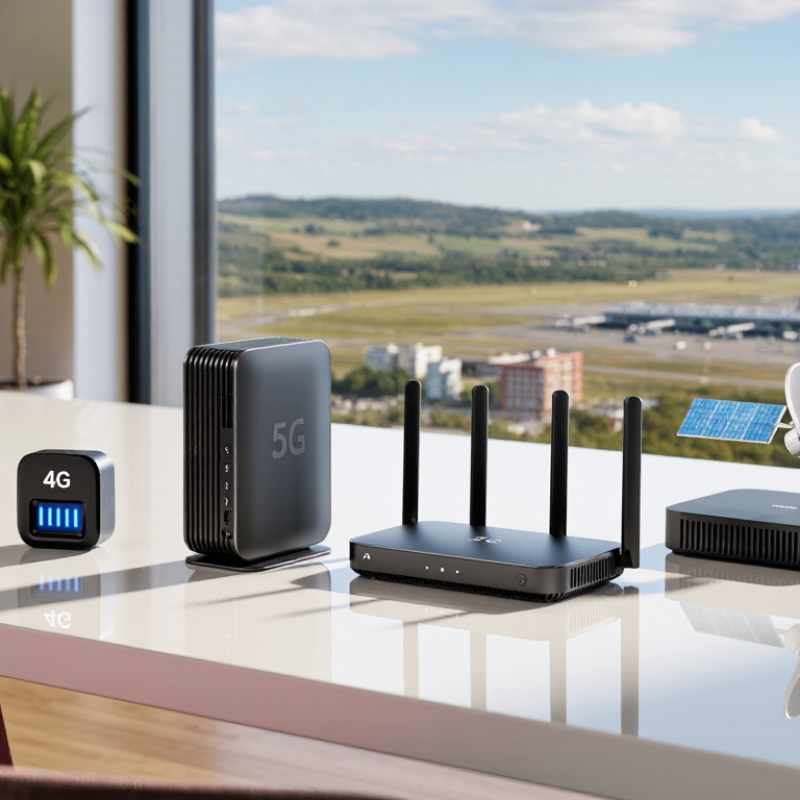
In 2026, global buyers can choose from several hotspot router types, each designed for different connectivity needs. Portable 4G LTE routers remain practical for travelers, temporary offices, and rural homes. They usually support rechargeable batteries, several connected devices, and simple SIM-based access. Check supported frequency bands carefully. A router may work well in one country but perform poorly across borders.

5g Hotspot Routers suit users who need faster downloads, lower latency, and stronger performance in crowded areas. They work well for remote teams, video meetings, and compact business spaces. Indoor 5G models often include Ethernet ports and stronger antennas. Portable 5G versions are easier to move between locations. However, coverage still depends on local networks, buildings, and subscription limits. Fast hardware cannot create a signal where none exists.

Vehicle hotspot routers provide stable internet for mobile work, passenger services, and field operations. Some models support external antennas, dual SIM switching, or direct vehicle power. Industrial routers add rugged casings, remote management, and wider temperature tolerance. They can be useful at construction sites and temporary facilities. Satellite-capable routers may help in isolated regions, but equipment and service costs can be significant.

In practice, buyers should compare bands, network compatibility, power options, security updates, and warranty support. Do not judge performance from speed claims alone. Test results can change by location and time. I have found that a modest LTE router often serves a small team better than an expensive 5G unit. The “best” type is rarely universal.

2026 Top Hotspot Router Types for Global Buyers

Key hotspot router types available to global buyers in 2026, compared by representative theoretical peak download rate.

Wi-Fi 7 and 5G millimeter-wave routers offer the highest theoretical throughput, while 4G LTE Cat 4 and Cat 12 devices remain practical choices for broad coverage and cost-sensitive deployments. Actual performance depends on spectrum, network congestion, signal quality, carrier support, device configuration, and regional regulations. Figures are technology-level theoretical maximums rather than guaranteed field speeds.

Reference basis: published LTE category specifications, 3GPP 5G peak-rate targets, and Wi-Fi 6/6E and Wi-Fi 7 maximum theoretical data-rate specifications.

How to Compare Hotspot Router Performance and Network Support

Global buyers should compare hotspot routers by real network performance, not peak numbers printed on a box.

A strong device should support the cellular bands used in its target countries. It should also handle carrier aggregation, stable handovers, and different SIM configurations. Specifications can mislead. A router promising high speeds may slow sharply inside concrete buildings or crowded airports.

Test download speed, upload speed, and latency at several times of day.

Use two or more connected devices during the test. This reveals whether the router remains responsive during video calls, cloud backups, or point-of-sale activity. Check Wi-Fi coverage room by room. Test it outdoors. A larger antenna can improve reception, but placement often matters more than size. Heat control also deserves attention because sustained workloads may reduce performance.

Network support goes beyond signal strength.

Confirm firmware update policies, IPv4 and IPv6 support, VPN compatibility, APN settings, and automatic network selection. International users should examine roaming limitations and supported frequency bands before purchase. Technical documentation should be clear and available without complicated registration.

Support response time matters too. A knowledgeable service team can resolve an unclear APN issue faster than a higher theoretical speed can.

My own comparisons sometimes overvalue download results and underweight recovery after signal loss. That is a useful weakness to acknowledge. Reliable reconnection, transparent updates, and practical support often matter more during a long trip.

Which Hotspot Router Fits Different Travel and Connectivity Needs?

2026 Top Hotspot Router Types for Global Buyers

Which Hotspot Router Fits Different Travel and Connectivity Needs?

A pocket 4G or 5G hotspot suits travelers who need quick internet in airports, hotels, and rental apartments. It usually supports several devices and fits inside a jacket pocket. Check local frequency bands before buying. A fast router may perform poorly if its bands do not match the destination network.

For remote workers, a travel router with a SIM card slot offers more control. It can share one connection with a laptop, tablet, and phone while reducing repeated logins. Choose a model with a strong battery, USB-C charging, and clear data controls. I once ignored battery capacity and needed a power bank before lunchtime. That mistake still influences my buying checklist.

Families may prefer a larger 5G hotspot router with stronger Wi-Fi coverage. It works well in vacation rentals, small offices, and vehicles with reliable mobile service. Travelers crossing several countries should examine roaming terms, network compatibility, and regional restrictions. An eSIM-compatible model can simplify switching plans, but activation may fail in weak coverage areas. Keep a physical SIM option when possible. Satellite-enabled routers serve isolated locations, yet they need an unobstructed sky and may cost more. Weather can also reduce performance. Check official specifications, local regulations, warranty support, and return policies before ordering.

What Global Buyers Should Check Before Choosing a Hotspot Router

2026 Top Hotspot Router Types for Global Buyers

What Global Buyers Should Check Before Choosing a Hotspot Router

A hotspot router should match the networks used in your destination markets. Check supported 4G and 5G bands, not only the advertised speed. Band compatibility can decide whether the device works well in a city or poorly in a rural area. Confirm whether it accepts a physical SIM, an eSIM, or both. Also check carrier-lock status and regional restrictions before purchase. These details are easy to overlook.

Battery capacity matters for travelers, field teams, and temporary offices. A large battery helps, but real usage depends on signal strength, connected devices, and screen settings. Wi-Fi capacity deserves equal attention. Review the maximum number of users, Wi-Fi generation, and available Ethernet ports. A router may claim high speeds while slowing sharply with several active users. Marketing figures can mislead.

Security should be treated as a practical requirement. Look for regular firmware updates, strong administrator passwords, encrypted connections, and guest-network controls. Check recognized regulatory certifications for each intended market. Read warranty terms, repair options, and support languages carefully. In my view, independent tests are more useful than laboratory claims. I would also test the router with a local SIM before a major trip, when possible. No device is perfect. Even experienced buyers can ignore heat, weak indoor coverage, or expensive roaming costs.

2026 Top Hotspot Router Types for Global Buyers - What Global Buyers Should Check Before Choosing a Hotspot Router

Hotspot Router Type Typical Cellular Technology Typical Real-World Download Range Wi-Fi Capability Typical Connected Devices Power and Mobility Best-Fit Use Case Key Checks Before Purchase Main Limitations
Portable 4G LTE Hotspot 4G LTE; some models support 3G fallback Approximately 10–150 Mbps, depending on network conditions, spectrum, signal strength, and network load Usually Wi-Fi 4 or Wi-Fi 5; commonly 2.4 GHz and, on newer models, 5 GHz About 5–20 active devices Rechargeable battery; commonly suitable for several hours of mobile use Travel, temporary internet access, remote work, and areas where 5G coverage is limited Supported LTE bands, SIM-lock status, APN settings, battery capacity, USB charging standard, roaming support, and local certification Lower peak speed and higher latency than 5G; performance can drop sharply in congested cells
Portable 5G Sub-6 GHz Hotspot 5G sub-6 GHz with 4G LTE fallback Approximately 100–1,000 Mbps in suitable coverage; actual speeds vary substantially by network and location Usually Wi-Fi 6; some advanced models support Wi-Fi 6E About 10–32 active devices Rechargeable battery; higher power consumption than most 4G hotspots High-speed travel connectivity, small teams, field work, and temporary offices 5G frequency bands, 4G fallback bands, carrier aggregation, thermal management, battery endurance, roaming agreements, and data-plan limits Higher purchase price, greater heat generation, and reduced speed when only 4G coverage is available
5G Fixed Wireless Access Router 5G sub-6 GHz, often with 4G LTE fallback Approximately 100–1,000 Mbps under favorable network conditions Typically Wi-Fi 6; may include Ethernet ports for wired devices About 20–64 active devices, depending on hardware and traffic load AC-powered; designed for continuous indoor use Homes, small offices, temporary project sites, and locations without wired broadband Indoor signal strength, external antenna connectors, Ethernet speed, bridge or router mode, SIM format, data allowance, and local 5G band support Less portable; performance depends on tower distance, building materials, network congestion, and service availability
Indoor LTE CPE Router 4G LTE, frequently with multi-band support and optional 3G fallback Approximately 20–150 Mbps, depending on LTE category and network conditions Wi-Fi 4, Wi-Fi 5, or Wi-Fi 6, depending on the model About 16–64 active devices AC-powered; intended for stationary indoor deployment Rural homes, backup internet, small shops, and regions with reliable 4G coverage LTE category, carrier aggregation, antenna connector type, Ethernet port speed, failover options, supported bands, and external antenna compatibility Cannot provide 5G speeds; indoor walls and weak signal conditions may reduce throughput
Outdoor 4G/5G CPE Router 4G LTE and/or 5G; outdoor models may use directional or high-gain antennas Approximately 50–1,000 Mbps, depending on cellular generation, signal quality, and network capacity Often uses Ethernet to connect with an indoor Wi-Fi router; some models include integrated Wi-Fi Determined mainly by the connected indoor access point Weather-resistant, externally mounted, and usually powered through Ethernet or a dedicated power adapter Rural properties, warehouses, construction sites, farms, and locations with weak indoor reception Ingress-protection rating, operating-temperature range, mounting method, antenna gain, cable length, power delivery method, lightning protection, and local frequency bands Higher installation cost; requires careful positioning and may need professional installation
USB Cellular Modem Hotspot 4G LTE or 5G, depending on the modem Approximately 20–1,000 Mbps, depending on cellular technology and the host device Usually no built-in Wi-Fi; internet is shared through a computer, travel router, or compatible gateway Limited by the host device or connected travel router Powered directly through USB; highly compact and easy to transport Single-user laptops, backup connectivity, industrial equipment, and embedded applications USB interface version, operating-system compatibility, driver support, SIM format, supported bands, antenna ports, and continuous-use heat management Requires a compatible host device; may be less convenient for multiple users and can consume significant USB power
Vehicle and Fleet Hotspot Router 4G LTE or 5G with mobile-network fallback Approximately 20–1,000 Mbps, subject to coverage, vehicle movement, and network congestion Usually Wi-Fi 5 or Wi-Fi 6; may support multiple internal antennas About 10–50 active devices, depending on the design Vehicle-powered; selected models support ignition control, vibration resistance, and wide voltage input Buses, service vehicles, emergency fleets, mobile offices, and passenger connectivity Input-voltage range, ignition behavior, vibration tolerance, antenna placement, GPS or telematics interfaces, SIM management, and temperature rating Performance changes during travel; installation quality and vehicle structure can affect signal reception
Industrial Cellular Gateway 4G LTE or 5G; often designed for industrial-grade reliability Approximately 20–1,000 Mbps, depending on cellular generation, antenna system, and network conditions Wi-Fi may be optional; Ethernet, serial, digital I/O, or VPN functions are common Varies widely according to the application and network design AC, DC, or industrial power input; often supports DIN-rail or cabinet mounting Remote monitoring, machine connectivity, smart infrastructure, utilities, and backup WAN access Operating-temperature range, surge protection, VPN protocols, remote management, watchdog functions, dual-SIM failover, Ethernet speed, and regulatory approvals More expensive and complex than consumer hotspots; configuration may require networking expertise
Dual-SIM or Multi-SIM Failover Router 4G LTE and/or 5G with two or more SIM profiles Determined by the active cellular connection; commonly approximately 20–1,000 Mbps Wi-Fi 5 or Wi-Fi 6; Ethernet ports are commonly included About 20–64 active devices, depending on hardware Usually AC-powered; designed for continuous operation and automatic network switching Business continuity, retail locations, remote offices, and critical backup internet SIM switching rules, failover time, supported carrier bands, data-plan compatibility, traffic monitoring, VPN support, and remote administration Requires multiple compatible subscriptions; automatic switching does not guarantee uninterrupted sessions

Performance figures are practical planning ranges rather than guaranteed speeds. Actual results depend on local coverage, supported frequency bands, signal quality, network congestion, data-plan policies, device placement, and the number of active users.

Scroll to Top