











2026 Best Fuse Holder Types for Global Buyers?
Choosing the right Fuse Holder in 2026 requires more than comparing prices or browsing catalog images. Global buyers must match the holder with fuse size, current rating, voltage, installation method, and operating environment. A small PCB holder may suit compact control equipment. It may fail in a vibrating industrial cabinet without proper mechanical support.
According to circuit-protection specialist Dr. John A. Nelson, “A fuse holder is part of the protection system, not merely a replacement accessory.” This principle deserves attention. The holder controls contact pressure, heat transfer, fuse access, and installation safety. Those details become visible when a terminal discolors, a clip loosens, or a fuse cannot be replaced quickly.
This guide examines common Fuse Holder types for international purchasing decisions. It covers PCB, panel-mount, inline, automotive, DIN-rail, and cartridge-fuse holders. Each type serves a different application. None is universally best.
Look beyond the headline rating. Check derating curves, terminal construction, touch protection, wire size, sealing performance, and certification marks. UL, IEC, and regional requirements may influence product selection. Supply continuity also matters. A technically excellent holder becomes impractical when replacement parts remain unavailable for months.
There is room for caution. Product data sheets can appear complete while omitting temperature limits or mounting restrictions. Buyers should verify critical specifications with the manufacturer. Samples should face vibration, heat, moisture, and repeated fuse replacement before mass ordering.
The strongest choice is often the least dramatic one. It fits precisely, stays cool, and remains serviceable years later. That simplicity is not guaranteed. It must be engineered, tested, and documented.
What Is a Fuse Holder and Why Does Its Type Matter?
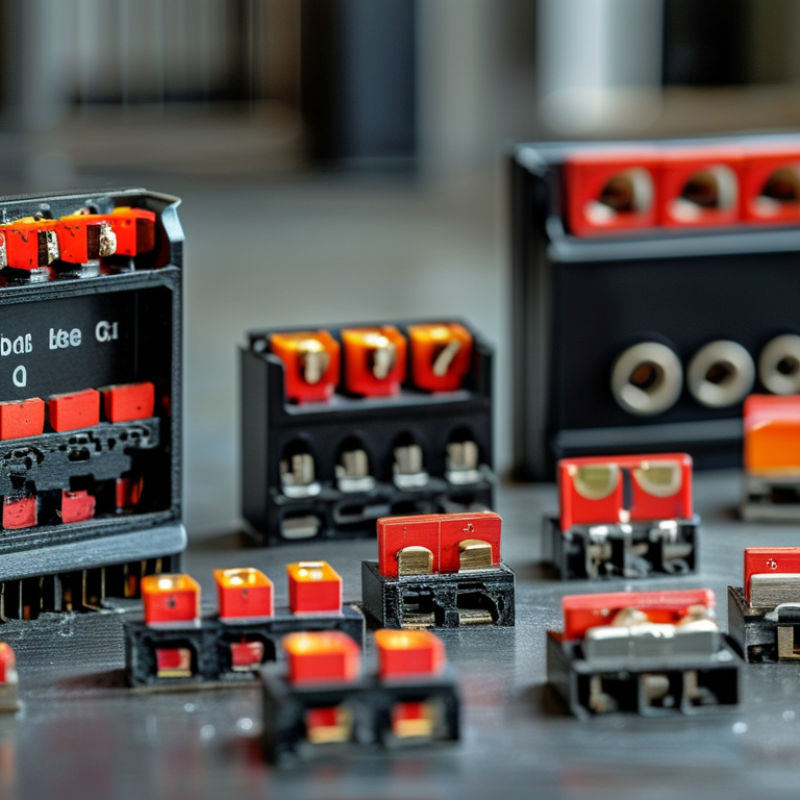
A fuse holder is the part that secures a fuse and connects it to an electrical circuit. It allows the fuse to be installed, removed, and inspected without disturbing surrounding wires. The holder also helps prevent accidental contact with live terminals. Small component. Important function. In practical equipment, its type affects safety, maintenance, heat control, and installation time.
An inline fuse holder works well for short cable runs and compact devices. A panel-mount holder fits through an enclosure wall, keeping replacement access visible. PCB fuse holders suit control boards, but they need careful attention to board temperature and spacing. DIN-rail types support organized cabinet wiring and faster service work. The correct choice depends on fuse size, current rating, voltage rating, fault conditions, and wire capacity. A holder should not be rated below the fuse or circuit requirements.
During workshop checks, I have seen a holder selected only because it physically fitted. That decision was incomplete. Heat appeared around the terminals after repeated current cycling. The real issue was weak contact pressure and limited ventilation. Buyers should review terminal design, touch protection, material resistance, mounting space, and resistance to vibration. Regional requirements may also differ, so technical documents and applicable IEC or UL-based specifications deserve careful review. A clear product drawing is useful, but real installation conditions matter more.
2026 Best Fuse Holder Types for Global Buyers? - What Is a Fuse Holder and Why Does Its Type Matter?
| Fuse Holder Type | Compatible Fuse Format | Typical Current Range | Typical Voltage Range | Installation Method | Common Applications | Main Advantages | Key Selection Considerations | Common Standards or References |
|---|---|---|---|---|---|---|---|---|
| Inline Fuse Holder | Cylindrical cartridge, glass, ceramic, or automotive blade fuses | Approximately 1–30 A, depending on fuse format and construction | Typically up to 32–250 V AC or DC, depending on the product design | Installed in series with a wire or cable, usually by crimping, soldering, or molded cable assembly | Wiring harnesses, low-voltage equipment, battery leads, lighting, and field-repair applications | Compact, economical, and easy to add to existing wiring | Check wire size, insulation temperature, sealing level, fuse accessibility, and derating at higher ambient temperatures | Applicable fuse and holder requirements may reference IEC 60127-6, UL 4248, or automotive requirements depending on the end use |
| Panel-Mount Fuse Holder | Cartridge, glass, ceramic, or miniature fuse formats | Approximately 1–30 A for miniature designs; higher ratings are available in larger constructions | Commonly 125–500 V AC/DC, subject to the fuse holder design and certification | Mounted through a panel opening with a threaded body, nut, snap-fit feature, or rear mounting hardware | Control panels, power supplies, instruments, appliances, and industrial electrical enclosures | Provides convenient front access for fuse replacement and clear equipment integration | Verify panel cutout size, terminal arrangement, touch protection, locking method, and available clearance behind the panel | IEC 60127-6 and UL 4248 are common references for low-voltage fuse-holder constructions |
| PCB-Mount Fuse Holder | Radial or axial cartridge fuses, miniature glass or ceramic fuses, and selected blade fuses | Approximately 0.5–15 A in compact PCB applications | Typically 32–250 V AC/DC, depending on the holder, fuse, creepage, and clearance design | Through-hole soldering or, less commonly, surface-mount attachment | Power supplies, chargers, measurement equipment, appliances, and electronic control boards | Reduces wiring, saves assembly space, and integrates protection directly into the circuit board | Consider PCB creepage and clearance, solder-process compatibility, heat rise, fuse replacement access, and mechanical vibration | IEC 60127-6, UL 4248, and the applicable end-product safety standard may be relevant |
| DIN-Rail Fuse Holder | Cartridge, cylindrical, or modular industrial fuses | Commonly 2–63 A for modular low-voltage installations; larger systems use dedicated industrial fuse bases | Frequently 250–690 V AC, depending on the fuse system and configuration | Clipped onto 35 mm top-hat DIN rail or another specified mounting rail | Industrial control cabinets, distribution boards, automation systems, and building electrical panels | Fast installation, standardized cabinet mounting, clear circuit organization, and easy maintenance | Confirm rail compatibility, terminal capacity, touch protection, short-circuit rating, heat dissipation, and required auxiliary contacts | IEC 60947-3, IEC 60269, and relevant national installation requirements may apply |
| Automotive Blade Fuse Holder | Mini, low-profile mini, standard, and maxi blade fuses | Approximately 2–100 A, depending on the blade-fuse size and terminal construction | Usually 12–32 V DC in automotive and mobile equipment systems | Inline, panel-mounted, or integrated into a fuse-and-relay box | Passenger vehicles, commercial vehicles, agricultural machinery, recreational vehicles, and marine DC systems | Fast fuse replacement, high availability of compatible fuses, and good suitability for low-voltage DC wiring | Check terminal temperature rise, vibration resistance, moisture protection, cable gauge, polarity needs, and continuous-current derating | Automotive fuse dimensions and performance are commonly associated with ISO 8820 and applicable vehicle manufacturer requirements |
| Cartridge Fuse Clip | Exposed cylindrical cartridge fuses with end caps | Approximately 0.1–30 A in compact electronic and control applications | Commonly 32–500 V AC/DC, subject to the clip spacing, insulation, and fuse rating | Through-hole PCB mounting, chassis mounting, or direct assembly onto insulated supports | Prototype equipment, control circuits, test fixtures, and products requiring a simple replaceable fuse interface | Very low cost, simple construction, and compatibility with several cartridge fuse sizes | Limited touch protection, possible exposure to arcing, mechanical retention, clip contact force, and service access must be evaluated | Use the applicable cartridge-fuse and end-product safety requirements; enclosed holders may be required for user-accessible equipment |
| High-Voltage or High-Current Fuse Base | Industrial cartridge, square-body, or other high-breaking-capacity fuse systems | From tens of amperes to several hundred amperes, depending on the fuse system | Commonly 500–1,500 V AC/DC; specialized systems may exceed this range | Bolted, busbar-mounted, or installed on a fixed industrial fuse base | Motor drives, photovoltaic combiner equipment, battery energy storage, industrial distribution, and power conversion systems | Supports high fault currents, robust thermal performance, and secure mechanical connections | Verify fuse class, breaking capacity, busbar spacing, torque requirements, arc containment, ventilation, and maintenance procedures | IEC 60269, IEC 60947-3, UL 4248, and local electrical installation codes may apply |
| Water-Resistant or Sealed Fuse Holder | Automotive blade, cartridge, or specialized cylindrical fuses | Approximately 1–100 A, depending on the fuse and cable assembly | Typically 12–250 V AC/DC, depending on the application and sealing design | Inline or panel-mounted with a gasket, sealed cap, overmolded cable, or locking enclosure | Outdoor controls, marine equipment, agricultural machinery, battery systems, and vehicle wiring exposed to moisture | Improved resistance to water, dust, salt spray, and accidental contamination | Do not assume an IP rating; verify the tested ingress-protection level, cable sealing range, UV resistance, corrosion resistance, and service method | Ingress protection may be evaluated under IEC 60529; the electrical fuse-holder standard still depends on the holder and end application |
| Finger-Safe Fuse Holder | Cartridge, cylindrical, or modular industrial fuses | Commonly 2–63 A in low-voltage distribution and control equipment | Typically 250–690 V AC, depending on the fuse system and certified assembly | Panel, DIN-rail, or busbar mounting with insulated covers and protected terminals | Operator-accessible switchboards, industrial panels, commercial equipment, and maintenance areas | Reduces accidental contact with live parts during fuse replacement or inspection | Confirm the specified finger-safe category, fuse access procedure, terminal protection, lockout provisions, and enclosure requirements | IEC 60529, IEC 60269, IEC 60947-3, and applicable equipment safety standards may be relevant |
| Fuse Holder with Indicator | Cartridge, cylindrical, blade, or modular fuses with compatible visual or electrical indication | Approximately 1–63 A, depending on the fuse format and indicator circuit | Commonly 32–690 V AC/DC, depending on the holder and indicator design | Panel, PCB, DIN rail, or inline mounting | Control cabinets, power distribution, alarm circuits, telecom equipment, and systems where rapid fault location is important | Shows a blown-fuse condition and can reduce troubleshooting time | Check indicator visibility, auxiliary-contact rating, leakage current, polarity, insulation, and whether the indicator remains reliable under low fault currents | Certification and performance depend on the complete holder, fuse, indicator, and end-product assembly |
| Modular Fuse Disconnect Holder | Cylindrical or cartridge industrial fuses | Commonly 2–125 A, depending on the modular fuse system | Frequently 400–690 V AC, with DC capability only where specifically rated | DIN rail or panel mounted with a hinged, removable, or switchable fuse carrier | Industrial distribution, motor circuits, photovoltaic systems, and equipment requiring isolation during maintenance | Combines fuse protection with a visible or operational isolation function | Verify utilization category, isolation suitability, switching capability, short-circuit rating, fuse size, and handle-locking provisions | IEC 60947-3 and IEC 60269 are common reference standards for this type of equipment |
| Best Choice for Global Buyers | Select the holder to match the exact fuse format, not only the nominal current | Match the holder rating to the fuse rating and expected continuous load | Ensure the holder voltage rating is equal to or higher than the system voltage | Choose based on panel, PCB, DIN rail, inline, busbar, or enclosure requirements | International sourcing, OEM design, replacement programs, and multi-market product development | Improves safety, interchangeability, compliance planning, and long-term supply flexibility | Request datasheets, certification evidence, dimensional drawings, temperature-rise data, terminal details, and samples before approval | Ratings are typical market ranges rather than universal limits. The final selection must be based on the manufacturer’s certified datasheet and the requirements of the target market. |
| Technical note: A fuse holder is the mechanical and electrical interface that secures a fuse, maintains reliable contact, and may provide insulation, touch protection, environmental sealing, indication, or isolation. Holder performance depends on the complete fuse-holder-and-fuse combination. Buyers should verify rated current, rated voltage, interrupting or short-circuit capability, temperature rise, creepage and clearance, wire or terminal size, mounting dimensions, environmental rating, and certification for the destination market. | ||||||||